When Texas’s privately-run electrical grid collapsed amid a battery of winter storms in February of 2021, it plunged over 4.5 million people into darkness, and contributed to hundreds of deaths due to the lack of water, food, and heat.
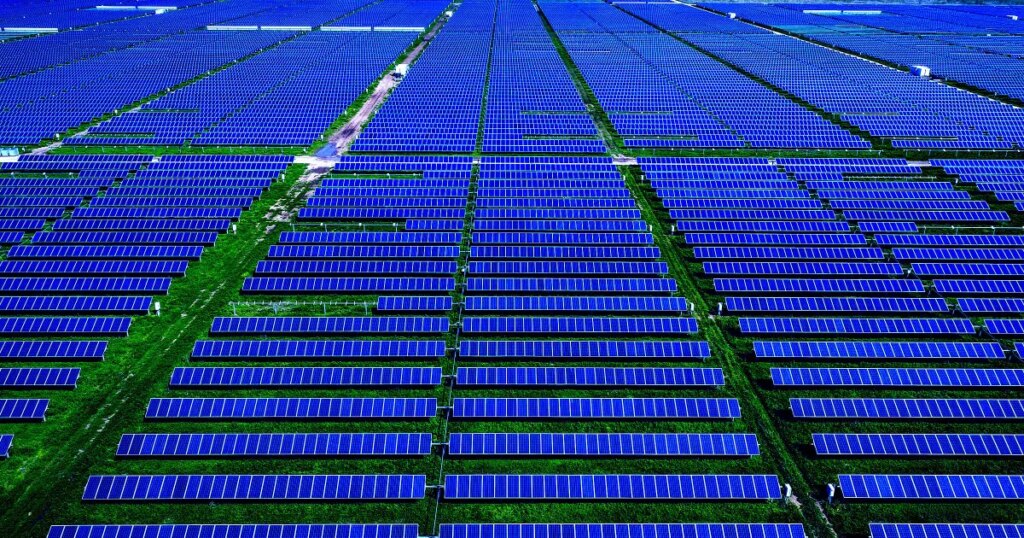
A similarly tragic story almost unfolded in July of this year — had in not been for the deployment of a jaw dropping amount of solar power infrastructure that kept the grid from collapsing under the strain.
New reporting by the Texas Tribune details the state’s rapid adoption of solar energy, specifically solar panels and storage batteries. The paper notes that when the organization that manages state’s electrical grid — the Electric Reliability Council of Texas (ERCOT) — broke record energy demands on both July 21st and 22nd, it hardly registered as an event, because its solar infrastructure ensured there was a 20,000 megawatt buffer padding the grid’s capacity.
“We hit an all time peak, and we had no issue hitting that peak,” Thomas Gleeson, chair of Texas’s Public Utility Commission, told the Tribune.
Unsurprisingly, those moments of peak demand coincided with oppressive summer temperatures, with the heat index reaching 116 degrees Fahrenheit in Dallas on July 22nd. The Tribune notes that at various points, solar power accounted for over 45 percent of the state’s total electrical generation, breaking state records both for total electricity generated by solar panels and for total electricity discharged from solar batteries.
As the power grid’s capacity grows, so too will the demand. Though ERCOT is standing strong for now, the state estimates that by 2032, statewide electric demand will be nearly double what it was on July 22nd.
To combat that reality, the utility firm says it has some 460 gigawatts of generation cued up for development, around 70 percent of which is made up of solar infrastructure.
Of course, it will also help if Texas governor Greg Abbott sticks to his recently enacted data center moratorium, which put the brakes on over 474 gigawatts worth of impending electrical stress, at least temporarily. Long-term, it’s unlikely that Texas will refuse the nearly 1,800 data center projects looking to call the state home — an unending game of chicken between the tech industry and a utility provider scrambling to keep up with growing demand.
More on Texas: Climate Scientists Shake Their Heads as First US City Running Completely Out of Water
The post Texas Avoids Blackout by the Grace of Solar Power appeared first on Futurism.