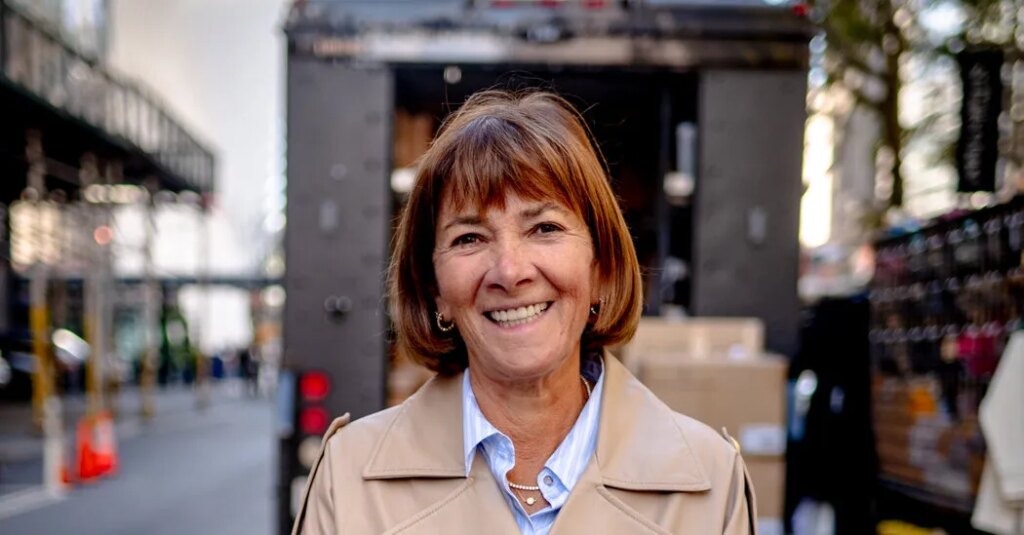
The next time you are stuck in a dispute with the government bureaucracy, consider Carole Blank Brown and the license plate she had on her red BMW convertible.
The plate read “BLANK,” for her maiden name. It became an issue this spring when she updated the car’s registration to an Upper East Side address she had moved to several years ago.
She soon received two notices about unpaid parking tickets. One, for $65, had been issued in March for a missing license plate. The other, for $95, had been issued in February for blocking a driveway. Both listed the offending license plate number as “BLANK.”
Ms. Brown, a 70-year-old self-employed lawyer and real estate title agent, was confused. She said that she and the convertible had never been at the addresses where the violations occurred. “This is not my car,” she wrote in challenging one of the tickets.
She called the city’s 311 line and was stunned to learn that more than 400 outstanding tickets totaling more than $40,000 in fines had piled up against her and that only an administrative judge at the Finance Department’s Adjudication Division could resolve them.
Ms. Brown had been pulled into a parking-ticket vortex.
On a Friday in April, she went to clear her name.
Before getting a hearing at an office building in Lower Manhattan, she obtained a list of the hundreds of parking tickets she had supposedly racked up. She also paid more than $400 for copies of them all. Some were for missing plates; others were for violations like double parking, parking in no-standing zones and blocking fire hydrants.
On each one, the space for a license plate number was empty — in other words, blank.
In her written challenges to those first tickets, Ms. Brown offered a theory that the blank space had somehow been conflated with her BMW’s plate. When her turn for a hearing came, there were so many tickets to deal with that one administrative judge could not handle them all. Instead, Ms. Brown had to bounce between four judges over two days to get all the tickets dismissed as the judges examined them one by one.
Anxious to avoid getting more tickets, Ms. Brown surrendered her plate, but the tickets kept coming. (She knew because she kept checking online.)
Every couple of weeks, she returned, stopping first at a customer service window for a printout of the tickets, then spending hours before judges. She thinks she went through this at least 10 times, clearing $10,000 in tickets or more on each trip.
“Everyone knows me there,” she said, describing how she had started to bring in her lunch and pass the time playing mahjong on her iPad.
She spoke to a Manhattan representative of the city’s Office of the Parking Summons Advocate in mid-September. He said he had “escalated” the matter. But by Oct. 7, she was facing another 36 violations totaling nearly $3,000.
That day, I sent a Finance Department spokesman an inquiry about Ms. Brown’s frustrations. The next day, a different representative of the advocate’s office emailed Ms. Brown to say he, too, had “escalated” the matter and the problem had been solved.
The Finance Department spokesman, Ryan Lavis, said in an email several days later that the agency had been reviewing Ms. Brown’s problem since mid-September and that she was one of more than 5,200 people the advocate’s office had helped so far this year. He did not respond to questions about what caused her problem or how it had been fixed.
The state’s Department of Motor Vehicles also took action.
“We will never reissue this same plate combination to another registrant,” said Walter McClure, a spokesman.
As for Ms. Brown, the sense of humor she tried to maintain throughout the ordeal was evident when the new vanity plate she ordered arrived in October.
“KNALB,” it said.
The post Why Did She Rack Up $40,000 in Parking Tickets? Fill in the ______. appeared first on New York Times.