We’ve read the stories about private jets ferrying families from one college campus to another. One of our competitors has reportedly offered a $300,000, four-day tour per student-and-parent pair, taking seven such pairs to seven universities as part of what it calls the “Elevation Experience.” The itinerary promises a Gulfstream G650, private tarmac pickups, chauffeured cars, Four Seasons hotels, VIP concierge service, curated dining, and even apparently designer luggage. The company describes the exclusive experience as providing families with a “strategic edge” in college admissions.
Read that description and one can’t help but ask: Who, exactly, is this for?
I ask as a former University of Pennsylvania admissions officer who now serves as a senior admissions consultant at Ivy Coach. Over the last 35 years, our firm has worked with plenty of wealthy families, including the children of titans of industry, heads of state, and the glitterati. We’ve even been written about for commanding seven-figure fees to pursue admission to universities with single-digit acceptance rates.
In other words, we know wealthy families. And our clients generally don’t want their children’s privilege put on display. They don’t want their children traveling with six other student-parent pairs in a $300,000-per-family private-jet caravan, only to descend on campus together and risk being seen by admissions officers or, heaven forbid, regular college students. They understand something the college admissions industry has taken decades to learn and it’s that wealth can open doors, but flaunting it can slam them shut.
That wasn’t always obvious. Two decades ago, applications routinely contained clues that could make admissions officers wince. A student’s Costa Rica “service trip” might cost more than an admissions officer’s annual salary. Students “summered” in the Hamptons, apparently because even vacation needed to make the résumé. They interned at mom’s white-shoe law firm or dad’s wealth-management firm. Coincidence? Unlikely.
The problem wasn’t that these students were wealthy. Admissions officers knew that. The problem was that their boastful applications that flaunted privilege made it look as though their parents had constructed their résumés for them.
Eventually, many parents caught on. Today, sophisticated families are much more attuned to the optics of privilege. They are less likely to trumpet the Hamptons, rely on powerful family friends for recommendation letters or believe that a famous name will unlock an acceptance. We haven’t seen a recommendation letter from President Clinton in several years, which, after years of seeing at least one annually, is rather refreshing.
In that sense, college admissions is simply reflecting a broader cultural shift toward quiet luxury and stealth wealth. The millionaire next door today may not be a Hollywood mogul stepping out of a chauffeured Bentley. She may own a chain of auto-parts stores or a plumbing business, and you might never know she’s worth eight figures. That’s increasingly the point. For generations, the stereotype of the nouveau riche was someone desperate to advertise newly acquired wealth. Today, sophisticated wealth often does the opposite. The logo disappears and the vacation doesn’t make it onto the Instagram grid.
Yet some families seem to forget every lesson of quiet luxury the moment their child applies to college. They overengineer résumés with expensive summer programs, exotic service trips, connections, and experiences that practically announce what they cost. In an era of stealth wealth, some college applicants and their parents could use a lesson of their own, which is that if you have privilege, you don’t need to prove it.
But families aren’t entirely to blame. There remains a remarkable disconnect between what sophisticated families have learned about the optics of privilege and what some college consulting firms and universities themselves continue to sell them.
Consider the market for elite summer programs. A student enrolls in a $10,000-plus program at a prestigious university, ostensibly to pursue an academic interest, but oftentimes because the family believes the university’s admissions office will notice.
Stanford’s Dean of Undergraduate Admission, Richard Shaw, has warned students not to participate in summer programs simply because they think doing so will improve their chances of admission. In other words, don’t spend $10,000 to impress an admissions office.
At highly selective universities, admissions officers aren’t looking for the applicant who has accumulated the most expensive experiences. Instead, they’re looking for self-initiative, character, and genuine intellectual curiosity. They want students who chart their own paths in, as we like to say at Ivy Coach, wonderfully weird ways.
Stellar grades in rigorous courses and perfect or near-perfect test scores don’t make a student compelling. They make a student qualified. And thousands of applicants are qualified. There simply aren’t enough seats in incoming classes at these elite universities for merely qualified applicants.
Thus the objective is to inspire an admissions officer root for the student. And that brings us back to the private jet. There’s something almost surreal about spending $300,000 to surround a teenager with virtually every trapping of privilege and then asking an admissions officer to see that teenager as independent, authentic, and self-directed. A G650 doesn’t make a student more intellectually curious. A Four Seasons suite doesn’t demonstrate initiative. Designer luggage doesn’t establish character.
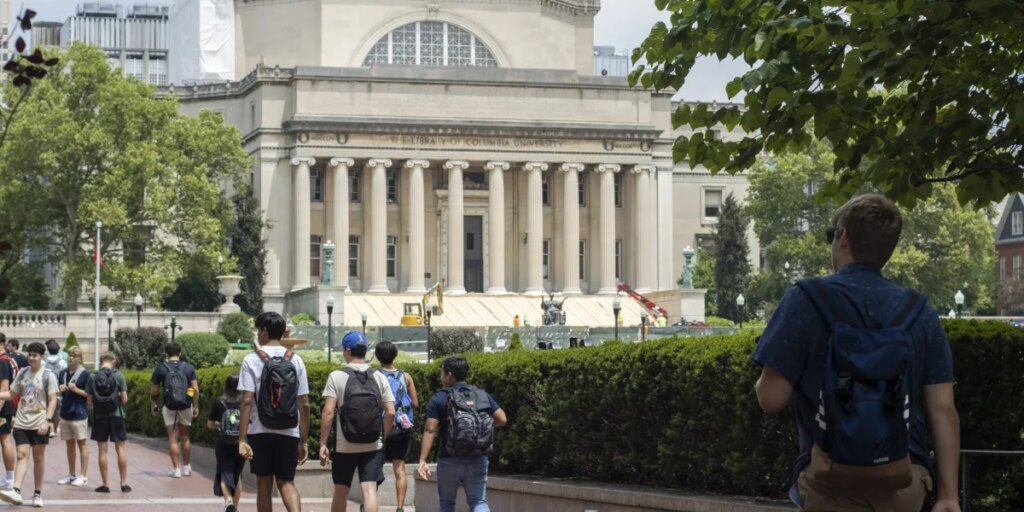
And here’s the funny part: after all that, it still behooves the student to take the regular campus tour. After all, visiting a college is, among other things, a rite of passage and an opportunity for a student to engage with the campus and demonstrate genuine interest in attending. A private four-day luxury itinerary may offer VIP access, chauffeured cars, and fine dining, but it doesn’t replace actually experiencing campus life or even signing in for the ordinary campus tour that lets colleges register a student’s interest in attending. At some point, the teenager has to get out of the chauffeured SUV and join, heaven forbid, regular college students.
College admissions is already an arms race. Wealthy families will continue spending extraordinary sums in search of an edge. But the most sophisticated families understand the paradox that the more conspicuously you engineer a child’s advantages, the harder it becomes to make that child look self-directed, authentic, and likable.
At Ivy Coach, our task is to make admissions officers want to root for our students and, frankly, to want to hug them too.
They say you get perspective from 40,000 feet. We say the smartest admissions strategy is knowing when to stay grounded.
The opinions expressed in Fortune.com commentary pieces are solely the views of their authors and do not necessarily reflect the opinions and beliefs of Fortune.
The post The rich are learning how to look less rich on their children’s college applications appeared first on Fortune.