Wim Dijkman was in Munich the first time I talked to him, in possibly illicit possession of three possibly ancient bones.
The remains — two teeth, one humerus — may or may not belong to what is left of D’Artagnan, the French historical figure upon whom Alexandre Dumas based the main character in “The Three Musketeers.”
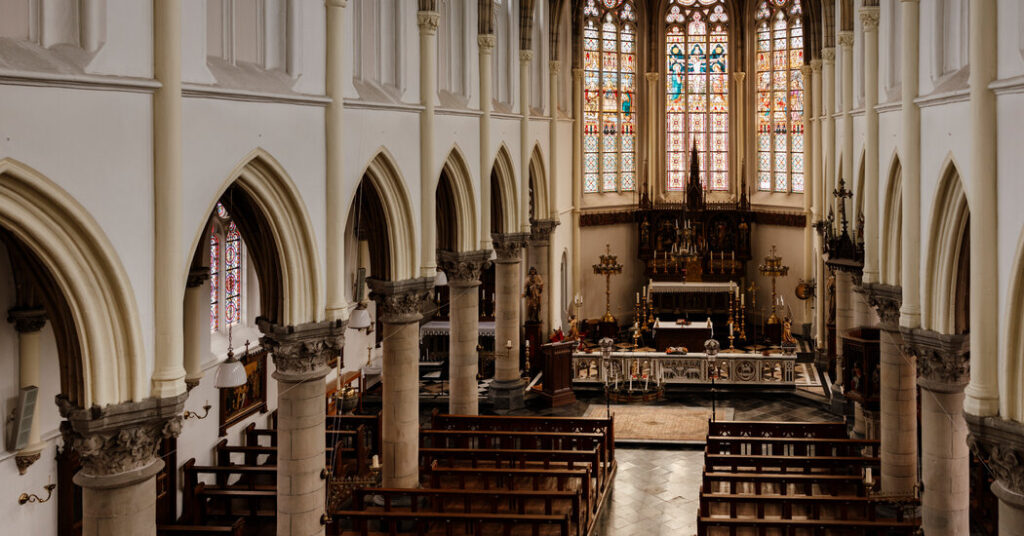
They are part of a skeleton Mr. Dijkman and his friends unearthed in an old church near Maastricht, in the Netherlands, earlier this year. To the city’s dismay, they did so without permits, and largely in secret: Even church parishioners weren’t fully informed about the giant dig happening directly in front of their altar.
By the time I reached Mr. Dijkman, in May, local officials had become aware of the excavation and had taken over. They had also, and with evident alarm, insisted upon the return of the bones that Mr. Dijkman had sent to Munich for carbon dating and DNA testing.
“The local authority was not amused that we were digging in the church,” Mr. Dijkman, sitting in a German hotel room, admitted to me over the phone.
If he felt any remorse, it was not obvious. Mr. Dijkman, a retired municipal archaeologist and museum curator, went on to tell me that his former colleagues are “bureaucratic civil servants” who had themselves “never discovered anything of any importance” and who now felt a “need to intervene.”
They were after his glory, if you asked Mr. Dijkman.
“Success has many owners, as they say in Dutch,” he said.
Yet the investigation into whether the bones belong to Charles de Batz de Castelmore d’Artagnan, who died during the Siege of Maastricht in 1673, was about to take twists and turns that might have impressed Dumas himself.
Within days of our conversation, Mr. Dijkman would find himself in a cell at the local police station. Within weeks, he’d be arguing in the local media that he was being framed for grave mistakes in unearthing and processing the skeleton.
Within months, it would become clear that Mr. Dijkman and his band of mostly amateur archaeologists might well have uncovered D’Artagnan’s remains — but the town of Maastricht would allege that they may also have impaired the chances that the world will ever know whether the bones truly belong to the musketeer.
The quest for D’Artagnan’s skeleton would prove to be a story full of power struggles, hubris and hot heads. It continues to consume the little corner of the Netherlands, nestled between Belgium and Germany, where it has unfurled.
D’Artagnan, a mentor and confidant to Louis XIV and the captain-lieutenant of his Musketeers of the Guard, was most famously fictionalized in “The Three Musketeers” in 1844. Dumas painted him as an impulsive but daring young man who befriends Athos, Porthos and Aramis — the titular three musketeers — before rising in rank and prominence. His central role in Dumas’s popular story cemented him as a French national legend.
In this part of the Netherlands, where the real D’Artagnan died, his lore is omnipresent — statues and monuments honor him, a local beer is named for him, locals still point out the spot where he is said to have expired. A pop-up cocktail joint is called b’Artagnan.
In Maastricht, finding D’Artagnan would surely make someone a hero.
Mr. Dijkman, 70, told me — many times — that he is a scientist and not, unlike many of his local associates, a D’Artagnan obsessive. He spent most of his career working as a museum curator and archaeologist for the town of Maastricht, a place with sufficient history to employ its own team. Though he said he had been involved in excavations for human remains, they were not the primary focus of his work.
Still, he has spent the past three decades at least a little bit obsessed with the idea of finding D’Artagnan’s.
The notion first came to him around 2000, when he met Odile Bordaz, a French scholar who is one of the world’s foremost experts on the historical figure. She pointed out that the most enduring mystery about the French hero — one that she, his most detailed biographer, had never been able to solve — was where he was buried. Her own research pointed to a Catholic church in the village of Wolder, just outside of Maastricht’s city center.
“‘You have to find him,’” Mr. Dijkman says Ms. Bordaz told him.
Ms. Bordaz recalled the conversation. “He said to me, ‘I’m an archaeologist, after all — perhaps one day I’ll conduct excavations to discover where D’Artagnan is buried,’” she said.
Mr. Dijkman was busy with other projects: carbon-dating horses buried in a mass grave, exhibiting pieces of local pottery in a Japanese museum. But D’Artagnan remained on his mind. After he retired in 2022, he attended a D’Artagnan conference and got the feeling that the attendees almost expected him to find the bones, given that he was an archaeologist living in Maastricht. He felt pressure to deliver.
“To me, it was important as a fin de carrier, as they say in French,” Mr. Dijkman told me while we stood in a history museum in Maastricht, where he has lived since he was 6 years old. “An end of career.”
Retiring also gave him room to maneuver. As part of the town, he had to have extensive approvals for projects. Now, he was a free agent with a shovel and a mission.
Mr. Dijkman approached leaders of the church in Wolder, who were intrigued enough that they set up a foundation in late 2024 to fund the enterprise.
Jos Valke, a deacon, was particularly excited.
“I thought, when we have a treasure in the ground — if God gave us a treasure — then we should use it,” Mr. Valke said.
If they found D’Artagnan, he thought, they could set up a museum in the church. Years of declining attendance and pricey upkeep bills had been straining the 12 Catholic parishes of Maastricht. Capitalizing on the legend of D’Artagnan might offer the financial wherewithal to help fund the whole network.
At first, the quest was both above ground and aboveboard. Mr. Dijkman and Mr. Valke began by using metal detectors to search the church, which had been reconstructed in the late 1800s over the foundations of the medieval structure.
The men were delighted when they detected something near the front of the sanctuary, close to what they believed must have been the altar of the old church. Who but the most revered of figures would have been buried at the altar?
The church exploration fund had only about 4,000 euros in it, though. Hiring a team of qualified archaeologists and anthropologists to dig in the hot spot would have cost about 11,400 euros, Mr. Dijkman estimated. They simply could not afford it. Nor had they consulted local authorities on whether they could dig in the structure.
That might have been a good moment to stop.
But “I said, Yeah, I’m on the threshold of finding him,” Mr. Dijkman said.
The decision was made to press ahead, but quietly. In interviews, Mr. Dijkman alternated between insisting that they thought that going forward was legal because the site was on church property and done with the approval of the church board — and acknowledging that the team knew that it was tap-dancing on the edge of the official rulebook.
“Jos Valke was aware that it was not completely legal, of course,” he told me, of the deacon. During our interviews, Mr. Valke said he thought it was legal.
Mr. Dijkman had other friends along to help with the dig, including Thomas Samek, a physician whose medical expertise seemed potentially beneficial. Mr. Samek was a good fit for another reason: He is a D’Artagnan impersonator, for which he dresses in full regalia and rides a shining steed.
Mr. Valke said that while the church board approved the search, they kept it covert because they “didn’t want a fuss.” Mr. Dijkman didn’t want to publicize the dig before they knew if they had succeeded.
Stories vary regarding how Mr. Dijkman’s crew kept the excavation a secret from church parishioners, but it clearly involved covering up the chasm so that churchgoers could traverse the site to take Holy Communion. And eventually, Mr. Valke built a wooden platform to cover the hole, pulling a faded faux-oriental rug over it before Mass on Sundays.
The dig started slowly. The first set of stones yielded little, Mr. Valke said. But after they had pulled 75 heavy tiles out of the floor — working on Saturdays, per Mr. Dijkman; at night, per Mr. Valke — they finally found what they had been looking for.
There were bones in the earth.
The diggers cleared the dirt from the pit, placing it in white bags and storing it in an ornate church closet. (Mr. Valke is hoping to one day bottle it, and to sell the earth that once held D’Artagnan as a way to raise proceeds for the church.)
Before long, they had uncovered a full skeleton. They shot videos of Mr. Dijkman crouching in the crevasse, pulling sandy dirt away from aged vertebrae as someone else pointed an air compressor at the remains.
Mr. Dijkman started to box up the bones in plastic packaging and transport them to his home, at times placing their plastic containers in the blue Albert Heijn plastic grocery bags that are ubiquitous in this part of Europe.
Why not just leave he bones in situ, one might wonder? The diggers were nervous that if they left the bones in the church, the artifacts might be thrown away by cleaning staff. One wouldn’t want the janitor to toss out the mandible of one of France’s greatest war heroes.
Everything was going well until mid-February — Mr. Dijkman can pinpoint the date, because it was Carnival.
By Mr. Valke’s account, it was around that time that the church started to hear from universities. He alleges that Mr. Dijkman had told them about the dig.
“We thought: We want to be in charge,” Mr. Valke said, explaining that the church decided to go to the town with the find.
Mr. Dijkman emphatically denies this. His contention? Mr. Valke saw a town archaeologist at a local watering hole, Au Mouton Blanc.
“Jos Valke told him, ‘We have found him!’” Mr. Dijkman said.
This still burns for two reasons: It blew their cover and, in Mr. Dijkman’s view, it misplaced the credit for the discovery. “When you say, ‘We have found him,’ you don’t say, ‘Wim has found him,’” Mr. Dijkman explained.
Mr. Valke acknowledged that he “casually” mentioned the discovery to the archaeologist at the bar. But he said that the archaeologist didn’t really react and that “it was just drunken rambling rather than a serious conversation.”
Regardless, after hearing from the church board, the local authorities swooped in to take over. On March 13, they completed the dig.
Officials were alarmed by the state of the grave. Bone fragments in the soil were no longer in their original place — they were mixed together. Part of the skeleton was already unearthed. Pieces were missing.
When local media interviewed Mr. Valke, he implied that stones in the church floor had been loose and that repair work had triggered the find.
Mr. Samek, the D’Artagnan impersonator who had been present for the dig, was alarmed by this: “Jos Valke invented the story,” he said in an email. “That shocked me, because the truth is sacred to me.” (Mr. Valke and Mr. Dijkman both said that it was originally one of the town archaeologists who came up with the construction story.)
It did not take long for finger pointing to begin. The municipality swiftly reported the team of initial diggers, and their lack of appropriate permits, to official cultural heritage authorities.
The church board and Mr. Valke began to suggest in media interviews that Mr. Dijkman had led them to believe that their actions were legal.
By early summer, the town had announced that the initial dig “was not documented according to standard archaeological procedures.”
“As a result, a significant amount of archaeological information has been irreversibly lost,” a town F.A.Q. on the situation read.
Even after they came under scrutiny, Mr. Valke and Mr. Dijkman remained hopeful that they might soon have answers about whether the skeleton was D’Artagnan’s. Mr. Samek had taken several bones to a university in Munich for tests and DNA analysis.
The results, they hoped, could be compared with DNA from the living relatives of the D’Artagnan family.
But then Maastricht announced that it would view those results as null and void: “Because the origin, sampling and documentation of that material were not carried out or verified as part of the current research, it cannot serve as a reliable basis for answering the research question,” the town said in a question-and-answer sheet.
The indignant municipal authorities asked that the original diggers and the university doing the analysis swiftly return the bones. Mr. Dijkman became concerned that the town was going to have what might be D’Artagnan’s bones mailed back from Munich. To protect the precious artifacts from the post, he decided to pick them up himself.
When he arrived back in Maastricht, he refused to turn over the bones — in part, he said, because the town wouldn’t reimburse his travel costs. He entrusted the fragments to a “friend,” hoping that the town would pay him back.
Plus, he wanted to retain a foothold on his project. “I thought: If you give them everything, they can keep you out of everything,” Mr. Dijkman said.
Instead of a reimbursement check, Mr. Dijkman received a visit from several police officers, which came as a shock because he had never had trouble with the law.
He was taken to the station and placed in a cell, he estimates for about four hours. Only after he agreed to cough up the bones — police officers took him in their car to the house of his “friend” to retrieve them — was he released. He has not been formally charged.
Mr. Valke, too, was called into a police station for two and a half hours of questioning. Until he got the summons, he said, it had never occurred to him that he might be under scrutiny for wrongdoing.
By early summer, the town of Maastricht was emphasizing that the bones might not belong to D’Artagnan. While the skeleton is a male of roughly the right age (D’Artagnan is thought to have been about 62 when he died), carbon dating suggests the person was buried sometime between 1500 and 1900. A lot of 62-year-olds died during that span.
An analysis by Saxion University of Applied Sciences in Deventer suggested that the skeleton belonged to a man who ate a diet heavy in fish earlier in life. The town says that appears inconsistent with D’Artagnan’s upbringing, given that he was born far from a coast.
The DNA analysis in Munich was never made public, and a new DNA analysis is being conducted on the skeleton. It is expected to be completed by the end of 2026 or early 2027.
The town has also blasted the initial dig for making identification harder. Several of the bones jumbled together from the earlier excavation have been determined to belong to other people, according to the municipality.
“This is a former colleague who was the first to carry out excavations,” Gilbert Soeters, one of the town archaeologists, told reporters at a news conference in July, according to Agence France-Presse. “Well, the term excavations is not quite appropriate. These were not archaeological excavations.”
Mr. Dijkman says that the town is suggesting he messed up the dig so that it can take credit if the remains turn out to be D’Artagnan’s. Mr. Valke, meanwhile, is stressed about possible legal repercussions. Mr. Samek called the entire messy situation a “pity.”
“It’s a shame, because Pierre-Alexandre Dumas’s motto was the Musketeer one: ‘All for one, and one for all,’” agreed Ms. Bordaz, the French scholar. “So, you know, we would have liked things to be in that spirit.”
Still, they all share a hope that the man in the grave will indeed prove to be d’Artagnan.
“At that time, there will be a reaction from the French authorities,” Mr. Dijkman tells me. “They will say: How will you continue to frame the man who found our national hero?”
Koba Ryckewaert contributed reporting.
The post How One Man’s Quest for a Musketeer’s Bones Got Him Locked Up appeared first on New York Times.