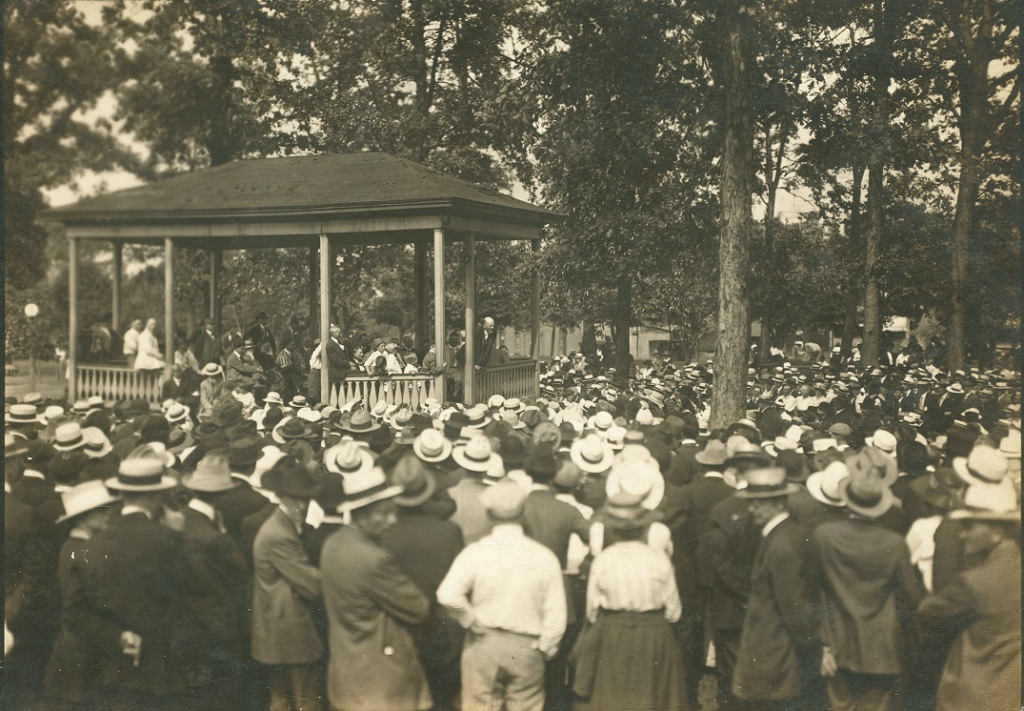
After a pair of June victories in New York City by candidates aligned with the Democratic Socialists of America, a centrist friend told me I was insufficiently alarmed. I shrugged: Socialism attracted a sizable following, especially in cities, in the 1910s — think of the presidential campaigns of Eugene V. Debs on the Socialist Party of America ticket. Now the Democratic Party is the obvious vehicle.
That was before the crimes of the Soviet Union, my friend shot back. The implication: Marxism was an understandable impulse until the actual Marxist regimes of the 20th century revealed the body count in its wake. My friend was appalled that so many Democrats today would lean toward the hard left in light of that history. But it’s happening on a large scale — as Abdul El-Sayed’s victory last week in Michigan’s Senate primary confirmed, and as the Wisconsin gubernatorial primary Tuesday, where DSA member Francesca Hong is the front-runner, might demonstrate again.
The exchange stuck with me because it highlights two ways of looking at the radical political ferment on today’s far left (and far right). From one point of view, it’s an aberration — a startling departure from settled norms and expectations. From another point of view, we’re witnessing the return of normal politics which, for a variety of contingent reasons, was on a hiatus. The latter view seems increasingly right.
In his 1992 book, “The End of History and the Last Man,” Francis Fukuyama famously argued that — at least for the time being — the great ideological struggles over how modern societies should govern themselves were over. Liberal, democratic capitalism had won out with the Soviet Union’s collapse. As he wrote: “All future efforts to push social equality beyond the point of a ‘middle-class society’ must contend with the failure of the Marxist project. For in order to eradicate those seemingly ‘necessary and ineradicable’ differences, it was necessary to create a monstrously powerful state.”
Fukuyama described the post-Cold War world well. But no consensus lasts forever, and the stigma against Marxism in America is clearly weakening as the memory of the Soviet Union fades. The title Democratic Socialists of America tries to dissociate today’s American socialists from the 20th century socialist dictatorships. But, of course, the Soviet Union styled itself as a union of “republics.” Sometimes a label tries too hard.
The political condition Americans have grown accustomed to since World War II — in which both political parties are basically liberal and capitalist — might be the real aberration. The sociologists Seymour Martin Lipset and Gary Marks described the absence of a strong and durable socialist political movement in the United States as a kind of American “exceptionalism.” The relative moderation of the Democratic Party, and its acceptance of market economics, sharply distinguished it from many left-wing parties in Europe and Latin America in the 20th century.
That exceptionalism is in question now. President Donald Trump’s Republican Party, with its illiberal tendencies, is behaving more like right-wing parties in other parts of the world. Why would the Democrats stick with their old ways?
In Trump’s first term, the Democratic “resistance” opposed Trump with hyperpartisan maneuvers and conspiracy theories such as Russiagate. But sometimes this partisan aggression seemed meant to compensate for a lack of genuine political radicalism — it was still the same old blue establishment leading the anti-Trump charge. Today’s DSA, by contrast, is a real-deal Marxist movement trying to commandeer the Democratic Party much as Trump did the GOP.
Fukuyama argued that future Marxists would have to reckon with the project’s spectacular 20th-century failures. But Americans have a short historical memory, those failures are receding, and today’s socialists are responding to new conditions with new terms and slogans. The old taboos are increasingly unenforceable.
That means Marxism and its ambitions of forced equal outcomes need to be challenged on their own terms. As Secretary of State Marco Rubio said in a recent speech: “The world it envisions for all of us is small, flat, gray, leveled of all exception, drained of all that is good and noble in the human soul. The world it envisions is a world without courage, a world without creativity or ambition, a world without heroes or glory or great causes to strive towards.”
Socialism’s rise is a reminder that the end of history is over. The big questions about the purpose of politics are back. The irreconcilable values of equality and freedom may clash in new and more visceral ways. And capitalism and the constitutional order can no longer sustain themselves by inertia and memory alone.
The post The rise of socialism and the return of history appeared first on Washington Post.