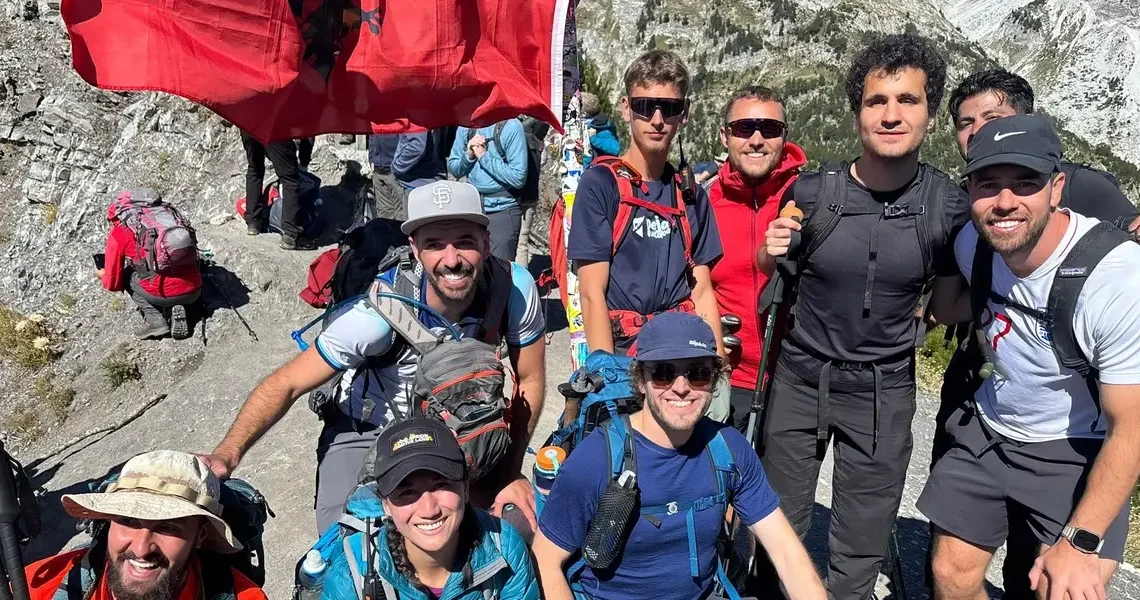
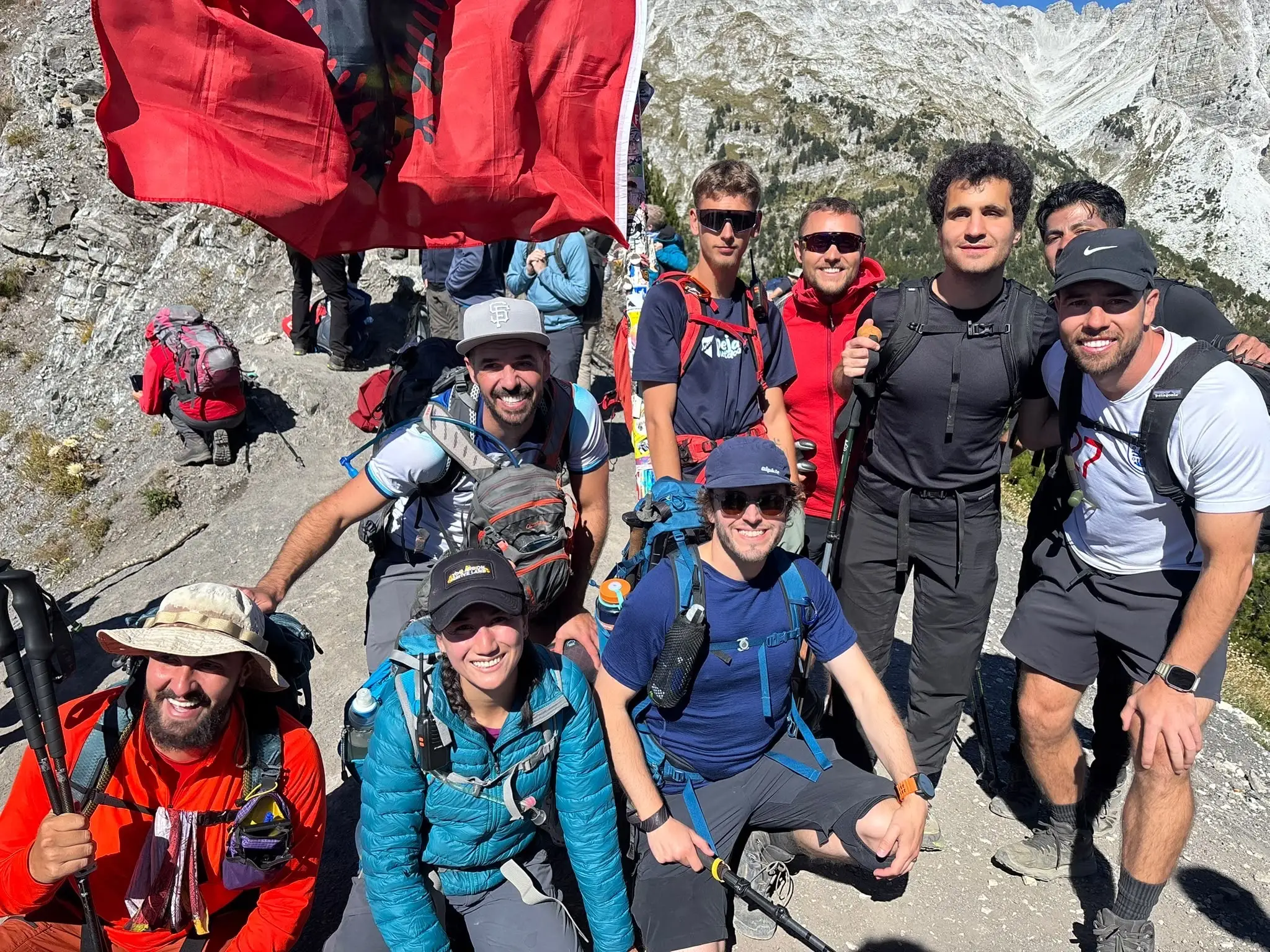
This is an as-told-to essay based on an interview with Batu Demir, an associate at McKinsey who went on an employee-run, weeklong backpacking trip along the Peaks of the Balkans trail with 99 of his colleagues in September. This story has been edited for length and clarity.
When I heard that a group of my McKinsey colleagues was planning a backpacking trip, I thought it was up my alley because I like to challenge myself. I also like to challenge other people’s worldviews.
I was also scared. One thing that is different about me is that I was born blind.
I was nervous about signing up for the hike because it wasn’t something I could do on my own, and I like to be independent. I would have to give that up to a group of essentially strangers, even though they were colleagues.
Often when I have conversations like this, people focus on asking, “How do you do X? How do you do Y?” But when I reached out to a colleague who was organizing the trip, his mindset was “How can we make this happen?” So that made me excited.
About 10 people on the trip volunteered to walk with me for part of the day. I wrote a guide on how to guide the blind and shared it with my colleagues so they could get some understanding of what it could look like. I knew they might be nervous too because they were also doing something for the first time.
A couple of things scared me going into it: I didn’t want to be a burden, and I didn’t want to feel like I was a burden. That was extremely important to me, but I never felt for one second like I was being a burden.
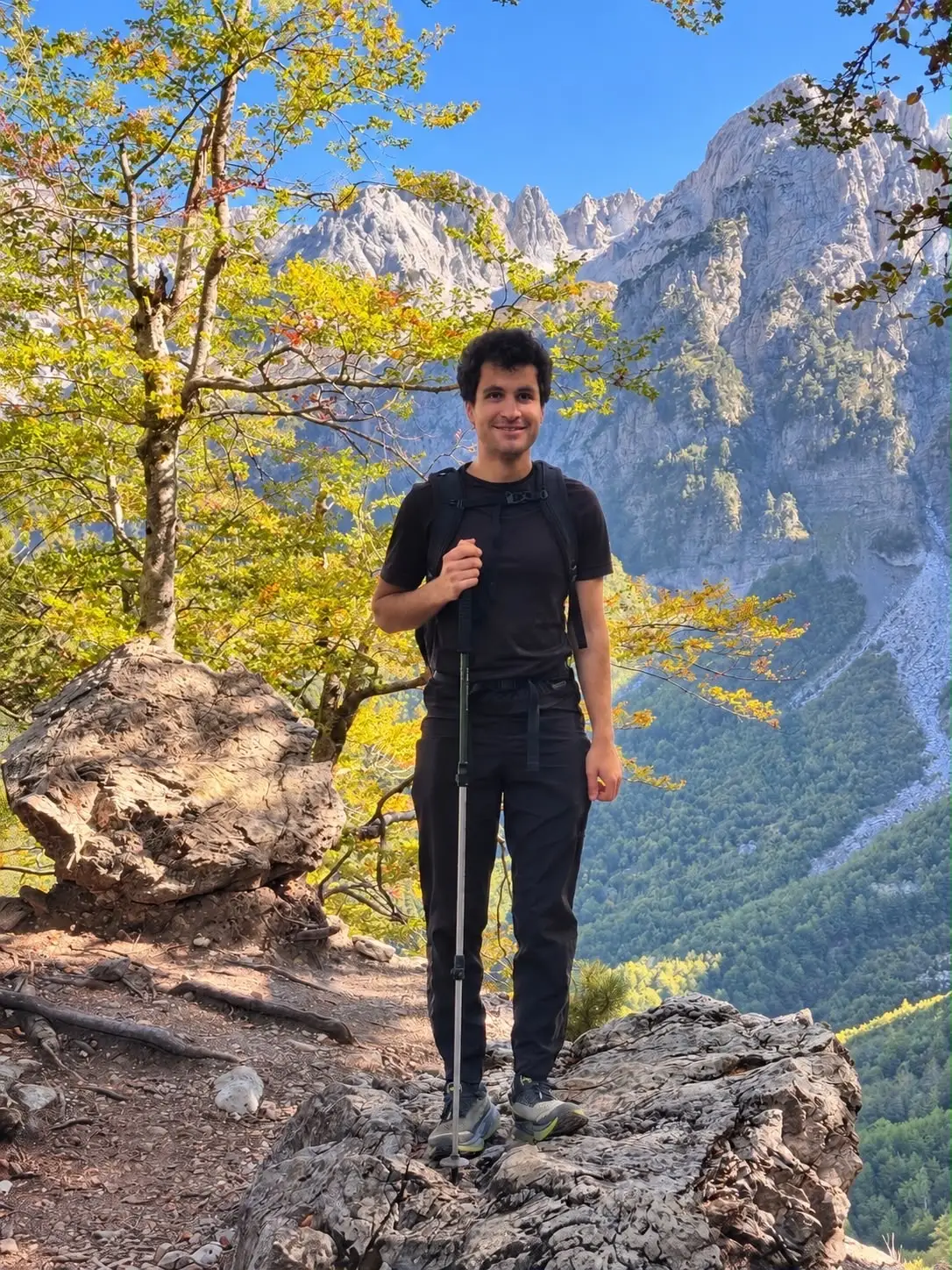
On the trail
Each day we would wake up early for breakfast at around 7 a.m. Then we would make our lunches, pack our bags, and fill our water. We were staying in mountain huts with five or six people in a room.
Throughout all this, someone in the group would help me. In a setting where I know what’s where, I can be independent and walk from one place to another. But we were visiting these places for one night, so I would just walk with whichever colleague was going to breakfast at the same time.
On the trail, I would typically walk with one of the volunteers for two hours at a time and then switch. As we walked, I would hold onto their elbow, and they would be one step ahead of me. By feeling their elbow, I could kind of feel their steps. They would also call them out and say things like, “Step up. Step down. Rocks. Trees. Step over something. Stay to your right.”
Everybody was such a great communicator, but we had funny moments too. One colleague would say, “There is something weird ahead.” I’d say, “That doesn’t help me.” And we’d laugh.
We also had a lot of fun conversations while walking, and we didn’t talk much about work. They would tell me stories about who they were and where they came from, and travel stories. Food was, of course, a huge part of the conversation because we were hungry.
Trusting my colleagues
Walking with guides was a huge matter of trust. If an instruction came one second too early, I could try to take a step that doesn’t exist. One second too late, I could fall off the rock we were stepping down. I also had to trust my own body. Of course I had missteps. I stepped on a rock that I wasn’t supposed to, and the rock started rolling, but I trusted my body to be alert and correct those steps instead of falling.
Often we see our colleagues at work in moments of building a document together, or a presentation, or a stressful delivery for a client. This helped me see a completely different side of the firm and helped me appreciate my colleagues and the company that we work for a lot more.
I’ll always remember those colleagues who walked with me and who were kind to me. They didn’t make me feel like they were doing something for me, but that it was something we were doing as a team and they were doing it with me.
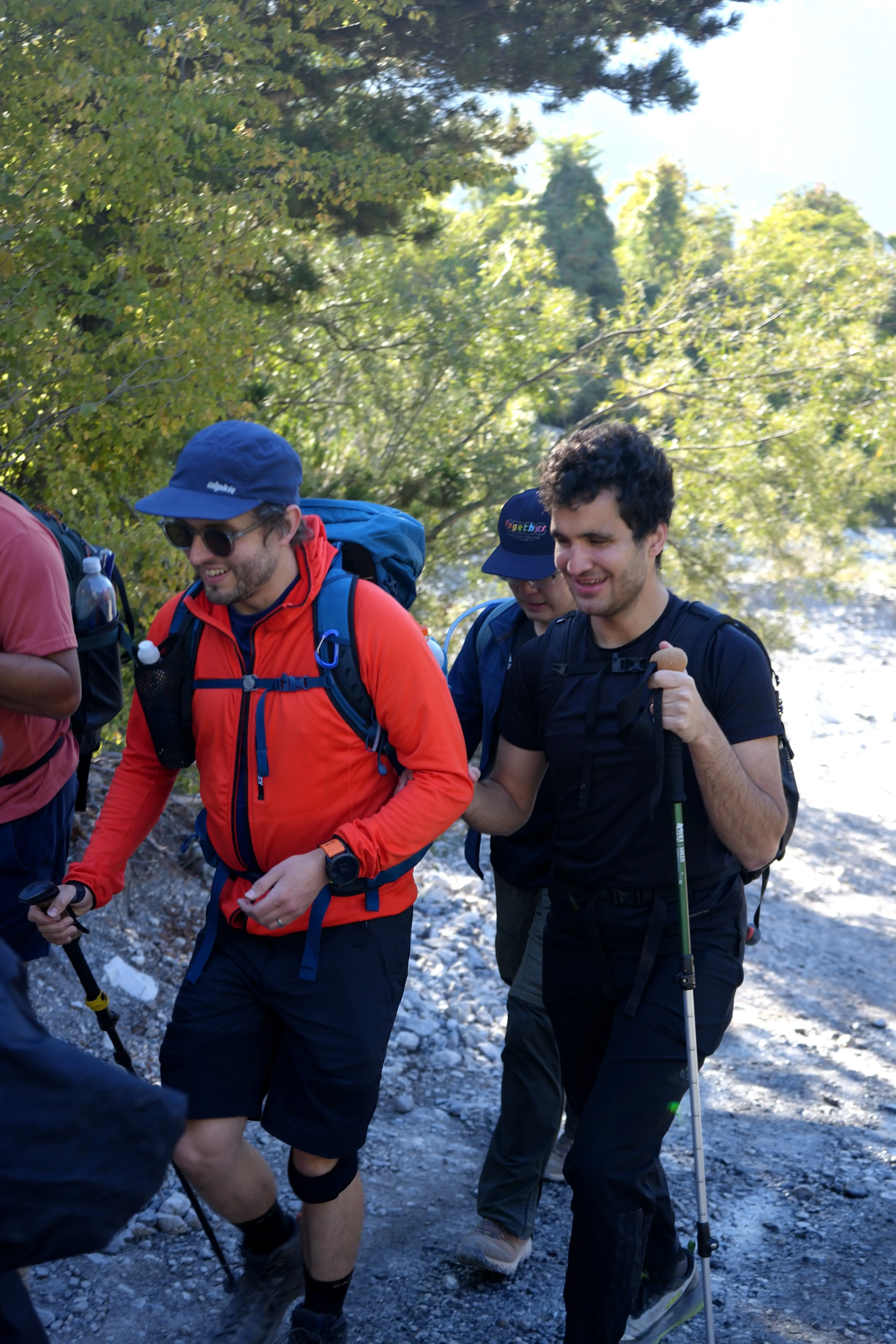
I couldn’t see the scenery, but I could use my other senses
The trip was also a great way to disconnect from the world. Some people ask me, “Why do you go on a hut hike, because you can’t even see the scenery?” Yes, I can’t see the scenery, but I can use my other senses.
We did 1,000 meters of ascent almost every day, and the end of those climbs always felt special. We would be in the open mountains. I could feel the wind on my face blowing sharply. My guide would give me such great descriptions of my surroundings. Those were my favorite moments on the trip.
There’s a faint smell of the pine trees at times when you’re around trees. I could hear basically nothing. That’s the mountains. You don’t hear anything if you’re not talking. Sometimes when we weren’t in conversation, we were just listening to the crunch of our boots.
Those moments are special because I remember them vividly. It gives you a chance to reflect on who you are and what you want to do in this world.
We all tell ourselves sometimes that, “Oh, this would be difficult because I have X. This would be difficult because I have Y.” In this case, “Oh, this trip would be extremely difficult because I’m blind.” I saw that when you actually reach out, people are willing to help.
It’s great for us and for me to question my limits and ask myself every day: “What are some limits that I’m accepting without questioning, and what would be possible if I refuse to accept them?”
Read the original article on Business Insider
The post I’m blind and went on a backpacking trip with my McKinsey colleagues. I had to trust my coworkers in a totally new way. appeared first on Business Insider.