Artworks sold for eye-watering prices, but at this week’s marquee auctions, drama over a $190 million painting by Vincent van Gogh stole the show.
“This is it,” the auctioneer Oliver Barker said to a packed salesroom at Sotheby’s on Wednesday evening — just over halfway through a week that would bring $2.4 billion in art sales. “The moment of no return.”
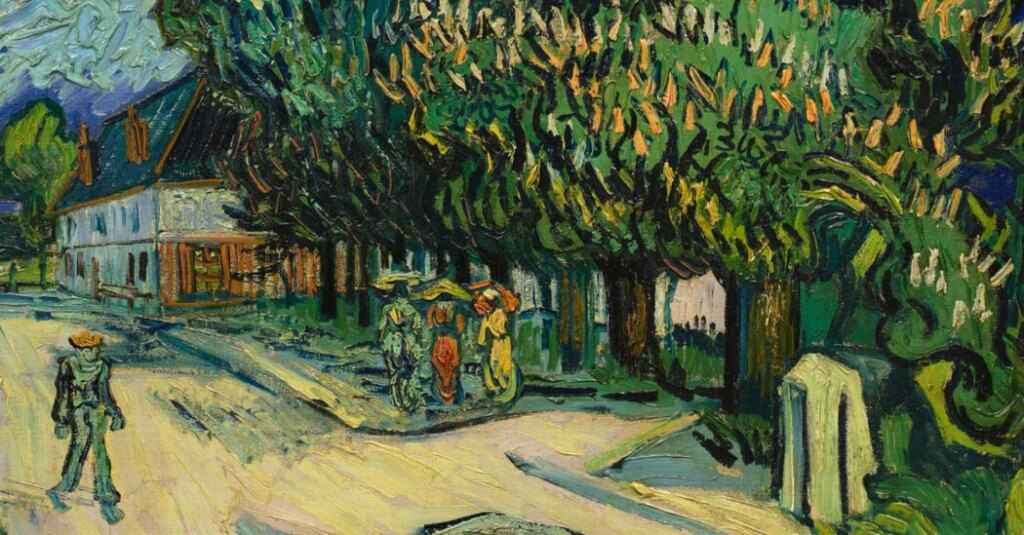
A lot was riding on that moment, and on that 1890 painting. Heirs of a Jewish family had staked a claim to the artwork just a few days prior, inviting questions about how much research auction houses do to disclose an artwork’s complicated history to ultrawealthy bidders.
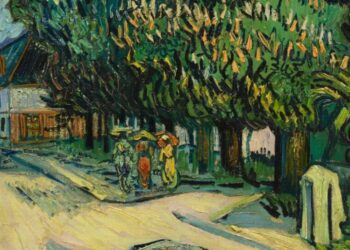
The concerns were about more than morality. They were also about cold, hard economics. In the end, the painting — a lush village scene titled “Châtaigniers en Fleurs (Blossoming Chestnut Trees)” — became a symbol of the risk and gamesmanship that define the art market’s peak. After the Jewish family and the current consignors of the van Gogh reached a last-minute settlement, the work sold for a record price, with little competition, to the gallerist William Acquavella. (The Acquavella family did not reply to questions about the sale or whether the purchase was on behalf of a client.)
The stakes are high for auction houses selling valuable estates like that of the Blaquier-Arrieta Collection, whose Impressionist and post-Impressionist trove included the van Gogh. Sotheby’s and Christie’s often promise sellers tens of millions of dollars up front to secure the best works — and, sometimes, even a portion of their own commission. The three major auction houses ensured that well above $1 billion of the evening sales’ estimated value was as good as sold before the salesroom doors opened this week.
Such backstage machinations have been employed by auction houses for at least two decades. But experts say it is becoming increasingly difficult to discern exactly how much money the firms are making on these highly choreographed sales. Around half the winning bids for this week’s eight-figure trophies fell below auction houses’ high estimates. (Even the star van Gogh came in $15 million below expectations, before the addition of auction-house fees that brought the total to $190.4 million.)
“The prices all made sense, and in many cases, they are successes,” said the art adviser David Norman. “The financial machinations puzzle me.”
Regardless, collectors shelled out enormous sums of money in just five days. The total at Sotheby’s, Christie’s and Phillips was up about 8 percent from the equivalent sales last fall. Bidders chased treasures as wide-ranging as a sheepdog sculpture by Jeff Koons ($9.7 million), a Harlem Renaissance-era painting of Harriet Tubman by Aaron Douglas ($14.5 million) and a Monet sailboat painting the size of a playing card ($7 million, about 14 times expectations).
The market’s ongoing recovery from a yearslong recession is fueled, experts say, by two factors: estates’ surfacing of treasures that have long been hidden from view, and a cadre of increasingly wealthy people willing to pay top dollar for rare and blue-chip art. Even though some works fell below expectations, Sotheby’s chief executive, Charles Stewart, noted that the auction house had its biggest week of art sales ever. “You have to separate the auction dynamic from the result,” he said.
Here are five takeaways from the auction marathon.
Provenance Under the Microscope
Some experts said Sotheby’s should have alerted the heirs of the Jewish publisher Samuel Fischer ahead of the van Gogh sale. He had deposited the painting in the early 1930s with an Amsterdam gallery, where it sold for a reported $22,000 (or $538,061 in today’s dollars); the heirs’ lawyer said the sale had taken place under duress amid Nazi-era persecution. “We have a fast-evolving legal landscape, so I expect we’ll see more claims like this testing the limits, even where the facts fall outside the traditional circumstances of a sale under duress,” said the art lawyer Channah Norman.
The van Gogh wasn’t the only artwork to draw scrutiny. Christie’s withdrew a 1952 painting by Frida Kahlo “for further research” hours before it was to be sold on Tuesday. The surreal orange painting had been reported missing last year from Casa Azul, the artist’s museum in Mexico City, by a former employee.
The situations were different, but they highlight the variety of provenance issues art collectors must assess before making a purchase. “Auction houses offer hundreds of thousands of lots annually, and by and large they do a fantastic job with provenance research,” said the lawyer Thomas C. Danziger. “But provenance research is like air traffic control. You only hear about it when things go really wrong.”
Art That Doesn’t Rock the Boat
In recent seasons, auction houses have generated buzz by selling an 18-karat gold toilet, a banana and a juvenile Triceratops skeleton nicknamed Cera. This time, it was back to basics: landscapes, flowers and boats were all the rage. “It’s very conservative taste,” said Bernard Lagrange, a senior adviser at Gagosian Art Advisory.
A blue square flower painting the size of a newspaper by Andy Warhol sold at Sotheby’s on Monday for $6.1 million, well over its $3.5 million high estimate. The next evening, a larger painting from the artist’s “Fright Wig” series, in which Warhol stares unsettlingly at the viewer, was withdrawn from Christie’s, presumably for lack of interest.
“One could argue that the ‘Fright Wig’ is more important, but people are less interested in importance,” Lagrange said, than in images “that are easier to digest, that photograph well, that are uplifting.”
Single-Owner Sales Face Reality
The estate sale of the tech billionaire Paul G. Allen set a benchmark for the single-owner sales that have come to dominate auction seasons in New York. Despite great expectations, their results sometimes topped out at … just good enough. Take the holdings of the star artist Jeff Koons.
Christie’s hoped that the seven works, ranging from old masters to Picassos, could make up to $153.5 million. Instead, they generated about $104.8 million — less than $1 million above their low estimate.
While demand for the lots was healthy enough, a number of experts said the estimates were too high.
“They were pitched at a level that was a bit too strong,” Stephanie Armstrong, the managing director of the advisory firm Beaumont Nathan, said of the Koons offerings. “We’re clearly in a market where taste is changing and estimates are recalibrating accordingly.”
A Wager on Taste
When paintings have an illustrious history and also happen to be the flavor of the moment, they can look like profitable investments. Below are three examples, adjusted for inflation.
-
A jazzy Wassily Kandinsky abstraction that last sold in 1986 for about $1 million ($3.1 million in today’s dollars) resold for a record price for the artist about 28 times higher: $85.8 million.
-
A Gustav Klimt lake scene that previously sold for $14.7 million ($30.9 million in today’s dollars) in 1997 appreciated more than 2.5 times, making $82.3 million last Tuesday.
-
Mary Cassatt’s “Summertime” fetched $150,000 (about $1.3 million today) in 1971; its resale price increased by about 10 times, to $13.3 million.
By contrast, the same strategy sputtered for multiple major artists from the postwar and contemporary era:
-
A 2003 Richard Prince painting from his “Nurse” series sold for $3.4 million in 2008 ($5.3 million after inflation). It declined in value by about 26 percent, making only $3.9 million this week.
-
A 1993 Ed Ruscha painting that sold at Sotheby’s in 2017 for about $4 million ($5.5 million after inflation) decreased in value by about 9 percent, selling for $5 million.
-
A Paul Cézanne still life that sold for $11.6 million ($31.6 million after inflation) in 1989 plunged in value by about 47 percent, making $16.7 million.
A Star Faces a Test
There is a prevailing belief that prices for an artist’s work jump after the artist’s death. That theory was put to the test when 13 works by the market juggernaut Yayoi Kusama were offered across the three major houses. The results were decidedly mixed.
Kusama, who died in August, was one of a few artists — and the only woman — to have crossed $1 billion in total auction sales during her lifetime, according to the market database ARTDAI. This week, seven paintings exceeded expectations. Bidders chased her volcanic red early-career canvas, “No. 3P.B.” (1960), to an auction record for the artist of $15.1 million.
But two sculptures failed to sell, including her massive “Starry Pumpkin” from 2021 — perhaps indicating doubts about her full involvement in late-career works.
The uneven Kusama results reflect the larger state of the auction sector at the close of 2026: far less frothy than at its post-pandemic peak in 2022 — but steadier than it has been in the three years since.
“It’s still not a market where you’re going to sell every painting on the wall just because it’s ‘art,’” said Matthew Newton, the head of UBS’s art advisory in the Americas. “There is still a lot of consideration.”
The post The $2.4 Billion Auction Week: Big Sales, Big Questions appeared first on New York Times.