They carry satchels filled with nuts. They appear in Chicago’s Lincoln Park at all hours. And, according to some who have confronted them, they do not respond kindly to criticism.
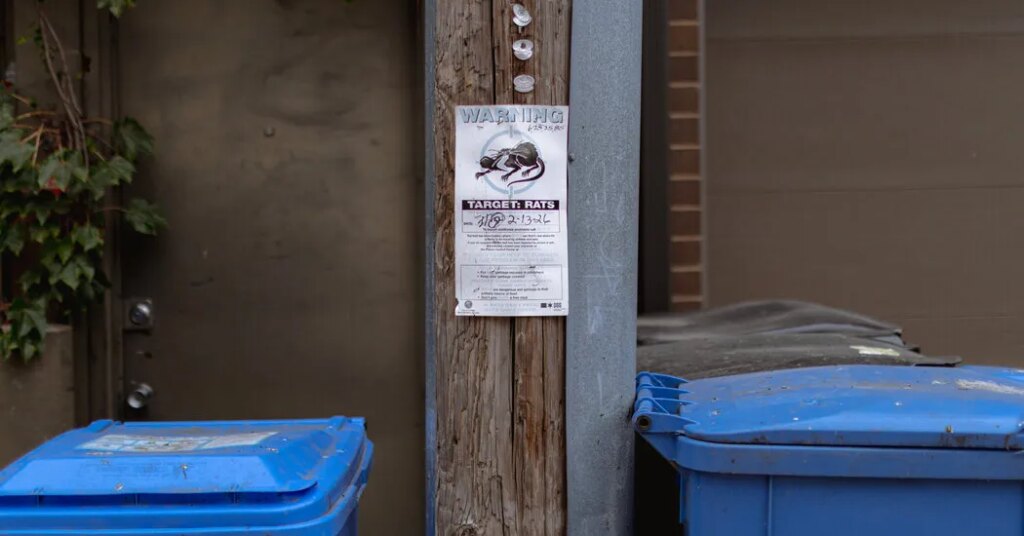
For months, one of Chicago’s fanciest neighborhoods and one of its most beloved parks have been overcome by dual incursions of rats and nut-spreading strangers. Holes leading to subterranean rodent dens have sullied once-pristine parkland. Residents have cut back on picnics and stopped allowing their children to go barefoot.
Many believe they know who to blame: the wealthy household down the street.
Long before nut distribution became a regular occurrence in Lincoln Park, neighbors of Barre Seid, who in 2021 donated more $1.6 billion to a political nonprofit that backs conservative causes and candidates, had complained to city officials about animal-feeding outside the couple’s sleek but unassuming nearby house.
They claimed that his wife, Barbara Seid, would leave nuts on a terrace separating their property from a small public plaza. Squirrels and pigeons came to feast, they told the authorities — and rats followed.
Timmy Knudsen, who represents the area on the City Council, said his ward had long struggled with rats. When neighbors complained about the wildlife feeding at the Seids’ house, he said, officials repeatedly tried to address the problem, first with friendly letters, then with citations. Inspectors were dispatched to the property dozens of times, he said. Twice, city records show, Mr. Seid was issued tickets with penalties of $300 to $600.
Nothing worked.
“This letter is a FINAL WARNING,” Mr. Knudsen wrote on official letterhead to Mr. Seid over the summer. He accused him of creating a “public health hazard” and threatened police involvement. He got no response.
To this day, the Seids’ side of the story remains unclear. Their property, situated in a walkable area abounding in Pilates studios and French eateries, is adorned with a colorful assortment of No Trespassing signs.
Several attempts to reach the couple for comment failed. Emails sent to a civic organization associated with Ms. Seid went unanswered, as did messages left on phone numbers linked to the couple. When a reporter standing in the adjacent public plaza told a woman in the home’s entryway that he was from The New York Times, she slammed the front door before a question could be asked.
Mr. Seid, who made his fortune in electronics manufacturing, is perhaps best known for the 2021 donation, which was believed to have been one of the largest gifts ever made to a politically-focused nonprofit organization.
Chicago is heavily Democratic, but Mr. Knudsen and the neighbors insisted that the complaints had nothing to do with the Mr. Seid’s conservative politics, nor did they suspect political motives for the nut-spreading. The most common hypothesis is that someone in the household just really loves squirrels.
In a brief statement, Chicago’s Department of Streets and Sanitation said it had linked people at the couple’s address to nut-spreading in Lincoln Park but did not believe the household was the main cause of the park’s rat problem. The department did not specify the basis for that claim.
Mr. Knudsen and many in the neighborhood are convinced that the Seids have dispatched people to the park with nut-filled satchels. And as the city’s official admonishments of the Seids mounted this year, residents’ complaints largely shifted to the park, where sightings of nut-spreaders increased.
In neighborhood group chats, Facebook posts and conversations at the farmers’ market, residents swapped sightings of the nut depositors. Some appeared around sunrise, when only the earliest-rising dog walkers were out. Others popped up in broad daylight, as the park teemed with stroller-pushers and joggers.
Witnesses described the spreaders — men and women, young and old — pulling nuts from bags slung over their shoulders, then placing them on and around trees.
Adrienne Eltink, who walks her dog in the park, said she had often seen spreaders. She described piles of nut shells forming at the bases of trees, along with large rat tunnels.
“It makes it so unpleasant if every morning you’re walking and you have to watch your step because you’re either going to step on a dead rat or you’re going to have a rat scurry over your feet,” Ms. Eltink said.
Whatever the source of the squirrels’ bounty, the opportunistic rat population has feasted on it.
“If we’re talking a large nut, that could be sufficient for one rat per day,” said Matt Frye, a rodent management specialist at Cornell University.
“The more you feed rats,” he added, “the more likely you are to breed them.”
Grossed-out park-goers are just one consequence of a booming rat population, Dr. Frye said. Rats can also carry diseases, damage infrastructure and harm the environment.
Caroline Novak said that on one occasion, she saw someone leave the Seids’ home with a satchel, then spread nuts inside the park.
When WGN-TV elevated the story from hyperlocal curiosity to citywide fascination, Ms. Novak became a neighborhood celebrity by describing the outdoor buffet as “a luxury mélange of really nice nuts.”
“I’m talking Brazil nuts and walnuts,” she told the TV station. “These are not acorns.”
Ms. Novak, a physician, told The Times that she started approaching the spreaders to ask what they were up to. Some were brusque but cordial. Others less so.
“I said, ‘Hey, why are you throwing those nuts under these trees?’” Ms. Novak said, recounting a run-in last month with a satchel-carrying man. The response, she said, was an expletive-accented version of “None of your business.”
Ms. Eltink described being given the middle finger and being shouted at by a nut spreader whom she confronted.
Mr. Knudsen said he alerted the Chicago Police Department about the nut-spreading, but he acknowledged in an interview that it did not seem to be a top police priority.
Police Department officials said there were no incident reports this year at the Seids’ address but did not comment further. Streets and Sanitation officials said they had repeatedly baited rats in the park and were testing “fumigation methods” in the area.
On a recent stroll through Lincoln Park — an iconic stretch of North Side green space that is home to a zoo, sports fields and sweeping views of Lake Michigan — Mr. Knudsen pointed out exotic-looking nut shells and rat holes in the ground.
“You can see these nuts — these aren’t natural to this area,” he said. “Even when you step, you just crunch on nuts.”
Within Chicago’s municipal hierarchy of needs, Mr. Knudsen allowed, unauthorized nuts in a well-to-do neighborhood were a relatively minor concern. This is, after all, a city with hundreds of homicides each year and major budget problems.
Still, real damage was being done to a park that has long been a Chicago jewel, he said. And as attempts to stop the feeding faltered, Mr. Knudsen was left pondering a more existential question.
“Who is above the law anymore,” Mr. Knudsen asked, when a person suspected of wrongdoing is “not afraid of any civil punishment? Can they just do whatever they want?”
Sheelagh McNeill contributed research.
The post A Chicago Park Is Infested With Rats. Is a Wealthy Couple to Blame? appeared first on New York Times.