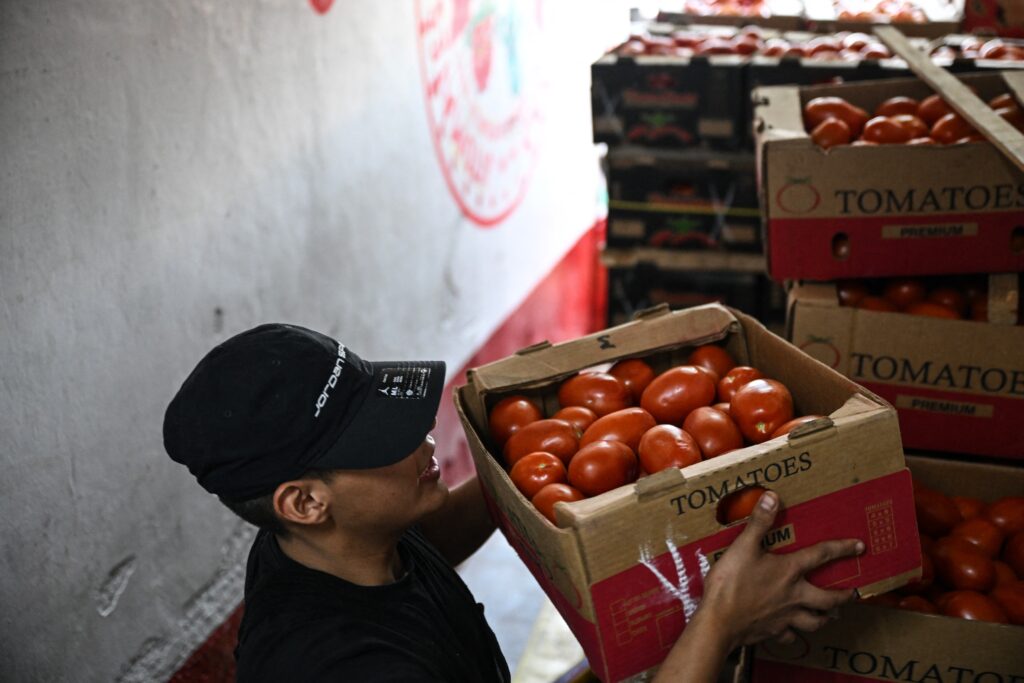
The Food and Drug Administration rarely inspects the foreign facilities exporting the vast majority of fresh produce to the United States, a Washington Post investigation has found, creating a major blind spot when it comes to U.S. food safety.
Americans are eating more imported fruits and vegetables, with Mexico supplying most of this fresh produce, including the iceberg lettuce that U.S. regulators this summer linked to the nation’s largest known cyclosporiasis outbreak. Yet since 2009 the FDA has inspected only about 2 percent of the facilities in Mexico that ship produce to the United States, according to a Post analysis of the agency’s inspections and imports data.
The Post combined FDA fresh-produce imports and inspections data for the first time to analyze all major fresh-produce facilities in other countries that account for 90 percent of the fruit and vegetable shipments to the United States. Overall, only 7.6 percent of the facilities have been inspected by the agency since 2009, the earliest full year such data is available. Other reports have identified the low overall number of foreign food inspections by the FDA but have not focused specifically on produce.
Though food in the United States is generally considered some of the safest in the world, the lack of foreign inspections raises the risk that federal regulators are not catching issues that could cause a foodborne outbreak, according to a dozen former FDA officials, food safety experts, consumer advocates and farming groups.
Because produce is often eaten raw, it is particularly vulnerable to bacterial and parasitic contamination from sources like machinery or the water supply. While inspections are just one part of the government’s oversight system, experts say they are an essential tool to help prevent outbreaks of foodborne illnesses, which the Centers for Disease Control and Prevention has estimated sicken roughly 48 million Americans per year.
Other countries conduct their own investigations, and the FDA and Mexico say they collaborate to prevent and respond to foodborne outbreaks. Major food trade groups say that the industry works hard to prevent contamination and that Americans should have confidence that imported products are held to the same safety expectations as those grown here.
Yet some pathogens are more common in other countries, and boosting FDA inspections would help ensure that producers are adhering to U.S. regulations, food safety experts say.
“We don’t have a robust system in place to go verify that these foreign producers are following the rules,” said Sarah Sorscher, who directs regulatory affairs for the nonprofit Center for Science in the Public Interest, “and that’s a big concern for anybody who eats food in America.”
Donald Prater, the FDA’s acting deputy commissioner for food, said in an interview that the “number of inspections doesn’t exactly tell the whole story.”
“Inspections are not a good proxy for our overall oversight activities,” he said. Prater pointed to other measures such as testing produce at the border, inspecting hundreds of produce importers’ records each year that focus on adherence to U.S. rules, and using artificial intelligence to improve how inspections and investigations are done.
Yet only a sliver of the food flowing into the country gets physically inspected at the border, exposing gaps in the system. Food safety experts have raised questions about other ways companies say they are complying with U.S. regulations, such as third-party audits.
This comes as the share of imported produce in Americans’ diet has skyrocketed amid rising U.S. labor costs and greater demand for year-round produce. About two decades ago, roughly 17 percent of fresh vegetables and 46 percent of fruit came from other countries. In recent years, 34 percent of fresh vegetables and 59 percent of fresh fruit were imported.
Though foreign food inspection numbers were already low, they dipped even further in early 2025. Elon Musk’s Department of Government Efficiency cut FDA coordinators who arranged investigators’ foreign travel, though some were later rehired, according to three people familiar with the matter who spoke on the condition of anonymity to share internal information.
In 2011, President Barack Obama signed legislation aimed at transforming the nation’s food safety system, including requiring importers to verify that foreign suppliers meet U.S. safety standards. The law also sought to dramatically ramp up foreign food inspections over the course of several years to conduct 19,200 annually, but the agency has consistently fallen short.
Last year, the agency completed 1,024 foreign food inspections, according to The Post’s analysis, representing just 5 percent of its target set by Congress.
Long-term issues have hindered the FDA’s ability to boost inspections, according to former officials, food safety experts and consumer advocates, as the agency struggles with a lack of funding, chronic understaffing, and difficulty recruiting and retaining investigators for these highly technical roles. Each foreign inspection costs, on average, $38,700 and can involve traveling to areas the State Department has deemed a security risk, further complicating matters.
“FDA is not funded appropriately to have enough investigators to go out and do their job,” said Eric Pittman, a 23-year veteran of the agency who left in February 2025.
Prater acknowledged the agency’s limited resources, saying it’s “trying to use the tools the most effectively that we can” by targeting the highest-risk areas and foods, such as produce in Mexico.
‘A watershed moment’
This summer, a wave of Americans began falling ill with what headlines and social media accounts described as “explosive diarrhea.”
The culprit? The microscopic parasite cyclospora.
Federal officials linked the largest outbreak to iceberg lettuce from Taylor Farms de Mexico, which sickened 12,883 people in 21 states, hospitalized at least 570 and was associated with two deaths in Michigan.
The FDA had last inspected the company’s Mexico operations seven years ago.
During this year’s outbreak investigation, the FDA found the parasite in a wastewater tank and a drainage ditch, but the agency couldn’t determine how the contamination occurred. The company recently said it would “indefinitely suspend” the harvesting of iceberg lettuce from central Mexico for sale during the cyclospora season, which runs from May 1 through Aug. 31. It also committed to participating in a public-private task force on produce safety, among other measures.
In another outbreak this summer, the FDA did not send a team to the grower that the agency identified as the “likely source” of an outbreak of salmonella bacteria in jalapeño peppers that sickened nearly 500 people. The grower was located in a region of Mexico known for its drug cartel. Food safety experts have said it can be difficult for the agency to travel to areas that are security risks. The FDA said it visited a common Mexican distributor, and no jalapeños were available to test at the time.
Brian Ronholm, the director of food policy at Consumer Reports, a nonprofit organization that promotes product safety, called the outbreaks this summer “a watershed moment.”
“Everyone knows that produce safety is a weak spot, and over the years, there’s been a lot of discussion about how we can get to a better place on it,” he said, “but they typically break down.”
The FDA recently released a new plan aimed at preventing future cyclosporiasis outbreaks, which Ronholm said was a “subtle admission” of the need to overhaul investigation protocols. The effort includes increasing surveillance of products historically associated with cyclospora, enhancing lab capacity in Mexico to process samples, and convening expert panels to improve growing and processing practices.
The International Fresh Produce Association — which represents growers, packers, shippers, distributors, retailers and others in the fresh produce supply chain — said food is held to the same “strong, consistent and science-based standard” regardless of origin.
“Consumers should have an expectation for that standard and to have that confidence knowing that they can go into a supermarket or a retail establishment or a retail food service and know that they’re going to be able to get that same nutritious food 365 days a year,” said Eric Stevens, a vice president at IFPA.
Yet, polling shows Americans’ declining confidence in the safety of food on grocery store shelves.
It’s the industry’s responsibility to produce safe food, Prater said. “We have another responsibility that’s also very important in terms of being able to make sure that they’re following the regulations.”
The United States has agreements with Canada, Australia and New Zealand, in which the countries recognize that they operate comparable food safety programs. (The Post’s analysis of produce inspection rates excluded those three countries.)
Mexico and the United States have a different arrangement: a partnership aimed at ensuring the safety of food traded across the border and improving data-sharing during outbreaks.
Senasica and Cofepris, the agencies in Mexico charged with overseeing food safety, did not directly respond to The Post’s questions related to the processes and timing of routine inspections and more. The agencies pointed to past news releases in which officials touted their collaboration with the FDA to ensure the safety of produce. The Mexican government has said there is no clear evidence that this year’s outbreaks in lettuce and jalapeño peppers originated in Mexico, despite U.S. officials’ linking the products to foodborne pathogens.
Mexico is far and away the top exporter of produce to the United States, followed by Peru, Canada and Chile. In the past two decades, the total value of all fruits and vegetables imported from Mexico has jumped more than fourfold to $16.7 billion last year, according to imports data from the U.S. Department of Agriculture. Some of the most commonly recalled foods have included lettuce and cabbages, berries, peppers, and fresh herbs. Those suppliers are also rarely inspected by the FDA.
Will anything change?
Pittman, the former FDA inspector, who now works for a consulting firm and serves as an adjunct professor at Temple University, said the “huge undertaking” of foreign inspections involves doing careful planning, securing visas and communicating with another country’s government. Investigators spend two to five days on-site, analyzing everything from the growers’ irrigation methods to the sanitation of a processing facility.
“It’s an enormous challenge and undertaking, in all fairness,” said Frank Yiannas, who served as the FDA’s deputy commissioner for food policy and response during President Donald Trump’s first term as well as in the Biden administration. “Can you imagine saying, ‘We want you to screen and provide oversight of all the food in a global supply chain and ensure it’s safe’?”
There isn’t one clear road map for ensuring safer produce as this year’s outbreaks have sparked informal conversations among food safety advocates, FDA officials and major trade groups. Ideas include deploying more staff to test produce at the border, beefing up third-party audits and investing in research on how to best prevent outbreaks.
But there’s generally one area of agreement: The FDA needs more money from Congress if it’s going to make strides in overseeing the produce Americans eat. The agency is seeking $9 million to increase inspections abroad, as well as the ability to collect fees from foreign food facilities that could provide an additional $71 million, Prater said.
Yet, the political environment is tricky. Democrats are pushing back against some Republican efforts to boost military spending while cutting domestic programs.
Lawmakers have passed a stopgap spending bill to fund the government through Dec. 11, and the outcome of the November midterm elections could affect funding negotiations on Capitol Hill.
In a statement, a spokeswoman for Senate Appropriations Committee Chair Susan Collins (R-Maine), who is locked in a tight reelection race, said the recent foodborne outbreaks were “troubling,” adding that the panel is “working closely with the FDA to identify their needs for the upcoming fiscal year.”
Rep. Rosa DeLauro (Connecticut), the top Democrat on the House Appropriations panel, was sickened by salmonella when she was 2 years old. She said ensuring that the food Americans eat doesn’t land them in the hospital is one of her “highest priorities.”
As cyclosporiasis cases ballooned over the summer, Bill Marler, a prominent food safety lawyer who filed lawsuits in the wake of this year’s outbreak, initially believed there would soon be a congressional uproar, with lawmakers convening hearings to ask tough questions.
“This is like a Jack-in-the-Box-level event,” he said, referring to an outbreak of E. coli in undercooked hamburgers that killed four children in the early 1990s.
But outside of congressional letters to federal agencies and Taylor Farms, “it’s been pretty silent,” Marler said. “It is sort of bizarrely shocking.”
Diana Baptista contributed to this report.
Methodology
The Post analyzed inspections data from January 2009 through September 2026 and imports data from January through September 2026 to calculate the FDA’s foreign food inspection rates for specific categories of food, individual products and exporting countries. Canada, Australia and New Zealand were omitted from inspection rate analyses because of the FDA’s reliance on those countries’ inspections as part of safety agreements. Major suppliers were identified as those that collectively provided 90 percent of all imports of produce or of specific products. Total foreign food inspections calculations end in June 2026 as the FDA finalizes inspections data up to 90 days following an inspection.
The post The FDA rarely inspects much of the produce Americans eat appeared first on Washington Post.