Dan Blumenthal is a senior fellow at the American Enterprise Institute.
Americans are broadly aware that the artificial intelligence boom depends on advanced semiconductors manufactured in Taiwan. But less attention is paid to the advanced memory chips crucial to unlocking the benefits of AI, which are largely made in South Korea. Seoul’s chip dominance makes the Korean Peninsula a hidden choke point in the global economy — one facing increasing risk as Washington and Seoul fail to challenge an emboldened Kim Jong Un.
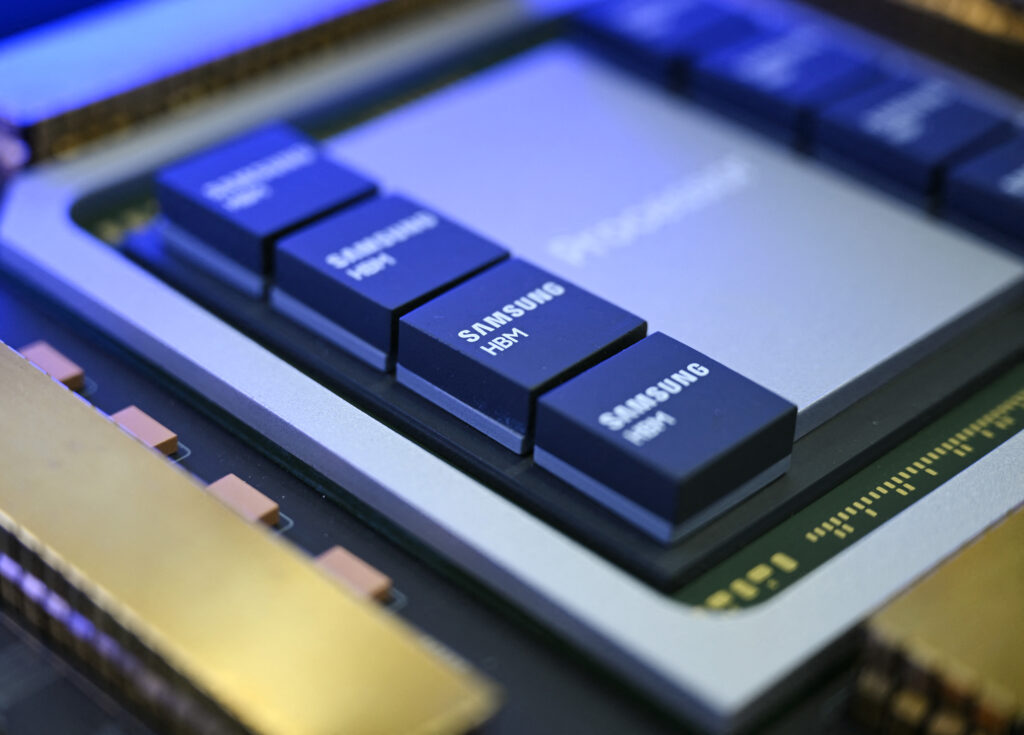
Korean companies Samsung and SK Hynix supply nearly two-thirds of the high-end memory chips AI accelerators depend on. South Korea’s biggest memory plants, including the world’s largest chip complex in Pyeongtaek, are within range of a North Korean strike. The data center boom is already causing a shortage of memory chips in peacetime. A kinetic conflict that hits Korean chip producers would create a global economic catastrophe.
Unfortunately, South Korea’s situation is becoming more precarious — and thus conflict more likely — as Kim’s confidence grows and resolve weakens in Seoul and Washington.
Moving production off the peninsula is not a practical fix. Cutting-edge fabs can cost tens of billions of dollars and take years to reach full output. Samsung and SK Hynix have decades of institutional know-how and a deep pool of specialized engineers. America’s Micron is building fabs in the United States, but significantly replacing Korea’s output is not realistic.
Pyongyang, meanwhile, is now stronger than at any time since the Cold War. Kim has sent an estimated 14,000 troops to fight for Russia, and they are returning home with valuable combat experience. In return, Russia has reportedly supplied North Korea with air defenses and electronic warfare capabilities and is considering transferring even more advanced military technology.
Beijing is also empowering Kim. In June, Chinese leader Xi Jinping visited Pyongyang without publicly mentioning the dictator’s nuclear weapons program. China has tacitly accepted North Korea’s nuclear status, reopened its border with Pyongyang and continued to serve as its economic lifeline. Backed by two great powers, Kim is accelerating his shift to a more aggressive nuclear posture that reserves the right to use nuclear weapons against the most likely U.S. and South Korean conventional responses to his aggression.
It’s easy to see how a conflict could erupt. Kim could escalate his provocations, eventually forcing a response from U.S. and South Korean forces. He could also take advantage of a Taiwan crisis: If China were winning a potential conflict, Kim could decide to attack the South, and overstretched U.S. forces would be hard-pressed to defend both allies. If China were losing, Beijing could push Pyongyang to open a second front to stress U.S. forces.
If Kim believed South Korea and the U.S. would respond together, he would be less likely to strike the South. However, Washington and Seoul are giving him reason to doubt their combined resolve. In March, the Pentagon reportedly began shipping Patriot and THAAD components from South Korea to the Middle East to support the Iran war. In August, just before the largest annual U.S.-South Korean allied exercise began, President Donald Trump scaled it back, saying the drills sent an “inappropriate and hostile” signal.
South Korean President Lee Jae Myung’s approach to North Korea has also increased the likelihood of conflict. He halted South Korea’s anti-Pyongyang loudspeaker broadcasts in 2025, cracked down on activists sending information across the border and decreased support for North Korean human rights. He has also proposed easing sanctions in exchange for a freeze on North Korean nuclear and intercontinental ballistic missile development. Kim responded to these unilateral concessions by calling the South his “most hostile enemy.”
The Sept. 21 blast in the demilitarized zone, when North Korean mines injured three South Korean soldiers, highlights the dangers of meeting provocation with conciliation. The day after the blast, Lee asked Trump to help restart talks with Kim. The U.S.-led U.N. Command later determined that the explosion violated the Korean War armistice agreement. While Lee’s defense minister blamed the North, Lee called the incident an “unfortunate accident” and pledged to keep seeking ways to reduce tensions. Less than two weeks after the mines exploded, the North fired an intermediate-range ballistic missile more than 700 kilometers.
Trump hopes to meet Kim this year, possibly in November. That would be a mistake. Given Kim’s improving strategic posture, any move that further raises his stature will only make him more dangerous.
A war on the Korean Peninsula would be a human catastrophe, leading to enormous devastation, suffering and loss of life. The destruction of South Korea’s memory chip fabs would compound this tragedy and cripple the global economy. South Korea makes both high-tech memory chips for AI accelerators and lower-tech chips present in most modern electronic systems. The price of computers and smartphones would skyrocket as electronic manufacturers idled their factories. Data center construction would slow drastically. The world economy could lose upward of $4 trillion, or roughly 3.5 percent of global gross domestic product, in the first year of a conflict.
The risk of conflict is growing and the threat to the international economy is severe. The AI build-out rests on a supply chain with two interlinked points of failure. Trump and Lee must restore deterrence, not reward Kim’s aggression, to avoid strategic and economic calamity.
The post This peninsula is an economic powder keg. A blast could cost trillions. appeared first on Washington Post.