Kevin M. Warsh wants inflation to move more swiftly back to the Federal Reserve’s 2 percent target. But on Wednesday, the central bank chairman and his colleagues are widely expected to hold interest rates steady.
The discrepancy is poised to be a focal point at the latest meeting, which is taking place just days before midterm elections that will decide who controls Congress in the latter half of President Trump’s second term.
Since officials voted unanimously in September to raise rates by a quarter point to 3.75 percent to 4 percent, the incoming inflation data has been anything but reassuring. Energy prices are up across the board as the war with Iran has dragged on. The range of goods and services growing costlier appears to be broadening out. And a splurge in spending tied to the proliferation of artificial intelligence shows little sign of abating.
The Fed’s other priority, the labor market, has also remained stable, despite monthly growth downshifting in September, in a sign that the Fed’s policy settings are not excessively onerous for the economy.
Numerous Fed policymakers have already indicated their support for a rate increase at their final gathering of the year in December in pursuit of a “timelier” return to the 2 percent target after six years of overshooting it. So the question for Mr. Warsh at Wednesday’s news conference is, why wait?
“The economics support another rate increase,” said Loretta Mester, who ran the Federal Reserve Bank of Cleveland for a decade until 2024. “By not moving in October, I’m a little skeptical whether a timely path is substantially different from just being on a downward path to 2 percent.”
Mr. Warsh had the last word ahead of the upcoming rate decision. Speaking in Bangkok at the annual meetings of the International Monetary Fund and the World Bank this month, the chairman did little to change the narrative that had been laid out by a number of his fellow policymakers in the weeks prior. The overarching message was that the central bank had more work to do to tame inflation, but that there was no urgency to raise rates at consecutive meetings.
Among the officials to push for patience was John C. Williams of the New York Fed and Philip N. Jefferson, the vice-chair, both of whom are part of an internal policy-steering committee, known as the troika, that Mr. Warsh leads.
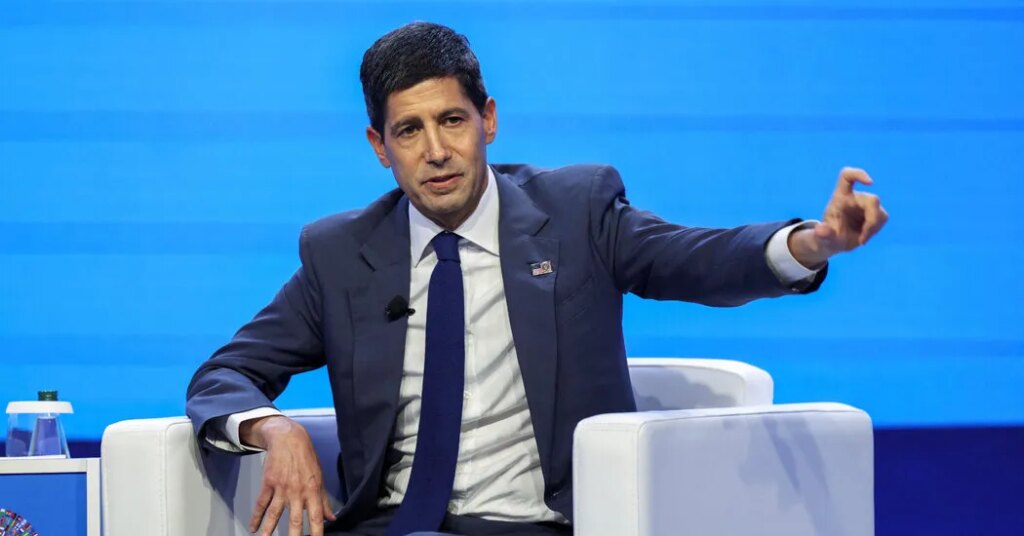
Those comments represented exactly the kind of guidance that Mr. Warsh had long denounced. Onstage in Bangkok. Mr. Warsh went so far as to say that it was a “new chapter at the Fed, and we’re not in that business anymore.”
But for a broad swath of economists and investors, the primary reason that a rate increase was not penciled in for October in the face of hotter-than-expected inflation data was precisely because of the steer that Mr. Warsh’s colleagues provided. What has also helped in the interim is recent jitters in financial markets amid concerns about the sustainability of the A.I. boom. That has made financial conditions, which measure the availability of credit in the economy, only slightly less accommodative than before.
But looking solely at the inflation data, Riccardo Trezzi, a former Fed economist who runs the research firm Underlying Inflation, said a rate increase was clearly justified on Wednesday.
“There is zero evidence of cooling down,” he said of current price pressures. Mr. Trezzi estimates that the Fed’s preferred inflation gauge, which strips out volatile food and energy items, will reach 3.4 percent in December. At the same time last year, it stood at 3 percent. Overall inflation, as measured by the Personal Consumption Expenditures price index, is projected to reach 3.8 percent, according to Mr. Trezzi’s calculations, nearly double the 2 percent target. P.C.E. data for September will be out on Thursday, the day after the Fed’s decision.
“There’s a disconnect in terms of how the Fed sounds at the moment,” he said. “They still have to make up their minds whether they’re really serious about disinflating the U.S. economy.”
The issue for the Fed is that the primary sources of resurgent inflation are out of their control. Beyond the Iran war and Mr. Trump’s tariffs, both of which have bid up price pressures, many of the biggest A.I. companies that are fueling growth also appear impervious to higher rates.
Perhaps the biggest propellant of demand right now is the sharp rise in wealth across the country being generated from stock market gains, said Marc Sumerlin of Evenflow Macro, an economic consulting firm.
In the last four quarters, households’ net worth rose roughly $20 trillion, according to Fed data as of September. While most of these gains have accrued to high-income households, the bulk of consumer spending is driven by this group.
Estimates vary about how much the Fed will need to squeeze the economy in the coming months to begin to turn the tide on inflation. Some believe price pressures will begin to ease as the impact of Mr. Trump’s tariffs and the energy shock fade, obviating the need for an aggressive response from the Fed. But for others, a more forceful approach might be required.
“If you want to lower inflation now, you have to lower demand because raising supply takes time,” Mr. Sumerlin said.
The first of two wild cards is how financial conditions evolve in the coming months. U.S. government bond yields are sharply higher today than just a few months ago for a variety of reasons. Some of that reflects changing expectations about how much the Fed will need to raise rates as growth has picked up. There is also intensifying competition between governments and companies for capital as large A.I. companies borrow aggressively to fund their expansions.
Investors also appear to be demanding extra compensation to hold longer-dated debt versus shorter-term ones amid ever-present concerns about Washington’s fiscal profligacy and whipsawing worries about the Fed’s ability to operate independently, said Ellen Zentner, chief economic strategist at Morgan Stanley Wealth Management.
Rising yields on the margins will help the Fed in its pursuit of its inflation goal, but that will not supplant entirely the work the central bank has to do when it comes to raising rates to at least a neutral level that neither speeds up nor slows down the economy, Ms. Zentner said.
The second wild card is how the public perceives the Fed’s grip on inflation. Concerns about price pressures in the year ahead have mounted, but longer-term metrics look more benign.
For now, that has afforded the Fed some flexibility around when it must deliver additional increases, said Raphael Bostic, who served as president of the Atlanta Fed for nine years until February. But, “there are limits,” he warned.
“The danger always is that every additional month that inflation is way higher than your target is another month where people say, ‘maybe this is the new normal,’” Mr. Bostic said.
The post The Fed Is Expected to Hold Rates Steady. Warsh Will Have to Explain Why. appeared first on New York Times.