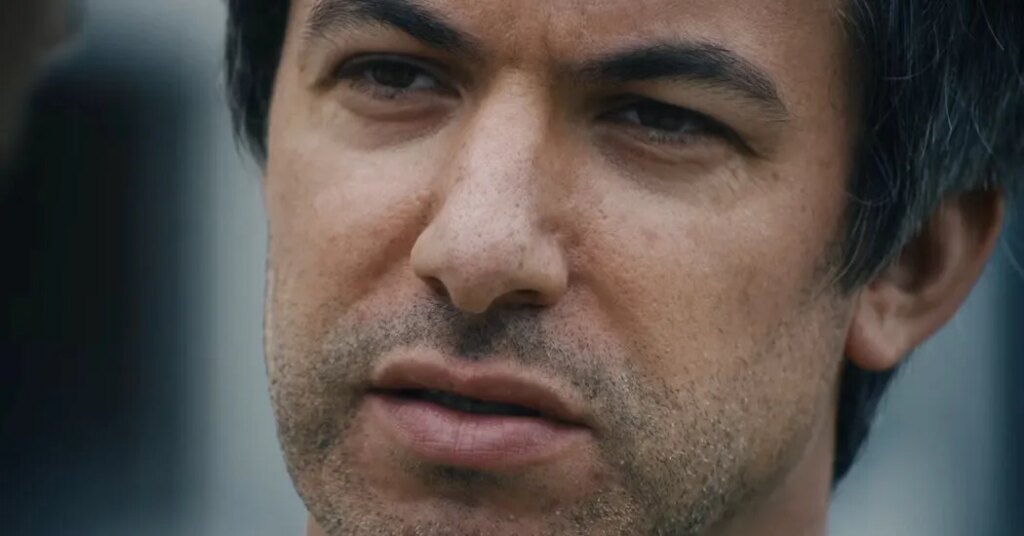
This article contains spoilers about a surprise appearance in this film.
In two weeks of release “You Can See Everything,” has grossed $45 million at the box office. Directed by Nathan Fielder and Lance Oppenheim, the documentary has a near perfect score on Rotten Tomatoes from critics and audiences alike. And its take on Elizabeth Holmes, the confounding founder of Theranos who was convicted of fraud, has everyone talking.
Now the question is, what are its Oscar chances?
The film’s distributor, A24, isn’t commenting but two people close to the production with knowledge of the studio’s thinking expect it to campaign for best picture, best supporting actress and best documentary. It may also make a showing in the editing, cinematography, score and director categories.
Should Amanda Seyfried land a nomination for playing Holmes in the recreations within the film, it would be the first time an actress has been nominated in the supporting category for a role in a documentary.
And no documentary has ever been nominated for best picture. “Fahrenheit 9/11,” the 2004 film directed by Michael Moore that currently holds the title for highest-grossing nonconcert documentary, may have come the closest, considering its effect on the cultural conversation that year, but it was shut out. More surprising: it was also shut out of the best documentary race, a fate that has befallen many a popular documentary.
To those who follow these races closely, “You Can See Everything” may have more of a chance landing a nomination for best picture than one from voters in the academy’s documentary division, which has a history of ignoring commercial successes that are either celebrity-focused or are considered unconventional.
“‘You Can See Everything’ is going to be a real test for the doc branch because it pushes the boundaries of what a documentary is and the branch in past years has disqualified very important films for this reason,” said Davis Guggenheim, the Academy Award-winning director of “An Inconvenient Truth” (2006).
The 770-member documentary branch has expanded its membership considerably in the past decade to reflect the rest of the academy: more international and younger. (Currently, 30 percent of the members reside outside the United States.) To those who know the branch well, that expansion has only made the group more strident in its priorities.
Critics say the documentary branch is hesitant to reward films that have experienced commercial success. They point to what they view as a bias against films that feature celebrities or are directed by well-known filmmakers. And if you have won before, it’s unlikely you will win again, regardless of how acclaimed your film has been.
“Unfortunately, there is an anti-commercial-success bias among some of my peers in the branch, so I don’t think it will be a shoo-in,” said Joe Berlinger, the documentarian behind the Oscar-nominated “Paradise Lost 3: Purgatory” (2011), who hasn’t seen “You Can See Everything” yet.
“I’ve also read it’s very unconventional in format, which will probably rattle some of my fellow branch members as well,” Berlinger added. “However, its box-office performance has been absolutely stunning, so hopefully that will help break through what I fear is some built-in resistance.”
The branch has overlooked a number of celebrated films in years past. A short, incomplete list includes “Hoop Dreams” from 1994 (it was nominated for an editing Oscar); “The Thin Blue Line” (1989); “Paris Is Burning” (1991); “Grizzly Man” (2005); and “Won’t You Be My Neighbor?” (2018), about Fred Rogers.
Yet over the years, the academy overall has also rewarded films that have done well at the box office including “March of the Penguins” (2005); “Amy” (2015); “Free Solo” (2018) and “Summer of Soul” (2021).
Berlinger’s own 1992 “Brother’s Keeper” (directed with Bruce Sinofsky) about a man accused of the mercy killing of his brother, was ignored by the academy. The omission prompted an editorial in The New York Times urging the organization to start a documentary branch with the hope that it would change the nominee makeup. The branch was established in 2001.
One concern among some in the documentary business — according to five people in the industry who spoke on the condition of anonymity so as not to upset the branch — is that it can be reluctant to nominate more popular documentaries for fear that they would often win simply because the broader academy membership would probably vote for the best-known contenders.
The academy declined to comment.
There are also those who think that perhaps this isn’t a documentary at all. Fielder’s form of comedy relies on blending reality and performance art, all delivered in his deadpan, absurdist style. And with the combination of Fielder and Holmes, who is serving a prison sentence for defrauding investors, the audience is never certain who is pranking whom and whether everyone is in on the joke or no one is.
“I so applaud the film, but it’s not a documentary,” said the documentarian Marina Zenovich (“I’m Chevy Chase and You’re Not”). “The subject and the director are trying to manipulate each other, outdo each other. It feels less organic as a result, but it’s still incredibly watchable. It seems to me that they’ve created a whole new genre.”
The post Could ‘You Can See Everything’ Be Up for Best Picture but Not Documentary? appeared first on New York Times.