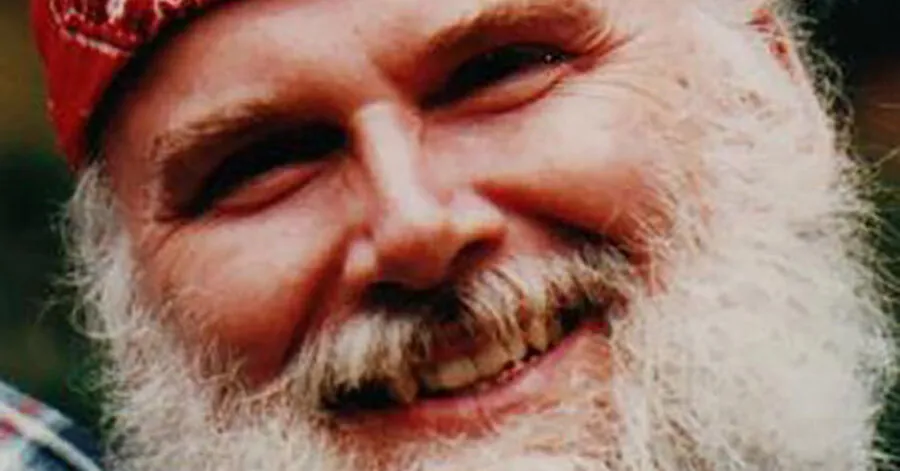
John Thorne wrote a lot about breakfast. We’re sleepy in the morning and feel the need to coddle ourselves, and he liked solace foods. He liked the morning solitude, too, because it was a spur to invention. “It’s only when you cook for yourself,” he told an interviewer, “that you find out how good some strange things can be.”
Thorne, who died last week at 83, was an indispensable American food writer: plain-spoken, learned, digressive and ironical. He wrote often about homely, vernacular New England foods — beans, chowder, Irish soda bread, leeks, pies, simple roasts, potato pancakes — in a way that combined memoir with instruction. He was interested in making humble things sing.
His books made you feel right beside him in the kitchen, especially in the morning, starting from scratch, maybe stirring the corn cake batter with your index finger. He made you feel right beside him, too, when things went sideways. “You don’t know the full meaning of the word explode,” he wrote, “until a flask of boiling-hot beans goes ka-poof in your kitchen.”
Thorne published books with titles like “Simple Cooking” (1987), “Outlaw Cook” (1992), “Serious Pig” (1996) and “Pot on the Fire” (2000), most of them written with his wife, Matt Lewis Thorne. Each is worthwhile.
He came close to becoming famous a few times. He won cookbook awards and was reverently profiled in most major food magazines. The novelist Jim Harrison wrote, “To think of Thorne only as a food writer is the same as considering Raymond Chandler just a mystery writer.” He added elsewhere: “I suspect that he will justly inherit the mantle from M.F.K. Fisher as our best food writer.”
Harrison was especially knocked out by one of Thorne’s essays, in which he dreamed about opening a chicken skin po’ boy shack in New Orleans. Laurie Colwin loved Thorne’s pumpkin tian and printed his recipe in her classic book “More Home Cooking” (1993).
Thorne was reticent by nature, and had little interest in book tours, pivoting to video or making the scene. Nor did he care about Michelin stars. In “Outlaw Cook” he wrote, in a not-untypical passage:
I am not, and never have been, a gourmet. I possess no curiosity about world-class restaurants, and while I am more drawn to the idea of exemplary foods — truffles, caviar, goose liver, rack of lamb — the fact that I have never tasted any of these except in the most adulterated form must mean that, finally, they are not all that important to me.
Thorne was born in Quincy, Mass. in 1943 and grew up in an army family that moved around a lot. He dropped out of college and fled to New York City’s Lower East Side, where he worked in a mailroom and taught himself to cook on poverty wages.
(He once gathered acorns in Central Park and tried to cook them. He reported that acorns need boiling for a day and a half to make them edible. His apartment reeked, and he suspected that one person who tried them threw up.)
He lived, for the rest of his life, in coastal Maine and in Northampton, Mass. He got his start as a food writer by publishing a food pamphlet out of his kitchen. He had no special training as a writer or cook. He just went for it.
The first issue of Simple Cooking came out in the early 1980s, and issues kept coming, if sometimes sporadically, for more than three decades. These were zines, basically, and they had a patchwork charm. His down-to-earth essays and recipes looped around bold woodcuts and dingbats and antique prints. They became offbeat collector’s items.
Thorne began pouring this material into books. I feel lucky to have been onto him early, probably through finding him in Jim Harrison’s writing. Thorne and Harrison, alongside Colwin and Calvin Trillin, were heroes to me. They mattered and continue to matter because none have a pretentious bone in their bodies.
Each mostly championed vernacular foods, the delectable stuff that’s all around us and can probably be composed after a single visit to your local Stop and Shop. Thorne worked, for example, to liberate crostini from “the canapé crowd.” He understood the difference, for a home cook, between the word “simple” and the word “easy.”
I feel lucky to have found Thorne, too, because his recipe for lemon ice cream — you simply stir together sugar, cream and fresh lemon, no machines required — has been a summer staple in my family for 30 years. It’s the only dessert I make. The recipe is on Page 129 of “Outlaw Cook,” but I no longer need to look at it.
Thorne loved the “fantastic underground currency” of the recipes in old, spiral-bound community cookbooks. He understood what’s primal about Velveeta cheese, certain Duncan Hines cake mixes and Lipton onion soup mix, even if he aimed higher.
His macaroni and cheese recipe uses a ton of cheddar and “a fat scarlet drop of Tabasco.” He liked the way that the elbow macaroni “sported in it like dolphins in a savory orange-yellow sea.” He always wrote so vividly. The combination of flavors in a good strawberry shortcake put him in mind of “the way the ear responds when Oscar Peterson slides Billie Holiday into ‘These Foolish Things.’”
“To cook is to lay hands on the body of the world,” he wrote. But he wasn’t always so serious. Thorne had a puckish sense of humor. He wrote meticulously, for example, about the common French snack pets de nonne, or “nun’s farts.” These are small, lightly fried fritters powdered with confectioner’s sugar.
He worked through the etymology and was especially taken with the British American writer Roy Andries de Groot’s translation, “the puff of a nun from Chamonix.”
He didn’t take to kiwis, lettuce in salads (most of the time) or zucchini, which has “the nutritional value, flavor and texture of rained-on newspaper.” He made an exception for ratatouille. He zinged Marcella Hazan for not crediting earlier Italian cooks.
He thought that Manhattan clam chowder, quoting the food writer Waverly Root, should be called clams with tomato and basil. He preferred fat cooks to thin ones because they have more oomph. The skinny ones, he felt, want to be around other skinnies and desire “only to taste and then quietly exclaim.”
He argued most centrally that “you don’t have to be a good cook, or even aspire to be one, to be an interested cook.”
Thorne was a gleaner, one who had Emile Zola and Elizabeth David in his head and corned beef hash in his belly. He found connections and associations everywhere. He took you out with him into the world. “Old cooking fads don’t, like old soldiers, fade away,” he wrote. “Instead, they linger on to fuel garage sales and book remainder piles.”
He disliked trends and new gadgets. He was interested in nourishment and memory and craft instead of spectacle. He was a soulful guy and sometimes a maudlin one. At the end of an essay about how he’d feel ashamed in front of exacting culinary perfectionists like Madeleine Kamman and Richard Olney, he wrote:
As for myself, well, I have my good days and bad days. During the latter, sometimes, I just don’t give a damn. On those rare evenings when I feel an irrational but irresistible desire to heat up a panful of frozen, batter-dipped chicken wings, I know it isn’t the food I crave. I just want for one night to shove all the company the hell out of the kitchen.
He was all about scraping together a little happiness.
The post A Plain-Spoken Champion of Homely New England Food appeared first on New York Times.