Four years of internal turmoil, war and growing global isolation have left Israelis bitterly divided over their country’s future as they vote in national elections on Tuesday. Opinion polls suggest it will be a close race with the possibility that neither Prime Minister Benjamin Netanyahu’s party nor his opponents will secure a majority.
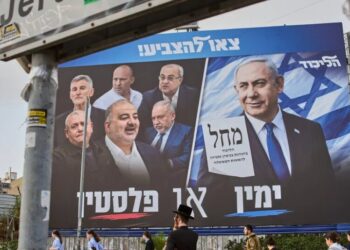
Many Israelis see the election as choice over whether to continue the rule of the country’s most hard-line, right-wing government ever, and the dominant fault line is Mr. Netanyahu himself. Critics say he has steered Israel to the lowest point in its history, while his supporters see him as an indispensable leader who has tried to destroy Israel’s enemies in Gaza, Lebanon and Iran.
Beyond Mr. Netanyahu’s leadership, however, there are plenty of issues polarizing the country.
Accountability for the Oct. 7 attacks
The Hamas-led attacks of Oct. 7, 2023, loom over the vote. About 1,200 Israelis were killed in the assault and 250 were seized as hostages, according to the Israeli authorities, making it the deadliest day in Israeli history. Israel’s military response in Gaza killed more than 70,000 people and led to widespread destruction and displacement of Palestinians.
Three years later, Israelis still have no official answer about why Mr. Netanyahu’s government and the Israeli military failed to foresee the attacks and then struggled to respond even as Hamas fighters invaded villages and a music festival, killing civilians.
Mr. Netanyahu’s opponents — a bloc of opposition parties and their leaders — have said they would establish an independent inquiry with broad authority, appointed by the president of the Supreme Court. Mr. Netanyahu has called for a “democratic and equitable” commission that would be made of an equal number of representatives of the coalition and the opposition.
Families of those killed and taken hostage broadly back the opposition, arguing that Mr. Netanyahu’s proposal would politicize what should be a comprehensive and dispassionate investigation.
The ultra-Orthodox minority
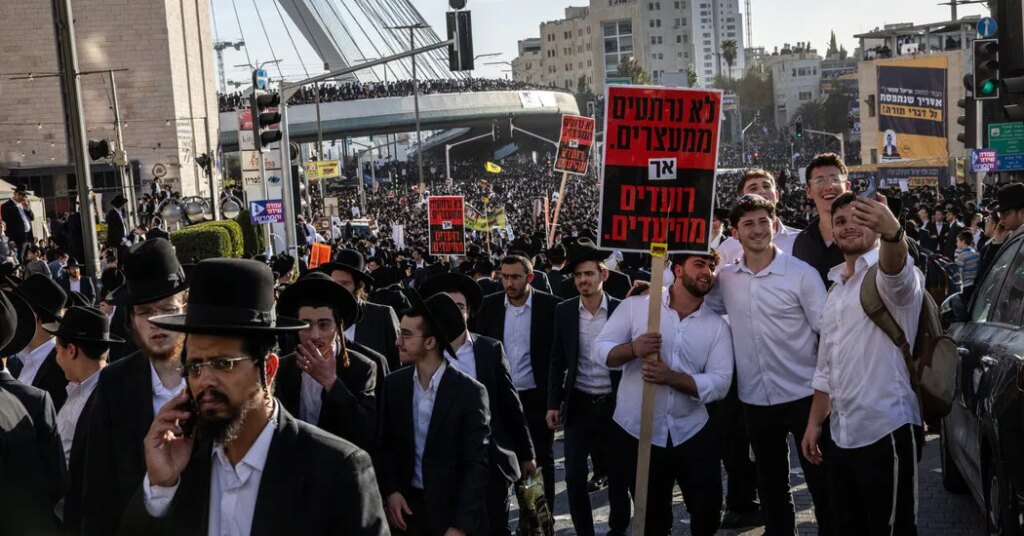
Secular and liberal Israelis have long been uneasy about the status of the ultra-Orthodox, an insular community that adheres to a fundamentalist interpretation of Jewish scripture and makes up about 10 percent of the population. Their religious students are eligible for an exemption from mandatory military service and receive state benefits despite not joining the work force.
During the wars in Gaza and Lebanon, that long-simmering frustration boiled over into outrage. Hundreds of Israelis from other backgrounds were killed in combat, and hundreds of thousands more did dangerous rounds of reserve duty.
Mr. Netanyahu’s government has relied heavily on the support of ultra-Orthodox parties. His opponents have called for ending the exemption to the draft for the ultra-Orthodox and cutting off welfare benefits for those who avoid military service.
Judicial overhaul
Before the war, Mr. Netanyahu’s government had sought to advance a highly contentious plan to weaken Israel’s judiciary. Hundreds of thousands of Israelis protested the proposals in mass demonstrations, saying that Mr. Netanyahu was leading the country toward dictatorship.
The Hamas-led attacks largely suspended the overhaul of the courts, part of which was also reversed by a Supreme Court ruling. But Mr. Netanyahu’s allies say they will push ahead with the changes if they are re-elected.
The Palestinians
While global attention has focused on the West Bank and Gaza, domestically both Mr. Netanyahu and his opponents have preferred to focus on other issues. Still, they have different visions for the future of these areas.
Mr. Netanyahu’s coalition is dominated by religious nationalists who have advanced Israeli settlements in the occupied West Bank at a breakneck pace. They have called for Israel to urge Palestinians to leave Gaza, with one senior minister saying conditions there should be kept miserable to “take away their hope.”
The fractious bloc of parties opposing Mr. Netanyahu hold wildly diverging views on the Palestinians. Gadi Eisenkot, who opinion polls suggest will lead the alliance, has vowed to rein in Israeli extremist attacks on Palestinians and engage on the Trump administration’s cease-fire plan for Gaza.
The post The Issues Dividing Israelis as They Vote appeared first on New York Times.