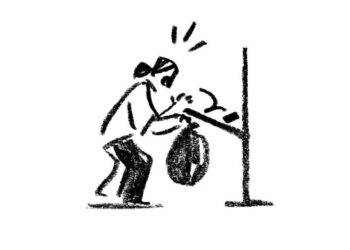
A young woman in Queens celebrated her 30th birthday with cake, champagne — and an existential crisis over still living paycheck to paycheck.
A 30-year-old in Manhattan felt ready to consider marriage, but knew he couldn’t afford a wedding.
And in Brooklyn, a couple, at 32, confronted a generational conundrum: stay in their hometown as their parents age? Or move away to start a family?
Forget the kids.
The 30-somethings are not all right.
“Everyone I know around my age is feeling the weight of the burdens of this economy and what it takes to live a nice, comfortable middle-class life,” said Dan Iammatteo, 31, a marketing director in the Bedford-Stuyvesant neighborhood of Brooklyn.
And their angst is intensifying. People in their early 30s constitute the largest age cohort in the United States, and their frustrations have emerged as a potent force reshaping cities and their politics and demographics.
In New York, this age group turbocharged the ascent of the Democratic Socialists of America, propelling to office Zohran Mamdani, who turned 35 this month, and a slate of progressive allies to congressional primary wins.
With the midterm elections little more than a week away, these voters across the nation — their rage fueled by rent and gas prices that are devouring their paychecks — could prove pivotal in some major contests.
“This is a very real feeling across the U.S.,” said Jason Dorsey, a generational researcher who lives in Austin, Texas. “Thirty-somethings really feel like they have missed out and have been left behind.”
Nearly two dozen people in their early 30s said in interviews that the image of adult life that they had been promised turned out to be a sham.
Many work full time and earn enough to cover the cost of basic groceries (even if it means trips to three stores). But their salaries are losing ground to inflation, and their health care costs are skyrocketing. They’re cutting back on salon visits, social activities and fresh fruit runs — and they feel priced out of adulthood.
On Thursday, the long-running Harvard Youth Poll found for the first time in its history that more young Americans expect to fall behind, rather than surpass, their parents economically.
Adam Crittenden, 30, who lives in Chelsea and does data work, thought about a future wedding (elopement sounds cheap!), children (costlier for an L.G.B.T.Q. couple) or a two-bedroom apartment (median asking rent in Manhattan is $6,000).
“In the past, the idea was that you would check all these boxes by 30, give or take,” Mr. Crittenden said. “But the more I think about it, so much of that is incredibly out of reach.”
‘A Lot of Hurt’
There was a time when the early 30s were described as a turning point.
“Never trust anybody over 30” was a rallying cry of the ’60s; the lead character of “13 Going on 30” awoke to a thriving career and posh apartment; a pop star even used “30” as a meditation on marriage and motherhood.
But so much about the lives of Americans has changed during the last three decades. In 1990, a wedding at 26, a baby shower (or two) by 28 or a first home around 30 was ordinary.
“It’s so crazy,” said Cat Van Holt, 31, a housing attorney in Manhattan who earns about $84,000 a year and lives in a rent-stabilized studio apartment. Many of her clients face eviction; she knows she isn’t poor. But compared with those mythical adults three decades ago, “our two realities are just leagues apart.”
Most Americans across all age groups agree: Financial milestones are harder to meet for today’s young adults than they were for their parents’ generation, according to a survey by the Pew Research Center this summer.
The share of Americans who say raising children is unaffordable jumped 20 percentage points during the last decade. And while people in their 30s today are more highly educated than earlier generations, they are more than twice as likely to remain saddled with steep student loan payments.
In interviews, two people in their early 30s separately described feeling “like a teenager” compared with their parents at this stage.
One woman in Manhattan struggled to fathom how her mother was married with two children by 35 and owned the New England home where she still lives. At the same age, she is single, and the rent on her 275-square-foot studio apartment doubled during the last decade while her take-home pay barely budged.
“You work hard and then you do better than your parents. And then your kids do better than you. And on and on,” said Maria Doulis, a New York State deputy comptroller who has researched this age group. At least, that’s how the story went.
“It almost feels like the slipping away of the American dream,” she said.
Many young professionals in their 30s have reached a breaking point in recent years and moved away in droves to raise families — contributing to an enrollment crisis in New York City’s school system.
Fiona Kearns, 31, who was born and raised in Queens, and her husband are public schoolteachers who consider themselves well paid. She is among the fortunate with no student debt. “Even with all that luck and privilege, I can’t get a two-bedroom apartment,” she said.
The couple planned to upgrade for more space last winter and try for a baby in the summer. But the search for an affordable place proved hopeless.
“I feel a lot of hurt about it as I feel myself aging — and a lot of resentment over being so careful to make responsible choices,” she said. “Am I entitled to have what my parents had? I’m not sure.”
She paused.
“But it’s hard to know that I can’t.”
Promises Dashed
Ali Sousa sometimes feels a gnawing guilt.
Ms. Sousa, 31, who lives in Central Brooklyn, needed to lean on her family to cover the $4,800 out-of-pocket cost of a recent chronic back pain treatment. She barely has savings and sometimes eats French fries for dinner.
“It can really feel like a personal failing,” said Ms. Sousa, who earns about $52,000 a year working in theater administration.
She regularly opens Instagram to a sea of stories from friends, desperate for any extra work to make their monthly bills. “I don’t know how we even begin to fix this,” she said.
In interviews, many people in their 30s felt that they were promised that graduating college, climbing the career ladder and forgoing DoorDash or Uber would put them on the path to whatever a “comfortable life” means these days.
In Manhattan, a 33-year-old nonprofit lawyer was somewhat embarrassed to admit that his parents are purchasing him a home. But it’s the only way that anyone he knows has managed to buy.
A college-educated couple, both 32, in Bay Ridge, Brooklyn, who spoke on the condition of anonymity to avoid reprisal from their employers, were among the many who acknowledged that these pressures have made them reconsider becoming parents.
The husband recently learned that, adjusted for inflation, he earns only about $5,000 more than he made in 2020. The wife’s monthly student loan payment jumped $600 overnight after Congress rewrote the rules for certain loans.
She pointed out that she was born to Soviet refugees who arrived in 1989 and had to learn English. But her parents planted roots in New York with government assistance, bought an apartment and built a fulfilling life.
She worries that starting a family now in Bay Ridge would push them into poverty — and refuses to bring a child into such a world. The two summed up their sense of dismay: We did all the things you’re supposed to do. And it’s not getting us nearly as far.
Still, some researchers saw reasons to feel bullish — or, at least, something other than abject despair over this extended timeline of adulthood.
“We sometimes forget the benefits,” said Jeffrey Jensen Arnett, a senior research scholar at Clark University who has written about emerging adulthood.
Kandice Hill, a 33-year-old working in sales operations, moved in March from North Carolina to a South Brooklyn house. She has 10 roommates.
To her family, it’s a curious arrangement. To her, it’s a relief. Back in Charlotte, she felt the pressure of societal expectations as a single woman; parishioners in her Bible study meetings sometimes prayed that they would find a partner.
In New York, her lifestyle comes with much less shame. At her employer’s Bring Your Child to Work Day, she noticed many parents of young children were in their 40s.
“No one’s like, ‘That’s nuts,’” she said. “They don’t even bat an eye.”
The post Can’t Afford a Home. Can’t Afford a Baby. Can’t Afford Life. This is 30. appeared first on New York Times.