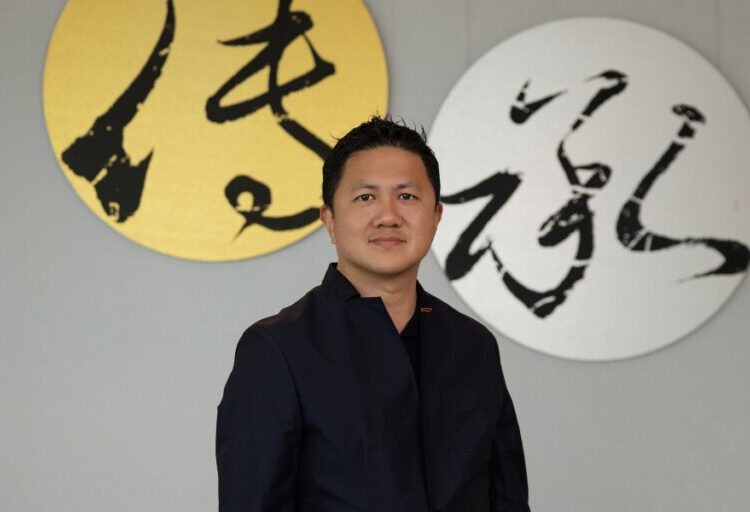
Late last year, Dave Regan, the pugnacious head of a California health care workers union, wanted his colleagues from other labor groups to support his politically explosive proposition to tax the assets of the state’s billionaires.
At a meeting in Los Angeles, he pulled aside Tia Orr, the executive director of the Service Employees International Union statewide council, to make himself clear.
“State Council better endorse this measure by January 1st or I’m coming for you,” Mr. Regan said, according to a report written by lawyers hired by S.E.I.U. to investigate accusations of intimidation. A copy of the report was obtained by The New York Times.
Mr. Regan has long been known for playing hardball and taking a go-it-alone approach to California politics as he has built power for his union, S.E.I.U.-United Healthcare Workers West. Along the way, he has made numerous enemies in California’s Democratic circles, even as he has pushed for liberal causes they might be inclined to support.
Besides facing multiple allegations of intimidation over the billionaire tax, Mr. Regan was recently accused of physically assaulting a former union director 17 years ago. A nurses union and several state lawmakers are calling for him to resign.
S.E.I.U. International, which oversees Mr. Regan’s union, plans a hearing into the allegations and could discipline him or remove him from his job.
The tumult comes during the highest-profile campaign of Mr. Regan’s career — a November ballot measure that could create the nation’s first wealth tax by targeting the assets of California’s billionaires and devoting the revenue to health care. The novel proposal, which would impose a one-time 5 percent tax on the wealth of billionaires residing in the state, is backed by prominent liberal economists as well as national progressives such as Senator Bernie Sanders of Vermont.
Mr. Regan has denied the accusations of intimidation and assault. He said it was “categorically false” that he made any sort of threat against other labor leaders. He cast the assertions as a politically motivated smear campaign by opponents of the billionaire tax.
“When you take on billionaires and when you do things that powerful people don’t like, it comes with consequences,” he said.
In California, the billionaire tax initiative, Proposition 40, has driven a sharp wedge into Democratic politics. Labor unions are split, and Gov. Gavin Newsom opposes the tax measure, fearing that it would drive entrepreneurs and their tax dollars away from California.
For some, the man behind the plan is also part of the problem.
“It has been very ugly, very personal,” said Gale Kaufman, a veteran Democratic strategist in California who has long advised a powerful state teachers union.
Mr. Regan, she said in a recent public forum, “has single-handedly blown up coalitions that have been together on Democratic issues for years.”
A ‘specialist’ in ballot initiatives
Mr. Regan moved to California from Ohio in 2009 during an earlier era of conflict within S.E.I.U., one of the nation’s largest unions for health care, janitorial, security and other service workers.
National leaders had removed the head of a health care workers union in Northern California and appointed Mr. Regan to take over. The ousted leader started a rival organization, causing an ugly rift.
A lawsuit from that period accused Mr. Regan of threatening to call ICE to deport Latino home care workers if they did not vote to join his union. Nathan Selzer, a spokesman for Mr. Regan’s union, S.E.I.U.-United Healthcare Workers West, said the allegation was false and that Mr. Regan has long supported immigrants. The suit was settled in 2016.
Mr. Regan soon came to see how he could use California’s direct democracy system to negotiate for his members or needle his adversaries. In California, anyone can place a measure on the ballot by collecting enough signatures, and few people have been as skilled at it in the modern era as Mr. Regan.
“Regan is a specialist in using the referendum system,” said Nelson Lichtenstein, a labor historian at the University of California, Santa Barbara. “That’s sort of been his modus operandi.”
Mr. Regan has spent millions of dollars in union funds to collect signatures for dozens of ballot measures over the years, many of them to increase wages for hospital workers or limit compensation for health care executives. Often, the measures never appeared on a ballot because Mr. Regan withdrew them after getting concessions from employers or policymakers.
Other times, his measures have thrust California voters into obscure health industry fights, such as three propositions to regulate dialysis clinics. Another measure he got onto the November ballot, Proposition 44, would control spending by community clinics.
His measures often fail, but by appearing on the ballot, they force adversaries to spend millions of dollars on opposition campaigns.
“It has been a reign of terror and threats,” said Francisco Silva, head of the California Primary Care Association, an umbrella group for the clinics that would be restricted by Proposition 44.
Mr. Silva’s group recently filed a lawsuit accusing Mr. Regan of coercive and extortionist practices by using ballot initiatives as leverage. The suit claims that Mr. Regan offered to withdraw Proposition 44 if Mr. Silva’s organization were to endorse the billionaire tax and donate toward it.
“You’re not supposed to use the ballot measure that way,” Mr. Silva said. “You’re exchanging something of value, money, for using the ballot measure as a threat.”
In a statement, Mr. Regan’s union said that the allegations were false and that the clinics’ association had used lawsuits to “bully” union members into backing down.
The ballot measure, the union said, “will increase transparency, reduce wasteful executive spending and ensure clinic health care dollars go where they belong: caring for Californians in need.”
Mr. Regan said in an interview that he was proud of using ballot initiatives to improve conditions for workers.
“Direct democracy is just a tool that’s available to us,” he said. “I still wonder why it doesn’t get used more.”
Mr. Regan has faced accusations of rough behavior over the years that went beyond his negotiating tactics.
In 2016, police in the San Francisco Bay Area said that Mr. Regan had pushed a process server who came to his house to deliver legal documents. In 2018, a state lawmaker reported being shoved by Mr. Regan outside a reception in Sacramento. Neither incident resulted in criminal charges, and Mr. Selzer, the union spokesman, said the allegations were false.
A 2018 lawsuit alleged that Mr. Regan oversaw a workplace where women were harassed and discriminated against, though he was not named as a defendant. Mr. Selzer said the union fired the employee who was accused of sexual harassment and Mr. Regan was not implicated. The lawsuit was settled in 2020.
Suzanne Jimenez, Mr. Regan’s chief of staff, has worked with him for 15 years and said that she had never seen him be physically rough.
“I will say, though, that he is direct,” she said. “He is focused on winning, not just for our members but for workers as a whole.”
Ms. Jimenez described him as a visionary who has helped to spread the use of ballot measures to progressive organizations in other states and successfully pushed for a significant minimum wage hike in California a decade ago.
Future in question
Mr. Regan’s aggressive push to win support from other unions for the billionaire tax prompted investigations by at least two separate S.E.I.U. organizations. Their findings, first reported by The Los Angeles Times, have resulted in internal charges that will be heard in December by S.E.I.U. International, which has the power to punish him.
One of the most serious allegations surfaced during a conversation among several Democratic strategists and union officials who had gathered at a hotel bar in Sacramento after a holiday party hosted by Mr. Newsom in December.
Courtni Pugh, one of the strategists, told the others that Mr. Regan had physically assaulted her in 2009 when she was executive director of the S.E.I.U. California State Council. Ms. Pugh’s account was described in the investigations of Mr. Regan that the union commissioned this year. She declined to comment.
“Regan forced his way into her office, pinned her against the wall, and had his hands either around her neck or on her neck,” one report says, detailing the account that Ms. Pugh gave to her associates that night at the bar.
The other report said the 2009 altercation began when Mr. Regan was upset with Ms. Pugh’s handling of a ballot measure. It described Mr. Regan kicking her office door open, shoving her against the wall, pushing his finger into her chest and screaming an insult at her. She collapsed and began hyperventilating, the report says.
A colleague, Terry Brennand, found Ms. Pugh on the floor of her office and helped her get home. Mr. Brennand said in an interview with The New York Times that he had never seen Ms. Pugh so traumatized. He said he offered to testify for a workplace investigation but was never contacted until this year.
“There has been a lack of accountability in the entire process,” he said.
Ms. Pugh left the union and went on to build a successful career as a political consultant. She is currently working on campaigns for Xavier Becerra, the Democratic candidate for governor, and against the billionaire tax.
Mr. Regan said the 2009 incident never occurred and he accused Ms. Pugh of making up the story for political gain.
“She is a paid operative for the billionaire campaign,” he said. “It’s completely fabricated. Not a word was breathed apparently for 17 years until we’re doing this campaign and she stands to benefit.”
Another S.E.I.U. leader accused Mr. Regan of suggesting this year that the state council could be reported to the Trump administration for unspecified labor violations if it didn’t endorse the billionaire tax, one of the investigations said. That official described feeling “extorted,” according to the inquiry.
The state council ultimately decided not to take a position on the billionaire tax.
S.E.I.U. International, which oversees the state council and local unions, including Mr. Regan’s, plans to hold a hearing in December to evaluate the allegations that have emerged in the dust-up over the billionaire tax. That process will determine if Mr. Regan will face discipline.
“All sides will have the opportunity to present evidence and be heard,” April Verrett, president of S.E.I.U. International, said in a statement.
Mr. Regan said he is not worried because the allegations against him are not true.
“This is just character assassination and a smear campaign in a political context,” he said. “So we’ll get to the bottom of all of that.”
Since the accusations surfaced, several labor leaders have denounced Mr. Regan. Some lawmakers are calling on him to resign and the California Nurses Association said that it was “long past time for him to go.”
Eliseo Medina, who retired after decades as a senior official with S.E.I.U. and still commands respect in the organization, said the union must hold Mr. Regan accountable if the allegations are substantiated in the upcoming hearing.
“There’s no room for any leader in the labor movement that behaves in that manner,” Mr. Medina said.
Sheelagh McNeill contributed research.
The post He Put the Billionaire Tax on the Ballot. It Could Be His Last Stand. appeared first on New York Times.