American liberals have often looked to France for a model of what they would like to see in the United States: universal health care; low-cost day care; affordable universities; strong worker protections; sacrosanct social benefits; high taxes; large investments in green energy; a secular republic in a multicultural society; constrained defense budgets; modest economic growth; but lots of joie de vivre.
For a long time that model seemed almost plausible. Not anymore.
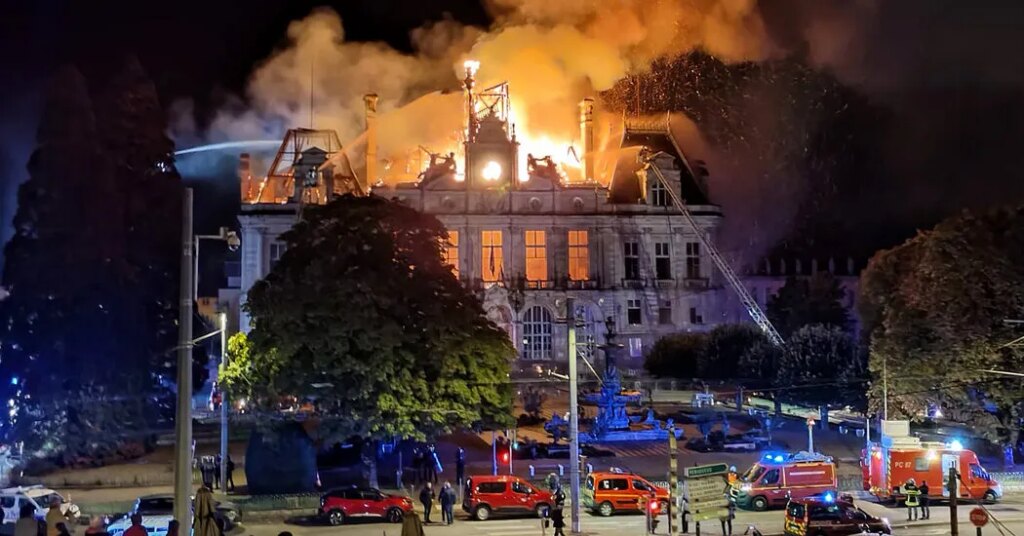
What has unfolded in France in recent weeks — student protests against deteriorating schools turning into mass demonstrations against deteriorating economic conditions turning into violence and rioting against the state itself on a level not seen in years, and all this ahead of presidential elections that could wind up pitting the extreme left of Jean-Luc Mélenchon against the extreme right of Marine Le Pen — are scenes from a country coming unglued.
That’s not because its finances or politics are broken, although both are. More deeply broken are the promises that were supposed to hold the country together: that the young would find opportunity and the old would have support; that the country could carry on as a vast entitlement state without having to compete as a nimble and enterprising one; that France would maintain its identity and its security within a peaceable Europe open to itself and to the rest of the world.
Those promises were never really tenable, though it’s remarkable how tenaciously the French have held on to them.
A succession of French prime ministers have struggled to enact a reform raising the retirement age to 64 from 62, which would bring it more in line with the European Union average and help address the crushing fiscal burden of paying generous pensions in an aging society. Yet the measure is a political nonstarter, which has now been kicked past the next election so the current prime minister can hold on to his job.
France’s youth unemployment stands around 20 percent, nearly three times the rate in Germany. Yet statutory social costs for employers are higher in France — about 45 percent of gross salary — than anywhere else in Europe, discouraging hiring.
A whopping 57 percent of the country’s gross domestic product is spent by the state. Yet the quality of France’s public schools, hospitals, policing and other social services is in manifest decline, not because the government spends too little but because it tries to do too much.
France is hardly the only country in which people are unwilling to let go of government benefits for the common good. But its problems are compounded by its elite traditions of étatisme, even under Emmanuel Macron’s supposedly reformist presidency, and deep-seated hostility to free markets and enterprise. One recent survey of 34 countries put French attitudes toward economic freedom in the bottom quarter of the table.
Of course the French are fully within their rights to distrust or repudiate what they call, usually as a slur, “neoliberalism.” But they should accept the consequences that come with that distrust.
Average annual wages in France, measured in U.S. dollar purchasing power, are over 30 percent less than they are in the United States. The last time the World Bank published its “ease of doing business” rankings, in 2020, France came in 32, in league with Turkey. That may explain why France gets relatively little foreign direct investment — only 15 percent of what tiny Singapore takes in.
In a list of the world’s 100 largest companies as measured by market capitalization, 62 are from the United States, 11 are from China and Hong Kong, and just four are from France. Last year, Le Figaro reported that “nearly 15,000 recent graduates from French engineering and management schools choose to begin their careers abroad each year,” the primary reasons for wanting to go being France’s low salaries.
Policies of national self-impoverishment have broader effects on social cohesion and national security. Resentments against migrants inevitably fester when people feel they are sharing dwindling national resources with newcomers. So do most other resentments — of class and age and religion and race — when people are fighting over how to divide those resources rather than thinking about how to grow them.
Demographic forecasts expect net immigration to jump an additional 50 percent in the coming decades compared with the net increase over the past 30 years. Barring draconian immigration restrictions or a miracle of economic growth, this is a recipe for civil strife, if not outright war.
It’s also a formula for a different kind of danger. Though they are ostensible opposites, both Le Pen and Mélenchon oppose military aid to Ukraine and want a partial or full withdrawal by France from NATO. To the extent that the protests and riots have boosted their presidential chances, they’ve also made it likelier that Vladimir Putin will eventually win his war, especially as the Trump administration turns, shamefully, on Ukraine.
It’s always possible that the weekend’s spasms of violence will remind the French, some of whom are now under curfew, that their politics tend to end badly when taken to the streets. There’s a warning there for all the naifs who used to extol the virtues of a country that thought it really knew how to live.
The Times is committed to publishing a diversity of letters to the editor. We’d like to hear what you think about this or any of our articles. Here are some tips. And here’s our email: [email protected].
Follow the New York Times Opinion section on Facebook, Instagram, TikTok, Bluesky, WhatsApp and Threads.
The post France Comes Unglued, Again appeared first on New York Times.