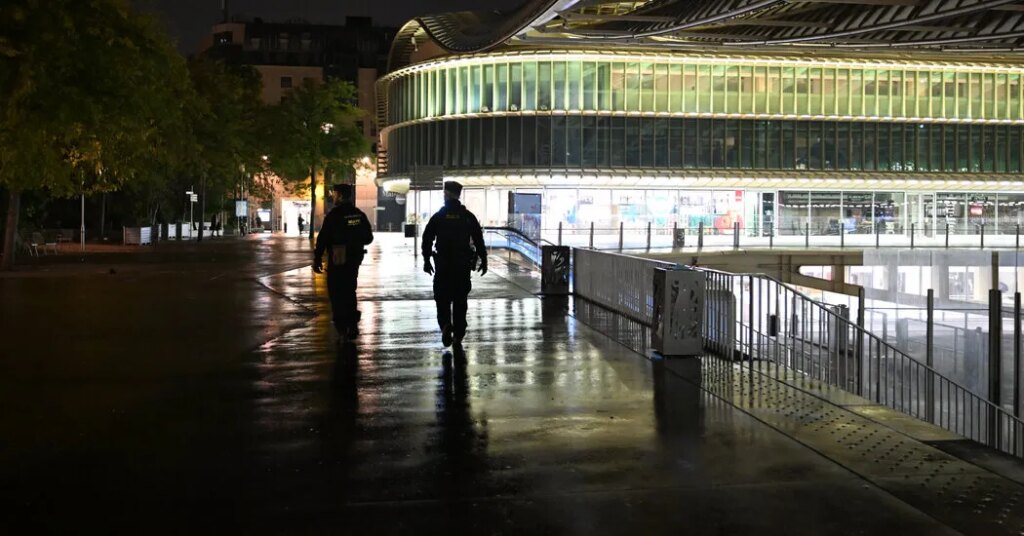
Curfews in France will be extended through Tuesday night “where the situation requires it,” the country’s prime minister, Sébastien Lecornu, said on Tuesday, after the measures “helped keep the night calm” overnight Monday, following days of riots and looting.
The restrictions on nighttime movement in parts of cities like Paris, Marseille and Lille reflected how the French state is trying to reassert its authority after the country’s largest riots in years. In unrest starting on Saturday, several government buildings were attacked and more than 3,000 shops were looted, leading to the arrest of more than 2,500 people, officials said.
French courts are scrambling to process the high number of cases tied to those arrests, amid calls by politicians for a firm and swift judicial response. Courts in Paris and Marseille are holding additional trials with expedited proceedings. Those typically involve prosecutors and court-appointed lawyers churning through straightforward cases in which the accused is caught in the act.
Some people have already been sentenced while more than 700 people were expected to be tried over the next couple of days, Gérald Darmanin, the justice minister, said in a broadcast interview on Tuesday morning.
Mr. Darmanin said that those arrested included “people from immigrant backgrounds, people who are foreigners, but there are also people who are fully integrated and who are French.” He gave no further details about their nationalities, but added that 95 percent of those arrested were men and that 70 percent were adults.
“There are many convictions resulting in prison sentences with immediate incarceration,” Mr. Darmanin said. “In Limoges, 10 protesters attacked police officers. All 10 are in prison.”
A person accused of setting fire to the city hall of Limoges, a small city in central France, was arrested with the help of an elite police unit, prosecutors said on Tuesday. The devastating fire, in a quiet town known for porcelain, caused a national outcry.
Mr. Darmanin said in a separate broadcast interview on Monday night that he had asked French prosecutors for a firm response to the widespread violence. “The justice system is independent,” he said, “but it administers justice on behalf of the French people, and the French people demand the utmost firmness.”
.
The curfews vary from one city to another, with the government instructing local officials to take appropriate measures depending on the situation in their jurisdictions. In Paris, the curfew was imposed in parts of the city for Monday night only and was combined with a ban on unauthorized public gatherings in some neighborhoods. The authorities in other areas, such as Nice, in southern France, have announced that their curfews would remain in place until Sunday.
Some politicians criticized the government’s response, with some saying it was too limited, and others saying it was too harsh.
“A curfew cannot be a political response to a social crisis,” Marine Tondelier, the head of the Green party, said on social media on Monday. “A citywide curfew affects residents who have not participated in any violence: night-shift workers, students, families, and people who must travel for essential reasons.”
Yaël Braun-Pivet, the president of the National Assembly, the lower house of France’s Parliament, said that she wished curfews had been imposed earlier.
“We were shocked on Saturday, but I was even more shocked on Sunday night, thinking, ‘But wait, we still haven’t learned the lessons from what happened, we’re still not able to stop the looting’,” she said in a radio interview on Tuesday.
She called for a parliamentary inquiry into both the violence and the government’s strategy for preventing it.
The post France to Extend Curfews After a Night of Calm, Prime Minister Says appeared first on New York Times.