In today’s edition … Iran has all eyes on November … We ask you for your boldest predictions … but first …
Democrats, active fatherhood and masculinity
If you haven’t read my colleague Anna Liss-Roy’s piece on masculinity and the Democratic Party, you should — it is fantastic work on how, in several campaigns, the 2026 midterms have become a months-long contest to prove who is the manliest man.
“You’ve seen the highlight reel,” Anna writes, “Abdul El-Sayed repeatedly calling his opponent a ‘beta.’ James Talarico firing back against GOP attacks that he is ‘too low-T for Texas.’ A sweaty Beau Bayh, running for Indiana secretary of state, pumping weights in a campaign ad — one of many candidates flaunting their physical strength to break through with voters.”
I’ve been covering Democratic politics for a long time, and I have never seen more male politicians embracing old-school ideas about masculinity than right now. The trend clearly responds to the conversation around the 2024 election that Democrats, after losing to Donald Trump, need to do more to win over young men.
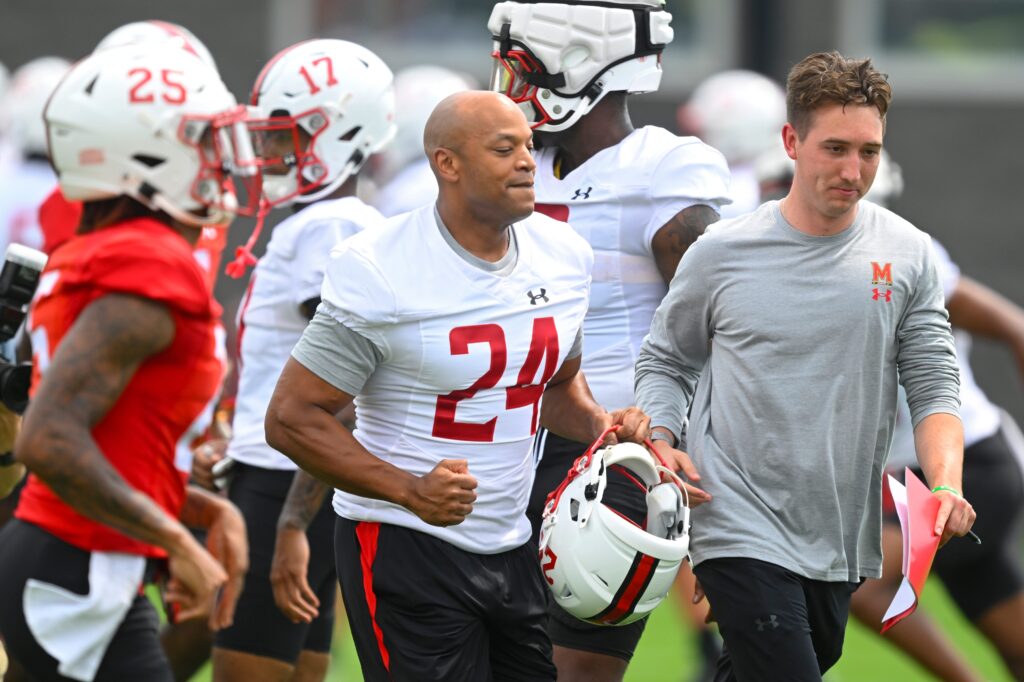
Maryland Gov. Wes Moore, a possible presidential contender up for reelection this year, stands out to me. When he practiced with the University of Maryland football team in 2023, he turned it into an administration hype video. As he campaigned for reelection this year, he talked to TMZ about his workout routine. And then there are the numerous photos I have seen of Moore just subtly flexing as he meets with voters … or Rep. Nancy Pelosi (D-California).
Anna’s piece also got me thinking about another side of masculinity — being a father.
Just as I have seen more male Democrats campaigning as hard-bodied, thirst-trap-posting bros, I’ve seen more male politicians talking about how being active fathers has changed their perspectives on politics.
“For whatever reason, people don’t associate the Democrats with a party that supports families,” Scott Colom, the Democratic nominee for Senate in Mississippi, told me a few weeks ago. “And that’s strange to me because I think we need to support families in our country.”
Politicians have long leaned on their families to humanize them. George W. Bush’s daughters were a staple of his presidency. The same goes for the children of Barack Obama and John F. Kennedy; the list goes on.
But just as fatherhood has changed in the last few decades — no longer just the traditional breadwinner, fathers are expected to be far more hands-on — so too has the way male politicians talk about being fathers. It’s a facet of masculinity that gives candidates a chance to humanize themselves, while also allowing them to flaunt traditionally masculine traits like protecting and providing for others.
Colom added: “Why would I not talk about my family? A big part of who I am as a person is being a dad, being a husband, and looking out for my family, and hopefully people understand that. That’s why I’m qualified to be a leader — because I understand what their family needs, because I have a family, and I’m fighting for my family like I fight for their family.”
Some of this is personal. I am the father of two boys, a role that has changed not just my life, but me personally, over the last five years. It has also certainly made me more attuned to how politicians talk about parenting.
Before I joined The Washington Post, I wrote a few freelance pieces, including one about how fatherhood changed Pete Buttigieg, the 2020 presidential candidate who is widely seen as a possible candidate in 2028.
“I’m more attuned to all of the different ways you can have a good life, only some of which involve public life,” Buttigieg told me in 2024.
His husband, Chasten Buttigieg, was even more blunt. “There has been a significant change in Pete,” he said, arguing that Buttigieg had “recognized that leadership is extremely important, but it’s not the only thing” and that the would-be candidate “realized how good it is being home and being a family.”
Anna found a similar dynamic in her reporting, including with Moore, who has two children.
“When I talk to, for example, my son, about what does it mean to be a man, it’s not … some phony or fake, artificial experience of dominance. It’s — you’re a protector. You’re a provider. You are an example,” Moore told her.
She also spoke with California Gov. Gavin Newsom, another possible 2028 Democratic candidate and father of four, on how Trump and figures in the so-called manosphere have changed the way young men view masculinity.
“I’ve got two young sons. And I see this. I see that need for role models,” he told Anna. “And in the absence of my own success as a father, I see where they gravitate. And I see how their need is exploited by these Andrew Tate types, and by Donald Trump.”
And then there is El-Sayed, the Democratic Senate candidate in Michigan and a father of two, whose campaign against Republican Mike Rogers has become a bit of a bro-off, with the Democrat routinely calling the Republican a “beta” — a slur in the masculinity world.
“We’re just trying to be foundationally authentic about who I am,” he told Anna about fatherhood. “When people say, ‘Oh, well, look at him, like he dances to Taylor Swift, how could he?’ It’s like, yeah, because I have two daughters, and the number of times we’ve turned on Taylor Swift and danced in the living room — that’s real.”
As my colleague Erin Cox noted to me earlier in the campaign, El-Sayed also wears friendship bracelets, the calling card of any Swiftie.
Want this in your inbox?
Start your day with The Washington Post’s flagship political newsletter. Sign up here.
From across the newsroom
- Texas redistricting may backfire — and take out some rising Latino GOP stars, from Jack Herrera and Clara Ence Morse.
- GOP is touting tax cuts to keep Ohio and Congress red. Voters aren’t sold, from Jarrell Dillard and Luke Connors.
- Trump officials soften approach to key immigration policy ahead of midterms, from Lauren Kaori Gurley and Ted Hesson.
- Trump administration holds up Patriot missiles for Ukraine, from Michael Birnbaum, Francesca Ebel and John Hudson.
What I’m watching
This quote is a stunner.
“They’re obsessed,” an Arab diplomat told my colleague Susannah George about Iranian officials’ focus on Trump’s political fortunes, oil prices and the midterm elections. “They think they can bring down a presidency.”
You can read Susannah’s full piece here.
It’s striking how focused Iranian officials are on the midterm elections and the power that oil prices give them right now.
Voters regularly cite the cost of living — including gas — as their top issue in polls. Trump’s inability to get prices lower, and the fact that it’s the war he began in Iran that’s responsible for the high prices, are weighing Republicans down in midterm races all across the country. And Iranian leaders know that.
“Two Iranian officials said their government is focused on the Nov. 3 midterms and sees the window leading up to them as critical to exercising leverage over Trump,” wrote Susannah. “The result has been an escalation in violence in the Strait of Hormuz. As the United States launched operations to encourage an increase in vessel traffic through the strait, Iran stepped up attacks on shipping to a rate not seen since the early days of the war.”
Republicans have been more open in recent weeks about their feelings that Iran is holding out on any de-escalation until after the midterms. Trump has acknowledged that “it’s possible” the war with Iran could cost him the midterms, and Trump has nodded to the idea that Iran is looking to pressure him by saying prices will come down after America votes.
“Right after the election, oil prices are going to be tumbling downward,” he said in September.
All of this is a reminder that one could argue the number that matters the most right now is not broader inflation, but the three numbers you see on the corners of American streets: gas prices.
In your local paper
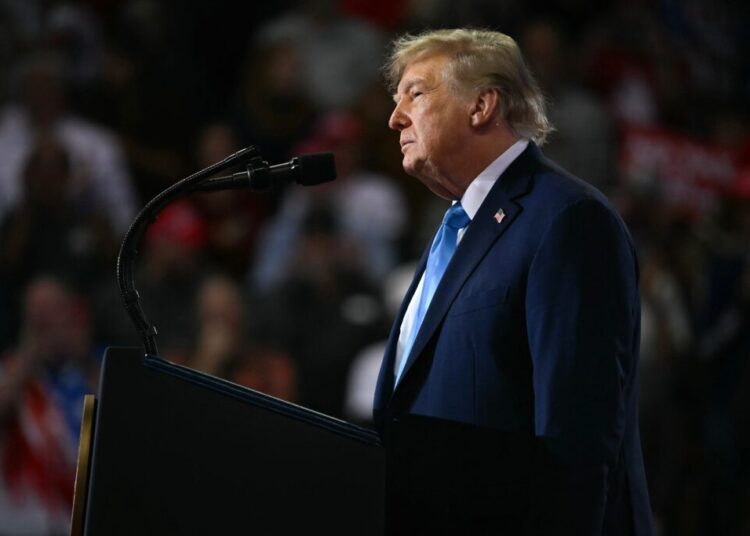
Carolina Journal: Republicans have all but abandoned Michael Whatley, the party’s Senate nominee in North Carolina. But not Trump, who is headed to the state today for a rally in Greenville amid concerns abut early voting numbers.
Source NM (New Mexico): Veterans are increasingly having to turn to food banks after the federal government cut funding to some food assistance programs.
From you
Many of you wrote in to say the dismissal of short-lived White House press secretary Katie Zacharia, who struggled during her first news conference and faced questions about her legal credentials, didn’t tell you anything new about the Trump White House.
“This sad episode tells me nothing I didn’t already know,” wrote Paul Gutermann, arguing the president is “incurious.”
“Katie Zacharia is the poster child of the ineptitude of this administration. As its most recent casualty, she has been flung off the merry-go-round,” added Mary Ciriello.
And Bruce Berkowitz added, “It was fairly obvious from her first presser Kate didn’t have the goods to succeed as Press Secretary. She had the looks and the fawning devotion to Trump, but she looked like a deer in the headlights. Lying about being a lawyer and trying to excuse those lies by saying she graduated law school just sealed her fate.”
Send a reply
This piece from my colleagues on deep red districts that could be in play this year had me thinking about election predictions.
I stopped trying to predict elections after covering the 2016 campaign. But that doesn’t mean you have to: Send me your more audacious election predictions, I will publish them tomorrow and we can see who correctly predicted something after next month’s midterms. Let me and your fellow Early Brief readers know at [email protected].
Thanks for reading. You can follow me on X at @merica.
The post Democrats, fatherhood and being a man appeared first on Washington Post.