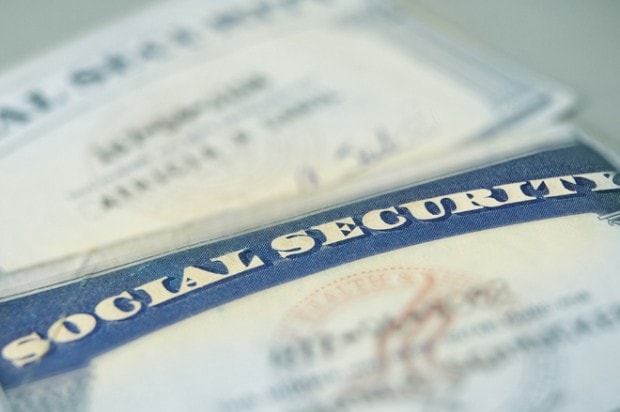
The Trump administration can use a wide-ranging government database that includes Social Security information to help state officials identify noncitizens on their voter lists, the Supreme Court said on Friday.
The emergency ruling means the database will be accessible ahead of November’s midterm elections for states that want to use it. But the fight over the procedure’s legality will continue in the lower courts.
In an unsigned opinion, the majority said the claims made by the voters who challenged the database’s use “likely lack merit.” At issue is the inclusion of Social Security data in a system, maintained by the Department of Homeland Security, called the Systematic Alien Verification for Entitlements (SAVE).
The court wrote that, under laws covering the data, “the Federal Government has an obligation to respond to requests from state and local election officials seeking to verify the citizenship of voters.”
The court’s three liberals dissented, citing the plaintiffs’ claims that the data has been shown to have errors that could lead lawful voters to being barred from casting ballots.
“The Court also focuses only on the harms the Government will purportedly suffer absent a stay, disregarding the harms that the modified SAVE system has caused, and will likely continue to cause, to lawful voters,” Justice Ketanji Brown Jackson wrote for the liberals in dissent. “The Court thus misuses its equitable powers.”
The immediate effects of the ruling may be narrow because states are barred under federal law from purging large numbers of voters from their rolls in the 90 days leading up to an election. That means states can take voters off their lists only if they have specific information showing a voter is not eligible to vote.
Jackson wrote that, if there is a “bright side” to the majority opinion, it is likely to have “minimal short-term impact” since “States will at most conduct individualized voter-roll maintenance using the modified SAVE system ahead of the November elections.”
The case is one of a flurry of election-related cases the high court has resolved less than two months before the critical Nov. 3 midterms.
In the most high-profile case, the justices blocked the Trump administration’s efforts to impose sweeping new restrictions on mail-in ballots, a major blow to a president who has often complained without evidence that mail-in voting is rife with fraud. Democratic and Republican states, along with an array of voting groups, warned that the restrictions would cause chaos by disenfranchising voters and disrupting ballot delivery across the country.
Also in recent weeks, the justices blocked a congressional map from taking effect in Missouri that probably would have helped the GOP gain an extra seat in the House, but the case has now returned to the Supreme Court for the third time. And they said political parties can get discounted TV ad rates when they buy in coordination with candidates, giving a boost to Republicans, whose party committees have far more money to spend in the midterms than those linked to Democrats.
The high court’s latest decision now joins that mix of 11th-hour rulings.
It injects fuel into President Donald Trump’s long-running false narrative that voting by noncitizens is rampant. Trump has insisted he lost in 2020 in part because of noncitizen voting, even though little evidence of widespread voting by noncitizens has surfaced.
In a March 2025 executive order, Trump ordered the creation of a federal system containing Social Security data and information on natural-born citizens that state election officials would be able to use in broad searches to verify their voter rolls. To comply with the order, DHS expanded the SAVE database.
State and local officials have used the SAVE system to verify a person’s citizenship before handing out licenses and benefits, and also to sometimes verify voter eligibility. But the previous system was limited, without information on natural-born citizens or Social Security data.
This summer, Trump and DHS asserted that more than 250,000 noncitizens were on the rolls in just four states. Those claims have largely fizzled. For instance, the department initially claimed there were up to 16,000 noncitizens on the rolls in Nevada. It later dramatically downgraded its estimate to 185. This week, officials in the office of Nevada Secretary of State Cisco Aguilar (D) said it had determined all 185 were citizens.
Noncitizens sometimes wind up on state voter rolls because of mistakes. This year, New Jersey disclosed it had inadvertently registered about 6,600 noncitizens to vote because of a software glitch in its motor vehicles office. About 340 of those noncitizens cast ballots.
In the case before the high court, the plaintiffs, who include immigrants who have obtained U.S. citizenship, challenged the administration’s creation of the enhanced database, saying that it exceeded what Congress had authorized and that the government does not have the ability to provide “accurate, real-time” verification of someone’s citizenship.
In some instances documented in court cases, inaccurate and outdated information in the SAVE system has resulted in mistaken identifications of citizens as noncitizens. Court filings include examples of Texas removing a voter from the rolls who had been wrongly flagged as a noncitizen and requiring two other voters to provide proof of citizenship when they were misidentified as noncitizens.
The government has acknowledged internally that the database could misidentify eligible voters as noncitizens and has an error rate of as high as 81 percent in some localities, the plaintiffs wrote in a filing with the Supreme Court.
“The government has recklessly created an error-laden master citizenship database that endangers millions of Americans’ privacy and voting rights,” the groups wrote.
In June, a federal judge in D.C. blocked use of the database, writing that the administration “haphazardly combined and repurposed the private information of millions of Americans, including citizenship data that they knew to be unreliable.” The federal appeals court in D.C. declined to pause the ruling, prompting the administration’s appeal to the Supreme Court this month.
The administration argued that the database was an effective tool to verify the eligibility of registered voters and benefits applicants under various state and federal programs. “The district court has issued an indefensible order that threatens the integrity of upcoming elections,” Solicitor General D. John Sauer wrote in a filing with the court.
The state of Texas, which the courts allowed to intervene as a defendant in the case, argued in a filing the database was “transformational” and urged the Supreme Court to clear its use.
“The updates, now disabled following the district court’s order, allowed Texas to more efficiently, promptly, and economically ensure the accuracy of its voter rolls,” Texas wrote.
Those who brought the lawsuit said they would continue to challenge the use of the database in the lower courts.
“We are deeply disappointed by today’s decision, but this case is not over yet,” said Skye Perryman, the president of Democracy Forward, one of the legal groups representing those who filed the lawsuit. “The Trump-Vance administration’s overhaul of the SAVE system threatens Americans’ privacy and their fundamental freedom to vote.”
The post Government can use Social Security data to identify noncitizen voters, Supreme Court rules appeared first on Washington Post.