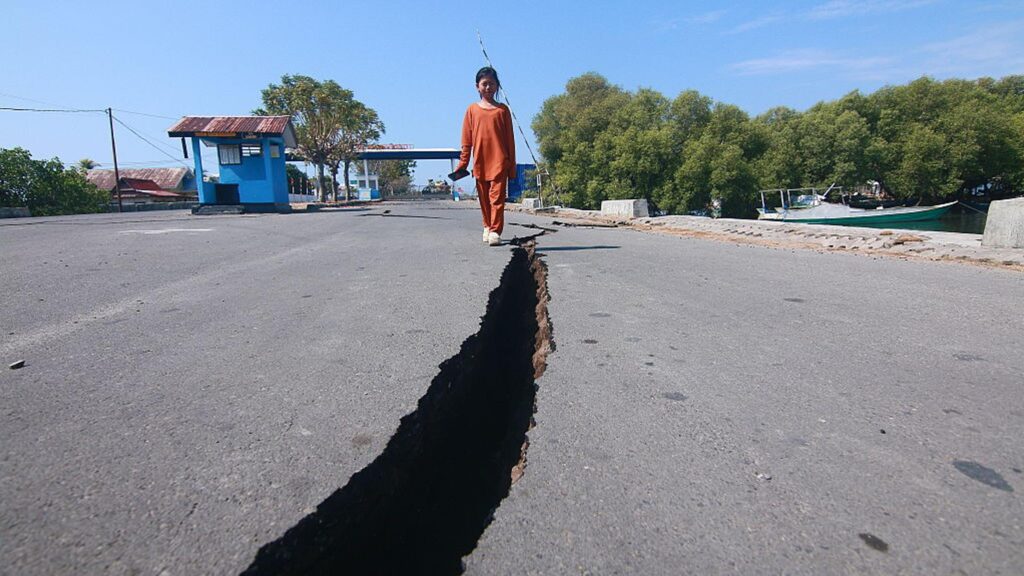
The 7.7-magnitude earthquake struck Indonesia on Saturday, becoming the deadliest quake to hit the country since 2022.
As of Monday, search efforts for bodies and possible survivors were still underway, with rescuers digging through the rubble of collapsed buildings as the death toll reached at least 68 people. Hundreds more have been injured, and thousands have been displaced due to infrastructure damage.
The quake hit off the coast of Flores island at roughly 6 a.m. local time on Saturday, 42 miles (68 kilometers) northwest of the coastal town of Ende at a depth of about 6 miles (10 kilometers), according to the U.S. Geological Survey (USGS).
USGS reported that roughly 2 million people were exposed to “strong” and “violent” shaking. Hundreds of aftershocks followed.
The province’s governor on Sunday issued a 14-day state of emergency.
President Prabowo Subianto paid tribute to the victims of the earthquake on Monday during a ceremony for the country’s 81st Independence Day, holding a moment of silence in their memory.
Here’s what to know about the earthquake, the ongoing recovery efforts in its aftermath, and how you can help.
How strong was the earthquake?
According to USGS, a 5.3 magnitude earthquake is considered “moderate,” while a 6.3 magnitude earthquake is considered “strong.” The earthquake that hit Indonesia had a magnitude of 7.7, making it a major quake.
It marks the latest of several earthquakes with magnitudes above 7 that have rattled countries this summer. Colombia is still in the process of recovering after it was struck by a 7.4-magnitude quake last week. And in June, Venezuela was devastated by back-to-back quakes with magnitudes of 7.5 and 7.7.
What damage has been reported?
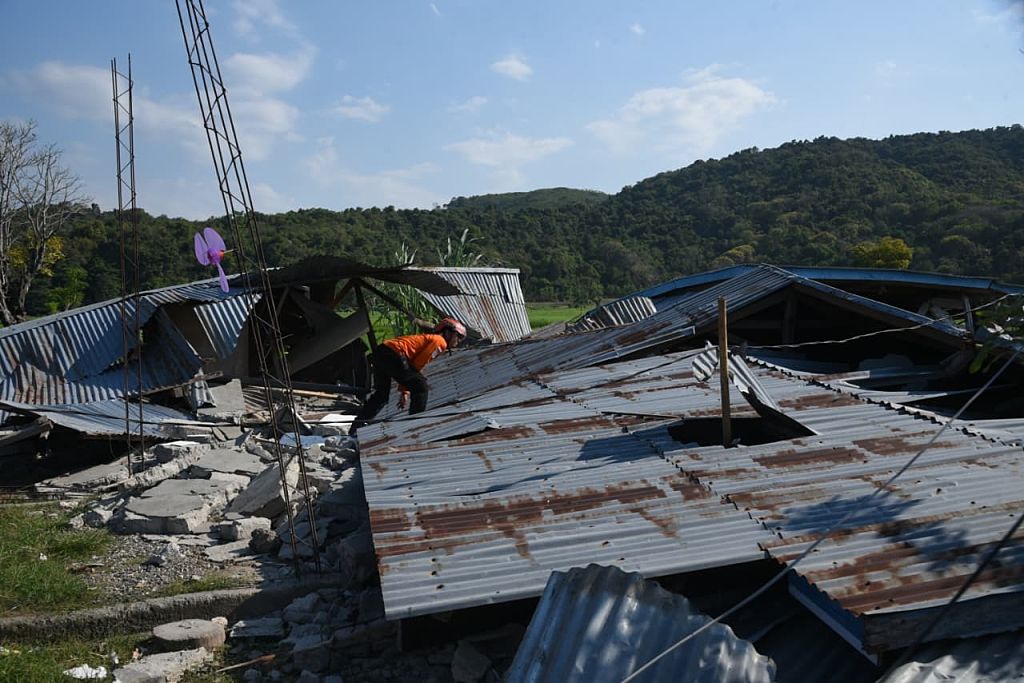
The quake caused widespread damage in several communities in the East Nusa Tenggara province of Indonesia, an archipelago nation comprising more than 17,000 islands.
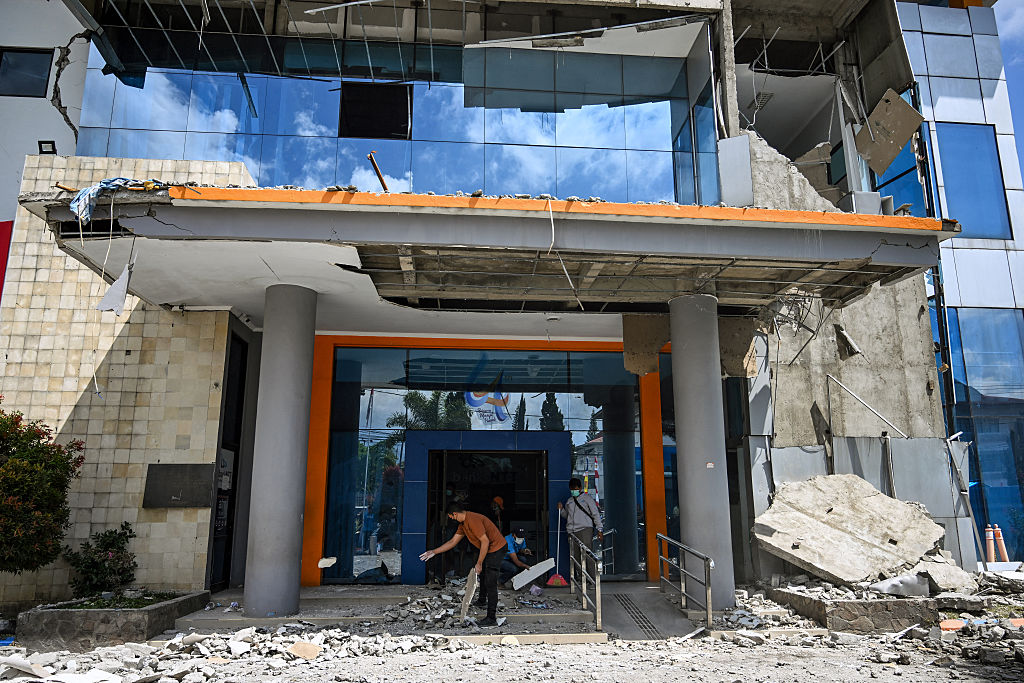
More than 4,500 homes were damaged, along with 122 health facilities, 252 schools, and 84 places of worship, according to the Indonesian National Disaster Management Agency, BNPB.
The Indonesian government has said that more than 1,800 military and police personnel have been deployed around the affected areas to distribute more than 100 metric tons of aid with the assistance of aircrafts and sea vessels.
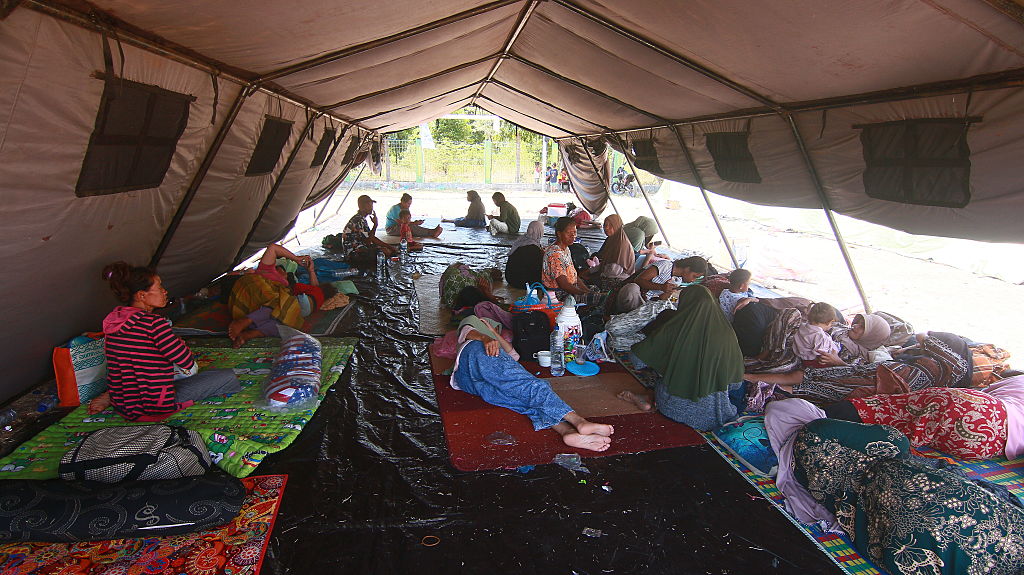
Thousands of people in Flores were sleeping under tarp tents into Monday morning, in need of food and medical attention.
Two emergency field hospitals have been set up in Ruteng, a town toward the western end of the island that suffered the worst impact from the earthquake, to treat injured victims, according to BNPB Deputy Chief Abdul Muhari, who delivered a video statement. He noted that 5,400 food packages were distributed to affected communities, along with medicine and clothing.
The earthquake triggered small tsunamis at 16 locations across four Indonesian provinces: East Nusa Tenggara, West Nusa Tenggara, South Sulawesi, and Southeast Sulawesi, according to Indonesia’s meteorology agency, BMKG. The tsunamis reached several small coastal villages, which caused some infrastructure damage, according to The Associated Press, though a tsunami warning has since been lifted.
Video shows buildings crumbling to the ground, and rescuers digging through debris in search of people.
“The quake was massive, the shock was so strong,” one villager told CNN. “We were resting at home with family. There were 13 of us inside the house and we all ran to save ourselves.”
On the small island of Palue, which was one of the areas closest to the earthquake’s epicenter, more than 150 homes were destroyed, and one villager was killed, according to the AP.
“The roads are steep and many were blocked by landslides. It was a near-death journey,” said the deputy police chief of Sikka regency, Marselus Yugo Amboro, according to the outlet.
How you can help
Several organizations involved in the efforts to help those on the ground in Indonesia in the wake of the earthquake are currently soliciting donations.
The United Nations Children’s Fund (UNICEF), a United Nations program that provides assistance to children and mothers around the world, has an ongoing donation fund to support its efforts in Indonesia.
So does World Central Kitchen, the food relief organization founded by celebrity chef and TIME100 Philanthropy honoree José Andrés, which is working to provide meals to thousands of Indonesians affected by the earthquake.
Global Giving, a nonprofit that connects other nonprofits to donors, is soliciting funds for a variety of services in Indonesia in the aftermath of the earthquake, including food packages, clean drinking water, shelters, and health services. As of Monday afternoon, the organization had raised nearly $10,000 out of its $15,000 goal.
Humanitarian assistance organization World Vision is is also currently accepting donations to help it provide shelter kits that it has prepared to people affected by the earthquake in Flores.
The post What to Know About the Earthquake in Indonesia appeared first on TIME.