Democrats want to target stock buybacks that enrich CEOs
Senate Democrats are proposing a bill that would raise the taxes companies pay when they buy back their own stock.
Publicly traded companies sometimes buy back outstanding shares from stockholders who are willing to sell in a move that increases the value of the remaining shares. CEOs can benefit from a stock buyback because much of their compensation is tied to the value of the company’s shares.
Senate Democrats are calling for an increase in the federal tax corporations pay when they repurchase their own shares, an effort that has not been previously reported. The tax is currently at 1 percent of the share repurchases, but Democrats want to increase it to 4 percent.
The effort revives a long-running debate over whether companies have used savings from tax cuts to help reward executives instead of investing in workers.
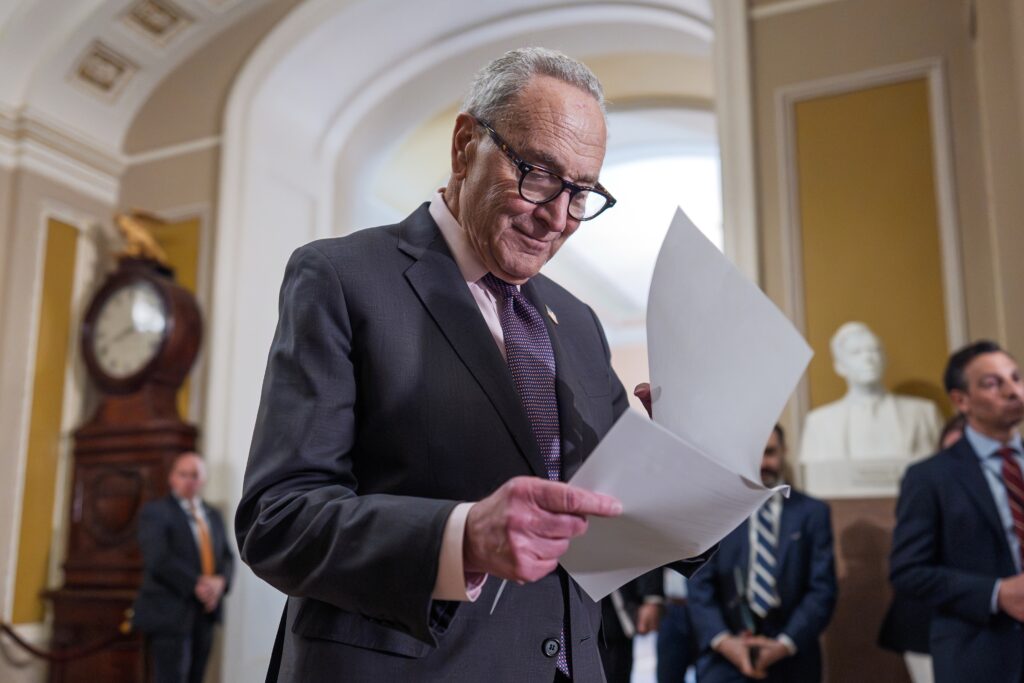
Senate Minority Leader Charles E. Schumer (D-New York) is expected to introduce the bill Thursday, alongside Sen. Ron Wyden (Oregon), the lead Democrat on the Senate Finance Committee, and Sen. Elizabeth Warren (Massachusetts), the lead Democrat on the Senate Banking Committee.
The bill is not expected to make progress with Congress under Republican leadership, but the move is part of a larger effort Democrats are waging ahead of the midterms to show they are attuned to people’s concerns about affordability and making companies pay their fair share.
“We’re going to use the tax code to deal with affordability and to deal with increasing wages, reducing income inequality,” Schumer said in an interview Wednesday with The Washington Post.
The legislation reflects a broader criticism of President Donald Trump’s 2017 tax cut law, which lowered the corporate tax rate from 35 percent of net profits to 21 percent. At the time, many large corporations promised the tax cuts would lead to more job opportunities and higher wages. Instead, Democrats point to data that suggests a significant share of corporate profits went toward stock buybacks, benefiting investors and executives who own the largest shares of stocks.
S&P 500 data shows stock buybacks jumped after the 2017 tax law took effect. Buybacks dipped in 2023 after Democrats passed a new 1 percent excise tax on stock repurchases as part of the Inflation Reduction Act signed by President Joe Biden, though the pullback was short-lived. Preliminary estimates show buybacks exceeded $1 trillion in 2025.
Republican lawmakers have largely opposed taxing or limiting buybacks. Although Democrats are currently in the minority in both chambers of Congress, Schumer said the new proposal signals what Democrats will do on tax policy should they regain the majority.
Schumer said stock buybacks don’t increase jobs or investments; instead, the practice “lines the pockets of the corporate executives, who are the wealthiest people around, and shareholders.”
“It’s shameful that wealthy shareholders and executives are profiting while American families pay through the roof for groceries, gas, and rent,” Warren said in a statement. “This bill is an important step forward in making corporations pay their fair share.”
Tax experts say the impact of a higher tax on buybacks depends on how companies respond.
Garrett Watson, director of policy analysis at the Tax Foundation, said a 4 percent rate could dissuade some firms from stock buybacks, while generating revenue for the federal government. He estimated the higher tax rate could raise about $242 billion over a decade.
Alexander Arnon, director of policy analysis at the Penn Wharton Budget Model, said the existing 1 percent tax had a limited impact on corporate behavior. He said a higher rate would probably drive some changes in behavior, although it’s not clear whether companies would raise wages or invest more in workers. He estimated the 4 percent tax on buybacks could raise approximately $300 billion over 10 years.
Researchers say part of the appeal of buybacks is that they carry lower tax rates than dividends, which are taxed immediately as income to shareholders, subject to higher tax rates.
Buybacks allow investors to benefit from stock price increases, and they are not taxed until the shares are sold. The difference has helped make stock repurchases a more attractive way for companies to give cash to investors and employees.
“It’s just a powerful force, and [companies] have just shown how relentless they are … about buying back their stock,” said Chuck Marr, vice president for federal tax policy at the Center on Budget and Policy Priorities.
He said it is hard to see how much of an effect a higher rate on buybacks would have on companies, “but it will raise real money.”
The post Democrats want to target companies that buy back their own stocks appeared first on Washington Post.