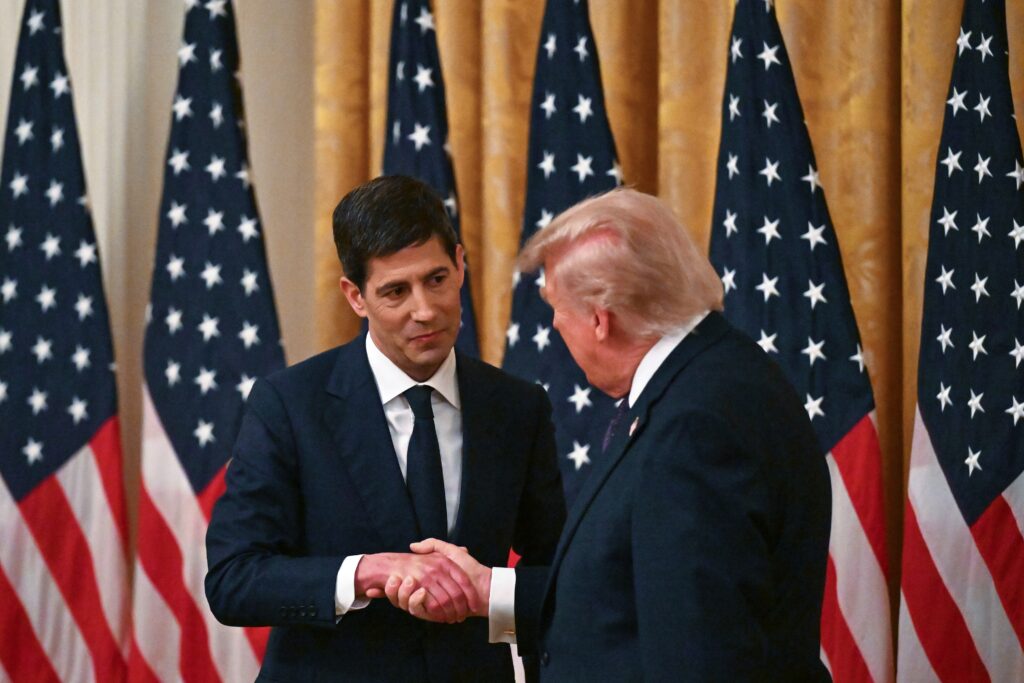
President Donald Trump’s new Federal Reserve chair, Kevin Warsh, previously argued that the Fed had room to cutinterest rates, a message that made him attractive to a president who has long viewed cuts as a top priority.
Only weeks into his role as chair, Warsh is confronting rekindled inflation that may eventually force him to do the opposite on rates, defying President Donald Trump, to exercise the Fed’s strongest tool to fight inflation.
This week’s consumer price index showed inflation topping 4 percent on an annual basis for the first time in three years. The hot inflation report landed about a week before Warsh chairs his first regularly scheduled policy meeting and one that could set the early terms of his tenure. And the news follows a stronger-than-expected jobs report reflecting resilience in the labor market, the other part of economy the Fed watches.
The Fed is designed to operate independently of the White House, setting interest rates based on its best assessment of the economy rather than short-term political pressure. That independence has long been considered a cornerstone of the central bank’s credibility — and a source of tension with some presidents, especially Trump, who wants dramatically lower borrowing costs.
“A critical test for Warsh in the early going will be whether he delivers the cuts Trump so strenuously demanded,” said David Wilcox, an economist at Bloomberg Economics and the Peterson Institute for International Economics. “Depending on how economic circumstances unfold, Warsh and his colleagues may be put in the difficult position of having to defy Trump by not delivering rate cuts and conceivably even hiking them.”
The logic behind a potential rate increase is straightforward: With the economy running hot, punctuated by the surprisingly solid jobs market, higher interest rates would raise borrowing costs on an array of loans, cooling demand and preventing the economy from overheating. It is the Fed’s classic role, in the words of a former chair, to take away the punch bowl just as the party gets going. The question is whether Warsh will pull that lever, and when.
The Fed is almost certain to hold rates steady at its meeting next week. But investors increasingly predict the central bank will move toward higher rates before the end of the year.
The Fed’s short-term benchmark rate ripples through the financial system, shaping what millions of Americans pay for mortgages, car loans and other forms of borrowing. The Fed doesn’t directly set those interest rates, though it does influence them.
Warsh is unlikely to telegraph his next move, and he may in fact begin a shift toward communicating less about his projections about the economy. One subtle move: He may cut language in the Fed’s policy statement that has suggested a rate cut is more likely than a rate increase. That change alone would reflect a meaningful shift for the financial markets that closely parse every word emanating from the central bank.
Some Fed officials have signaled growing impatience with the hope that inflation will simply fade on its own. Cleveland Fed President Beth Hammack said last week it “may soon be appropriate to act” on inflation — language widely read as a signal she could push for a rate hike this summer. Dallas Fed President Lorie Logan has also indicated openness to higher rates.
Vincent Reinhart, a former Fed official who spent years drafting the Fed policy statements, said he thinks Warsh can navigate the politics without ever getting to a hike — at least for now. By stripping out existing language in its post-meeting statements that has signaled a bias toward rate cuts, Warsh can satisfy the inflation “hawks” on his committee.
“There is a practical political benefit from cutting out the guidance,” said Reinhart, now at BNY Investments. “It makes the target you put on your back smaller.”
Warsh can also signal he is an agent of change simply by reworking the post-meeting statement that has accumulated decades of boilerplate language that adds little value and takes up a big chunk of the document, Reinhart added.
At his White House swearing-in ceremony last month, Warsh pledged to lead a “reform-oriented Federal Reserve.” He has yet to comment publicly on interest-rate policy. Warsh has since tapped two conservative policy veterans as interim advisers, one of whom helped write the chapter on overhauling the Fed in the conservative Project 2025 blueprint.
Trump said he wanted Warsh to be “totally independent,” while adding what he hopes that independence will yield. “You get the interest rates down, everybody’s going to be very, very happy,” he said after Warsh’s swearing-in ceremony. Asked on NBC’s “Meet the Press” whether he would support a rate increase, Trump said he wanted Warsh to “do whatever he wants.” Then he added, “We should actually lower interest rates.”
Veteran Fed watchers say Trump misunderstands how monetary policy actually works. The president tends to think of interest rates the way a real estate developer would, from the borrower’s side, rather than as a macroeconomic tool. If Warsh were to cut rates now, longer-term rates set by the market would likely rise in response, as investors demand higher returns in anticipation of higher inflation. That pushes up mortgage rates and undermines the very relief Trump craves. The bond market, already in a sour mood, would punish the move.
The inflation toll is showing up in the data. Consumer sentiment has fallen to its lowest level on record, while inflation expectations remain elevated and are moving in the wrong direction.
Though inflation has been fueled by successive supply and energy shocks, compounded by fiscal stimulus, it’s the Fed that now has a credibility problem: It is the institution specifically charged with price stability, and inflation has remained above target for more than five years, said Diane Swonk, chief economist at the accounting and consulting firm KPMG. She projects the Fed will raise rates twice this year.
“At the end of the day, the Fed’s job is to make sure that does not continue,” she said.
The post Trump’s new Fed chief may soon have to raise interest rates appeared first on Washington Post.