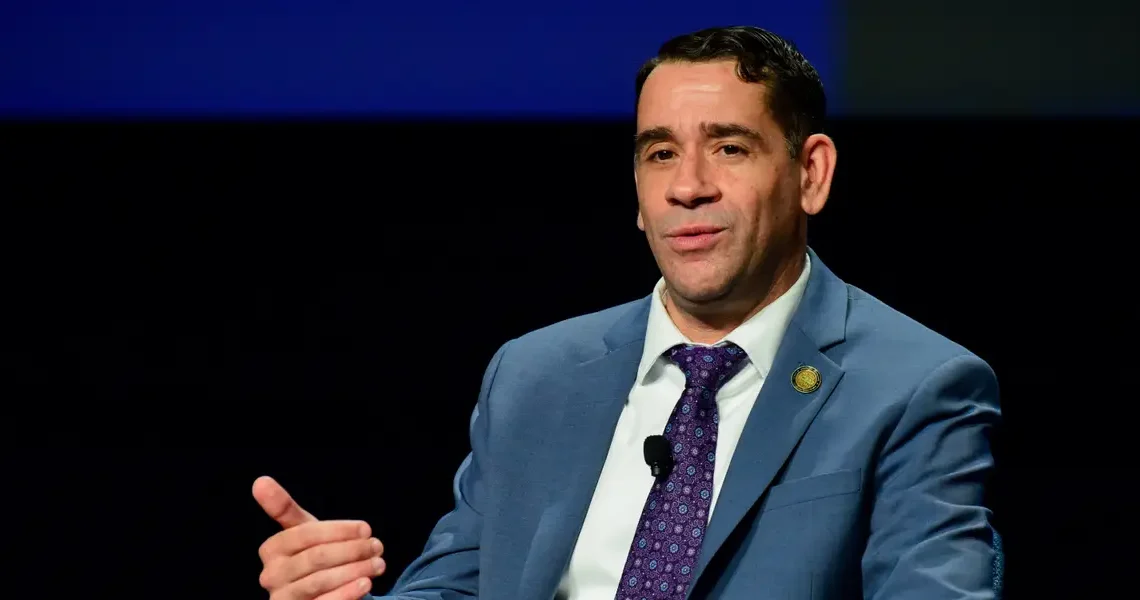
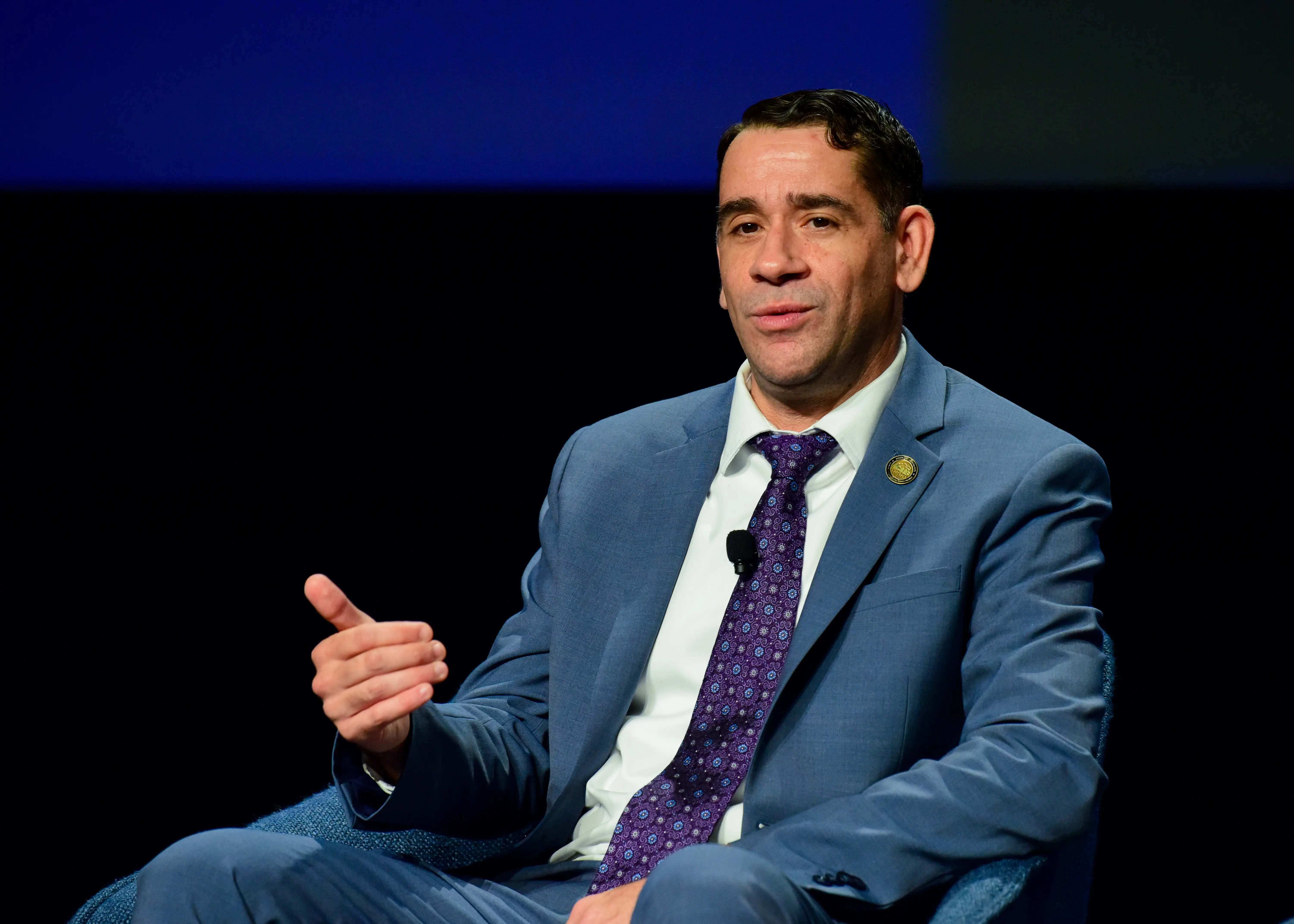
The US Army is flooding the force with new technology and AI tools. Its former top tech official says rolling them out is the easy part. The hard part is getting soldiers and the institution to adapt, a lesson for any inflexible operation.
“The hardest part is never the tech, ever,” Leonel Garciga told Business Insider. It’s getting workers to rethink how and why they do things, as well as encouraging them to play with new tools in a sandbox with some supervision. “People are always nervous when automation comes in or when technology comes in.”
Garciga, whose three-year term as the Army’s chief information officer came to an end last Friday, said the job was fast-paced, marked by efforts to upend decades-old processes and cut through red tape, allowing soldiers and civilians more space to experiment.
The key to making that happen, he told Business Insider, was pushing new tools out fast and prioritizing user experience while accepting the risk of things not working out as planned.
‘Let’s break some glass’
It’s the kind of rapid change Pentagon leaders are now pushing across the US military, from drones and new weapons to artificial intelligence platforms and digital tools. But transforming the Army at that speed, especially its sprawling business operations, runs contrary to how the military traditionally operates.
Rather than sticking with the typical yearslong development processes with excessive deliberations, Garciga’s approach was simpler. “Let’s just make it ubiquitously available and see what happens,” he said. “Let’s break some glass.”
The chief information officer serves as Army’s principal advisor on the technology that makes the service run, from the mundane software soldiers and civilians use in their day-to-day jobs to tech safety oversight. It’s a daunting role because of the size of the service and how much work has to happen behind the scenes to make progress possible.
“I think you have to have this mental agility to really do this job smartly because the portfolio is big,” he said, adding that “the ability to move your perspective and way of thinking across different areas makes this job a lot easier.”
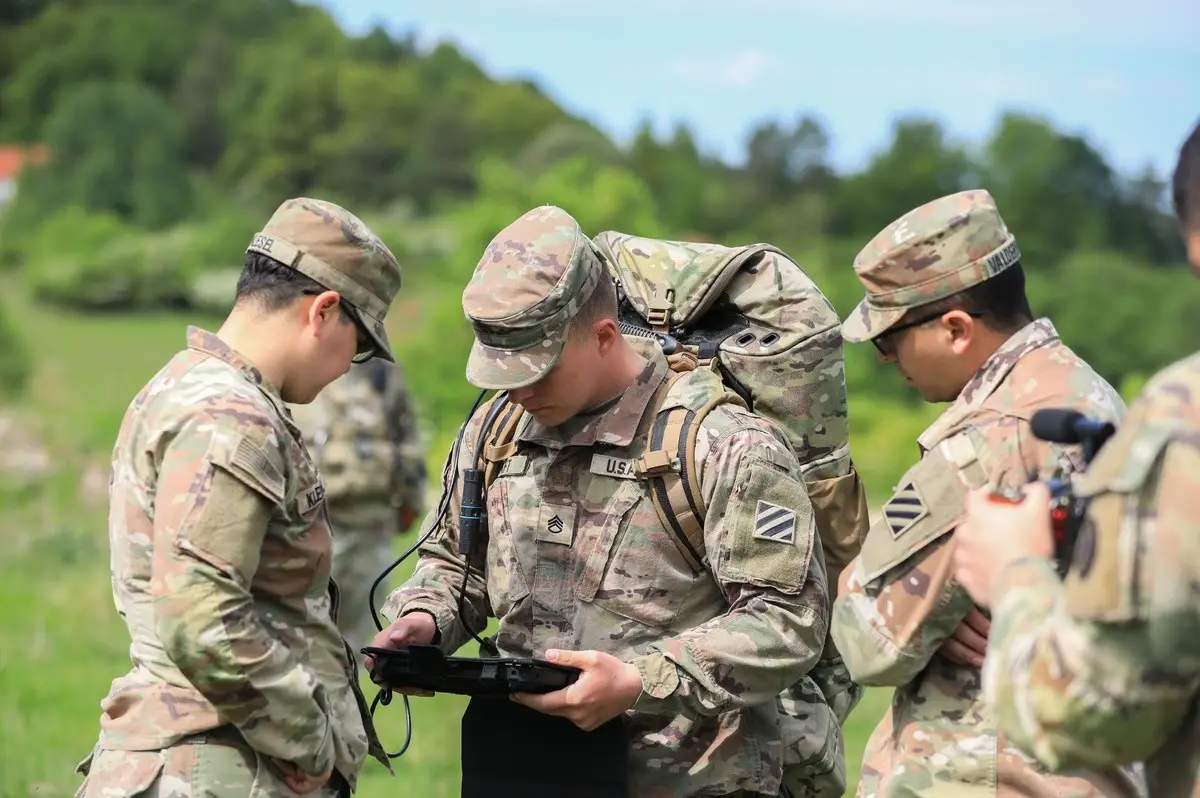
Garciga said many of the Army’s biggest problems came down to user experience: soldiers and civilian employees sometimes waited weeks for system access and faced significant paperwork for routine processes. At the same time, different parts of the Army, from legal to medical, have been buying their own software with little coordination or compatibility across the service.
Basic communication tools frustrate troops. The Army’s rigid memo formats were designed for a paper-heavy bureaucracy, not modern digital work.
One of the most popular requests from soldiers, Garciga said, was help turning messy memos into documents that easily complied with Army formatting rules.
‘Don’t turn it into a process’
Unnecessary points of friction, where bureaucratic processes consume time and eat into people’s actual jobs, can create some of the Army’s biggest workforce headaches,
Part of fixing these problems, Garciga said, meant pushing decisions lower and giving commanders more authority to make calls themselves.
“Don’t turn it into a process that takes time and delays people getting the capability they need,” he said.
That tension is playing out with the Army’s rapid adoption of AI technologies, which has unfolded more quickly than initially expected, Garciga said, creating a certain degree of whiplash as workers struggle to keep pace.
The Army has been making many of its new AI capabilities available with lower barriers to entry so that soldiers and civilians can experiment, but dealing with the flood of new tools can be daunting.
“Probably the biggest demand signal we get is, ‘Hey, how do I get trained on this because I don’t understand what I’m looking at?'” Garciga said. “And the other piece has been, ‘How do we keep up with policy?'” These are challenges not unique to the Army.
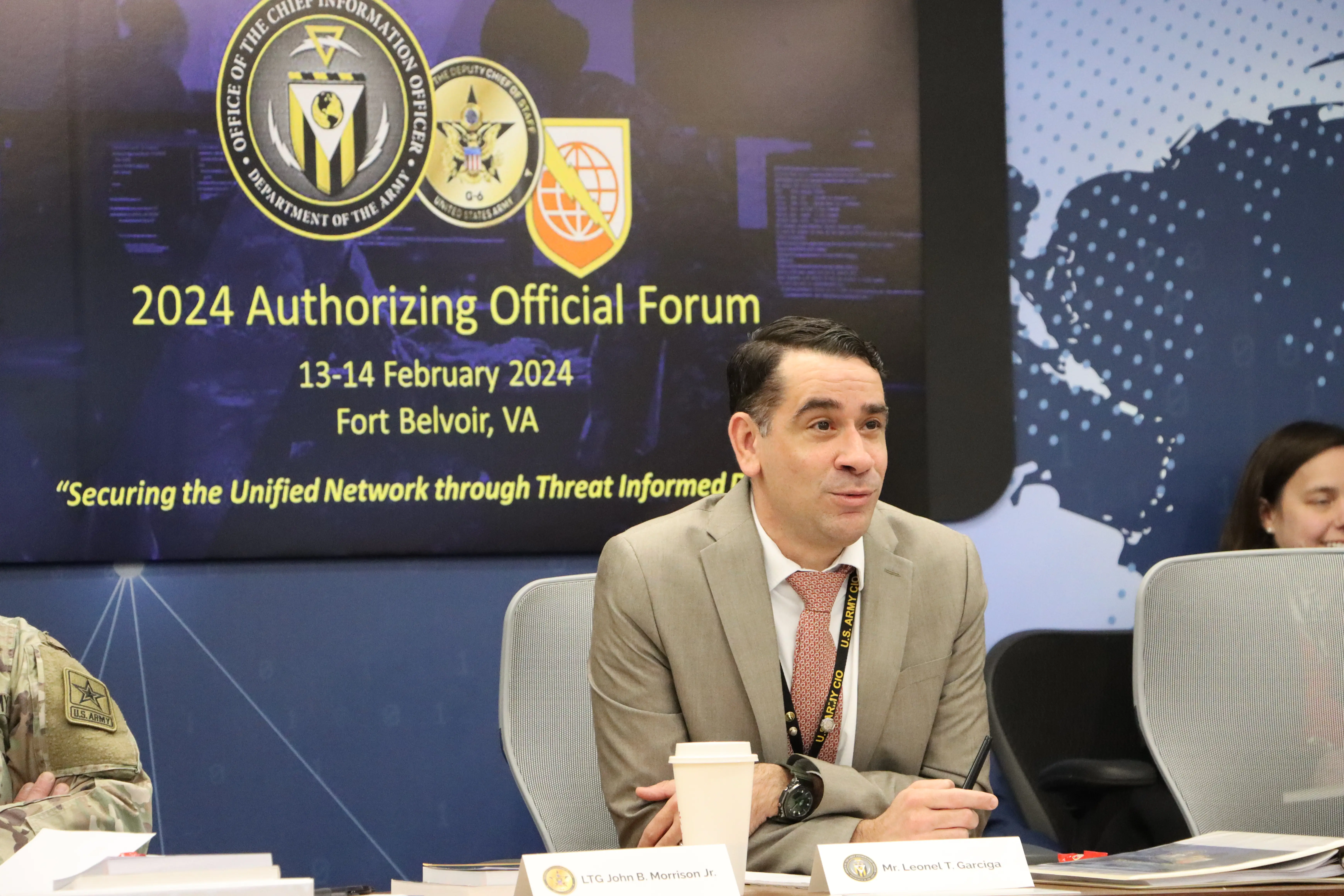
The situation Garciga described is a prime example of how military personnel and civilians, like white-collar workers in corporate industries, are adjusting to the benefits and challenges presented by artificial intelligence. It’s changing many of the processes that workers are accustomed to, making some bristle.
That creates obstacles to getting people to adapt, which Garciga called the biggest challenge, not the tech itself.
‘How do we push that’
Garciga’s appointment to CIO by the Biden administration’s Secretary of the Army Christine Wormuth and his time in the job came after decades of, as he described, never saying no to new jobs or learning opportunities.
Garciga is a first-generation American, his family from Cuba, and after graduating high school, he enlisted in the Navy because college wasn’t affordable. “Next thing you know, I’m on a submarine,” he said. Garciga later earned his submarine warfare pin aboard the Los Angeles-class USS Memphis submarine.
An early proving ground for his later role as Army CIO came in the 2000s, when he helped lead the Joint IED Defeat Organization, which was tasked with rapidly getting troops the tools, weapons, and training needed to counter improvised explosive devices — a deadly threat the military was still struggling to solve. He’s headed to Booz Allen Hamilton next where he’ll serve as an AI and tech advisor.
“I think I spent most of my career more in the unconstrained area of the Department of War and the intelligence community,” areas where access and information were decentralized and the workforce was less managed top to bottom, he said.
“I’ve had a very different perspective on that, which has driven a lot of our policy. If you look at that, it’s been really focused on, ‘How do we push that as far down as we can?'”
Now, Garciga said, his successor will have to test how much expansion and speed is tenable, and whether there are certain areas where guardrails should be raised. “What is the threshold that we have to put some governance on it, right? Unbridled sprawl is never a good thing, right?”
Read the original article on Business Insider
The post The submariner-turned-top Army tech boss said the hardest thing about modernizing isn’t the new tools — it’s the people appeared first on Business Insider.