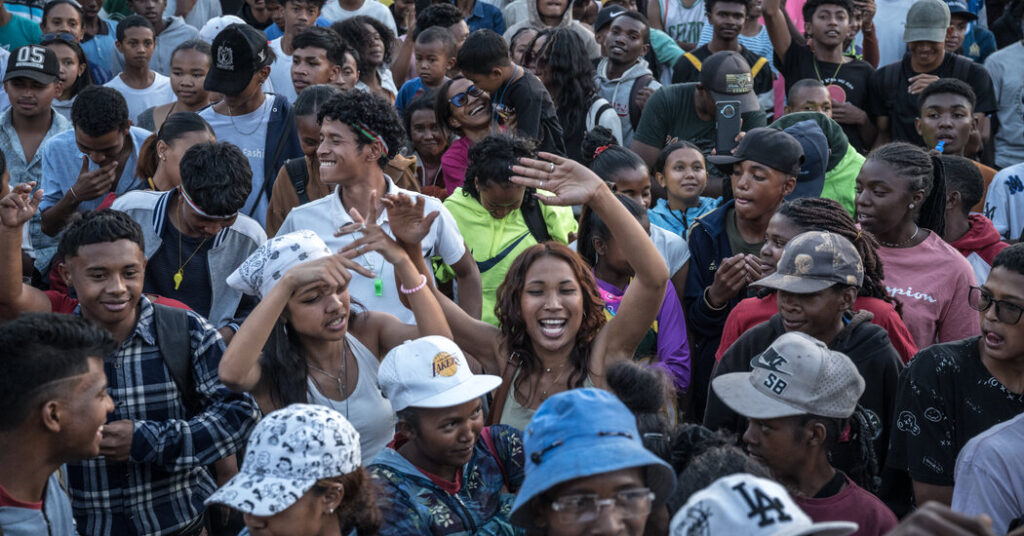
Last year, Gen Z rose up across the globe in protest. Deploying viral memes — down with “nepo kids,” salute the straw hat-wearing Jolly Roger pirate flag — teens and 20-somethings in Indonesia, Morocco, Peru, Nepal and beyond rallied against what they saw as a corrupt, out-of-touch old guard.
Young people often prompt change (think 1968). But as the legacy of the Arab Spring 15 years ago shows, they don’t always get what they want.
Here is where Gen Z stands today:
Nepal
-
What happened? In September, young Nepalis unseated a government after only two days of protests against corruption, political impunity and a government-imposed social media ban.
-
What changed? Six months later, a youth-backed party won elections by a landslide, ushering in a 35-year-old rapper as prime minister. (Although he is a millennial, he is wildly popular with younger people.) It is by far Gen Z’s biggest win to date.
Madagascar
-
What happened? Weeks after Nepal’s political upheaval, a colonel in Madagascar backed Gen Z protesters there, prompting the president to flee the country.
-
What changed? Last month, the colonel, now the new president, dismissed the interim government and named a new prime minister. He vowed to combat corruption by giving lie-detector tests to potential ministers. Elections aren’t expected until next year.
Peru
-
What happened? Young Peruvians took to the streets in September to protest an unpopular president and Congress, amid a worsening crime wave. The president was eventually ousted, and her interim successor was then impeached in February.
-
What changed? In a country that in a decade has cycled through six leaders before their terms were up, it was hard to deem this solely Gen Z power, rather than chronic political instability. An 83-year-old is serving as interim leader until July, amid a protracted vote count for the first round of elections this month. A runoff is expected in June.
Indonesia and the Philippines
-
What happened? In August, Indonesian youth began mobilizing nationwide to protest perks for lawmakers at a time of rising costs and unemployment. The president rolled back some of the parliamentary privileges, but not before chaos had erupted in the streets. The following month, youth-led demonstrations against corruption broke out in the Philippines.
-
What changed? Both countries once overthrew dictators through people power revolutions, but the entrenched elites remain in charge amid rising social inequality. The protests did nothing to change that.
Morocco
-
What happened? Youth unemployment. Crumbling schools and hospitals. Lavish spending on megaprojects like soccer stadiums. The woes prompting Moroccan Gen Z to protest last fall were no different from those lived by millions of youth worldwide.
-
What changed? Like in Kenya and Togo, countries with youth-heavy populations, the protest movement in Morocco led to a deadly police crackdown and little systemic change.
Bangladesh
-
What happened? Early starters, Gen Z scored its first revolution in 2024 when youthful demonstrators in Bangladesh kicked out the authoritarian scion of a political dynasty after a bloody crackdown.
-
What changed? A Nobel Peace laureate was named interim leader. But in elections in February, voters brought back to power another party led by the scion of another political dynasty. It promised big change, only to drag its feet on a reform charter that voters had overwhelmingly backed in a referendum.
Hannah Beech is a Times reporter based in Bangkok who has been covering Asia for more than 25 years. She focuses on in-depth and investigative stories.
The post Gen Z Protests Around the World: Success or Epic Fail? appeared first on New York Times.