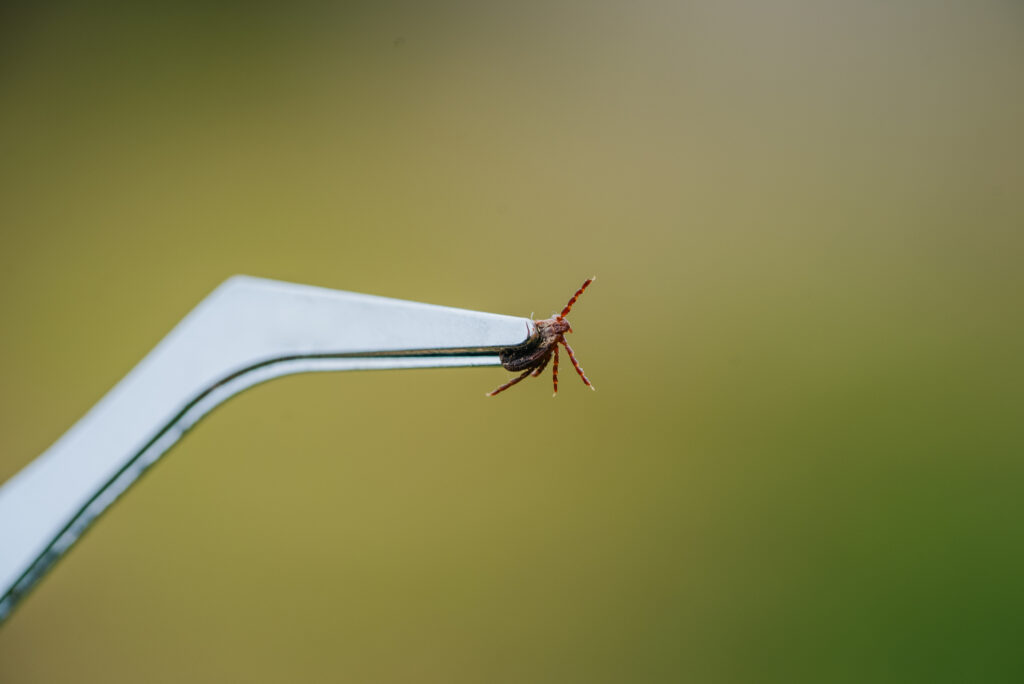
Spring is here in the Northern Hemisphere, which means tick season (and allergy season) is either just kicking off or already in full swing, depending on where you’re located. With more activity comes a heightened risk of tick-borne illnesses — the most infamous of which is Lyme disease, transmitted by the black-legged tick (a.k.a. deer tick) — especially if you spend a lot of time outdoors and have pets.
Many people know to be tick-aware on a hike or camping trip, “but maybe they are not taking the same precautions when they go into their own backyards,” said Neeta Connally, a medical entomologist who oversees the Tickborne Disease Prevention Laboratory at Western Connecticut State University. Some research suggests the majority of tick exposure occurs during everyday outdoor activities such as gardening, barbecuing, playing sports and walking pets.
While there’s been some good news lately — such as a new Lyme disease vaccine in development — climate change might also be increasing the range of ticks and the types of diseases they carry. “There are more ticks, and an increasing number of those ticks also have a number of pathogens, so every bite poses a much, much greater risk,” said Michel Shamoon-Pour, co-director of the Binghamton University Tick-Borne Disease Center.
While you can’t entirely prevent ticks from taking up residence near your property, there are ways to make the landscape less welcoming to them. Other smart prevention strategies can help keep your and your loved ones safer while enjoying your outdoor space.
How to make your backyard a tick-unfriendly zone
There are many tick species throughout the United States. Some, such as the black-legged tick and the lone star tick, like shady, moist, forested areas; others, such as the American dog tick and Gulf Coast tick, prefer grassy fields, forest edges and open trails. Knowing which types of ticks you’re most likely to encounter can help you best tailor the tick-prevention tips to your property.
First, scope out areas where ticks thrive. Because black-legged ticks are susceptible to drying out, you’re most likely to encounter them in parts of residential yards where the air stays humid, said Thomas Mather, a professor of public health entomology and director of the University of Rhode Island TickEncounter Resource Center. “They’re not going to be out in the middle of the lawn, necessarily, because it’d be too dry out there for them, so they’d be in the shadier edges,” he said. This is especially true if your backyard is adjacent to or contains shrubs or woodland.
One tick you are more likely to see on a sunny spot of grass is the American dog tick; this species has a “thicker, waxy covering, so they can hold all of their internal moisture better,” Mather said. American dog ticks don’t spread Lyme disease bacteria, but they can transmit Rocky Mountain spotted fever. The Gulf Coast tick and Rocky Mountain wood tick also thrive in similarly dry and open grassy areas.
Maximize sun exposure. Because black-legged ticks favor moist, humid environments, “it’s possible that by managing your landscape, your garden, your grounds, so that there’s a lot of light penetration from the sun, the ticks may do slightly worse,” said Richard Ostfeld, a disease ecologist at the Cary Institute of Ecosystem Studies. Cutting back tree overgrowth and trimming bushes to reduce shade can limit the number of tick-friendly areas. Make sure you suit up correctly when doing these tasks. (More on how to do that below.)
Clear out piles of leaves. Leaf litter and brush piles are ideal tick habitats: In one 2022 study of Staten Island yards, log and brush piles were associated with the presence of a variety of tick species. Black-legged ticks can be carried to these piles by deer or small animals, and once there, they thrive, thanks to the moisture and shade the leaves provide, explained Peter Krause, a senior research scientist in the Department of Epidemiology and Public Health at the Yale School of Public Health.
Consider a barrier. There’s no evidence that creating a mulch, gravel or wood chip barrier next to wooded areas prevents ticks from crawling to your property. (They’re more likely to make their way in on animal hosts, noted Ostfeld.) But this kind of landscaping can be beneficial if you have young children. “It’s not that the tick wouldn’t be in a wood chip barrier,” explained Mather, but it creates a clear boundary, “so you could teach your kids, ‘Don’t go across the wood chips because there are ticks.’”
Choose safer spots for play equipment and recreation areas. Swing sets, trampolines and outdoor furniture are best located away from high-risk edges. Place these items close to your house or in the center of your yard where the sun can shine on them and “make it a little less humid, so that it’s less hospitable for ticks,” Connally said.
Keep grass short. Tall grasslands may harbor black-legged ticks, but it’s unclear how often you need to mow your lawn to reduce them. In a 2019 field study from the U.S. Forest Service conducted in Springfield, Massachusetts, for example, ticks weren’t detected on residential lawns regardless of mowing frequency. Still, maintaining your lawn is a good idea, since it’s possible that with “very short grass, the ticks won’t be as abundant,” Krause said.
Take steps to manage wildlife. Ticks don’t crawl far. They enter your property largely on the bodies of mice, chipmunks, deer, birds or other mammals, said Ostfeld. Keeping log piles, bird feeders and bird baths away from your home can prevent these animals — and any ticks hitching a ride — from getting too close. Mice and chipmunks like to live in stone walls, Connally added. Sealing up or removing them can help, as can removing waste and closing trash bins that might attract rodents.
Treat your yard with repellent. Applying a tick repellent to your yard — which usually comes in a spray or granular form — has been shown to reduce tick numbers, so could be worth considering if your property has high-risk areas. However, Ostfeld noted that there’s no evidence that shows using tick-control substances in residential areas reduces the probability of getting sick from a tick-borne disease, and in addition to killing ticks, pesticides may harm insects such as beetles and bees. “You can use some pesticides judiciously, perhaps in the edge areas or ground cover or bushes,” said Jean Tsao, a disease ecologist and professor in the Department of Fisheries and Wildlife at Michigan State University. Early spring is the best time to treat your yard, she added.
Take precautions before going in the backyard
Nymphal ticks are active in spring and summer, and because they’re smaller than adult ticks — about the size of a poppy seed — they can be difficult to spot. Wearing light-colored clothing when gardening makes ticks a little easier to see, and tucking pants into your socks means fewer gaps of skin they can access.
Insect repellents registered with the Environmental Protection Agency, such as DEET and picaridin, can be used on skin.
One of your best bets to protect against ticks is using a 0.5 percent permethrin spray on shoes or outdoor clothing, experts said. This synthetic pesticide is available in a number of forms, such as in pretreated clothing or aerosols or sprays that last multiple washings, and “provides a really good protective layer,” said Shamoon-Pour.
After coming back indoors, perform a tick check, paying close attention to your ears, belly button, underarms and between your legs. You can also take a shower within two hours and put clothing in the wash or, at the very least, directly in the dryer on high heat for 10 minutes, said Connally. “[Ticks] can’t handle the high heat,” she explained, “and it’s easy enough to do.”
Fear of ticks shouldn’t prevent people from enjoying their backyards, Shamoon-Pour stressed, but it’s good to be prepared because tick-borne diseases could have rare but devastating complications. Putting in a little extra legwork can help you stay safe and enjoy your time outdoors.
The post How to tick-proof your yard appeared first on Washington Post.