In a doctor’s waiting room in Lafayette, La., Emma Benoit was puzzled: A bespectacled academic was there with a hulking machine that looked like a wooden closet. He wanted her to speak into it.
The man was Lorenzo Dow Turner, a pioneering Black scholar of linguistics. He was crisscrossing southern Louisiana in the summer of 1935 with an enormous recording device that weighed 100 pounds and required at least two people to carry.
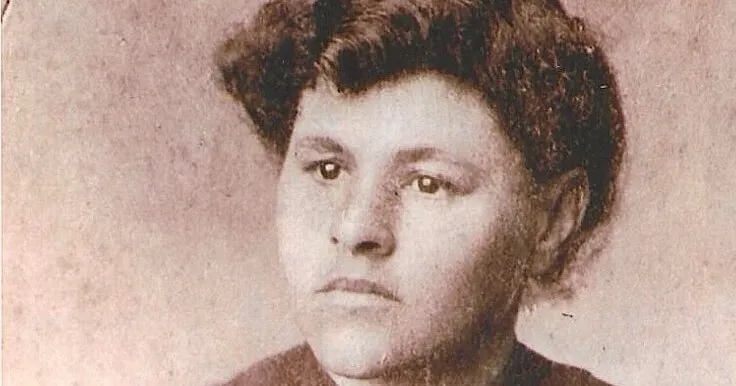
Ms. Benoit leaned toward the machine and began outlining the “passing of my life.” A 69-year-old widow, she was born in the ashes of the Civil War to a formerly enslaved mother and a white father. She spoke in Louisiana Creole, a language that only a few thousand people now use but was once the predominant one in parts of the state.
Nearly a century later, the machine’s aluminum disc recordings were analyzed and shared publicly on Friday for the first time. Oliver Mayeux, the Cambridge University linguist who found Ms. Benoit’s interview alongside 12 others from Dr. Turner’s trip, said they were the oldest known examples of someone speaking Louisiana Creole, also known as Kouri-Vini. (Older recordings exist, from 1934, but the language is sung rather than spoken.)
“The moment I heard these recordings, I knew that they would drastically change our understanding of this language,” Dr. Mayeux said. His research findings were published in the journal “Language Documentation and Description.”
For linguists, the discovery sheds light on how Louisiana Creole emerged from its roots in chattel slavery, blending French, West African and Native American languages. The clips offer historians an unusually direct glimpse into the lives of the language’s long dead speakers, who have remained largely sidelined from the historical record. To the direct descendants of Ms. Benoit, they are a trove of family history.
Dr. Turner recorded the interviews on a field trip through Lafayette, Opelousas and New Orleans as part of a research project into Louisiana Creole that was never published. In his interview with Ms. Benoit, she recalled a life spent toiling in the fields, harvesting sugar cane on plantations outside Lafayette.
In a recording made in New Orleans, George Doyle, a Creole retired policeman, described serving in the city’s Police Department before people of color were barred from its ranks in the early 20th century. Other interviewees included schoolteachers, children and a pianist.
The language they spoke traces its roots to 18th-century New Orleans, when the city was a French and Spanish colony on the fringes of the early American republic. Lacking a common vernacular, enslaved Africans combined approximations of French with grammatical structures from West African languages to create a new one, borrowing Native American terms to describe Louisiana’s unfamiliar plants and animals.
The language was spoken widely into the 19th century but began to be replaced by English after the United States purchased Louisiana from France in 1803. By the mid-20th century, speakers of Louisiana Creole had stopped passing it on.Until now, linguists studying its development largely relied on written texts. “Those were always an unreliable record,” Dr. Mayeux said, as they did not reflect how the language was actually spoken.
The rediscovered spoken recordings revealed that the language borrowed far more from French than was previously known, Dr. Mayeux said. They showed how speakers of Louisiana Creole readily threw in French grammatical forms and switched between the languages midflow.
“This language over time developed in a much more multilingual way than we thought before,” Dr. Mayeux said.
People with Louisiana Creole heritage often resisted the racial binaries enshrined into law across the United States. Many Creole speakers defied neat racial categorization, said Wendy A. Gaudin, a historian of Creole culture at Xavier University of Louisiana, complicating the enforcement of Jim Crow laws and segregation.
“There isn’t a single phenotype that one can associate with Creoles,” said Dr. Gaudin, who is Creole. “We are the product of an enduring Indigenous population, the French colonial project, the trans-Atlantic slave trade, the Spanish colonial period,” she continued, recalling how some members of her family used whites-only water fountains during the Jim Crow era while others would have been stopped.
“Jim Crow operated as a wide-tooth comb,” she said. “Some more racially ambiguous people could slip through the spaces between.”
Yet many Creole people lived under brutal racial oppression. Homer Plessy, whose arrest in 1892 for sitting in an all-white train carriage led to a landmark Supreme Court ruling that upheld segregation in the South for decades, was a Creole shoemaker from New Orleans.
Today, a new generation of people with Creole heritage is learning the language as part of a modest revival. It is part of a wider surge of interest in Louisiana’s Francophone heritage.
“Whenever something is almost lost, that’s when you realize who you are, what you’re losing, what value it has,” Dr. Mayeux said.
Some of the new learners are turning to online programs offered by language centers, while others are practicing their writing in informal Facebook discussions. Jermaine Butler, who performs under the stage name Jermaine from the South, has released hip-hop music entirely in Louisiana Creole.
Valencia Pradier-Linton, 66, a great-granddaughter of Ms. Benoit who does not speak the language, said she was stunned by the recording of her ancestor. Dr. Mayeux contacted her to share it in 2024 after locating her through an ancestry website.
Ms. Pradier-Linton had researched her family history for 30 years, compiling official documents and interviewing family members. According to one jarring anecdote shared by an aunt, Emma Benoit worked as a housemaid for her white father and was fed under the table by her white half sister. But nothing prepared Ms. Pradier-Linton for hearing a recording of her great-grandmother’s voice.
“I was just numb, initially,” she said. “I don’t know how to put it in words. It is just a treasure. It’s an heirloom. It’s something that I want to keep forever, and I want to learn Creole now.”
The post Oldest Recording of Louisiana’s Vanishing Creole Language Is Published appeared first on New York Times.