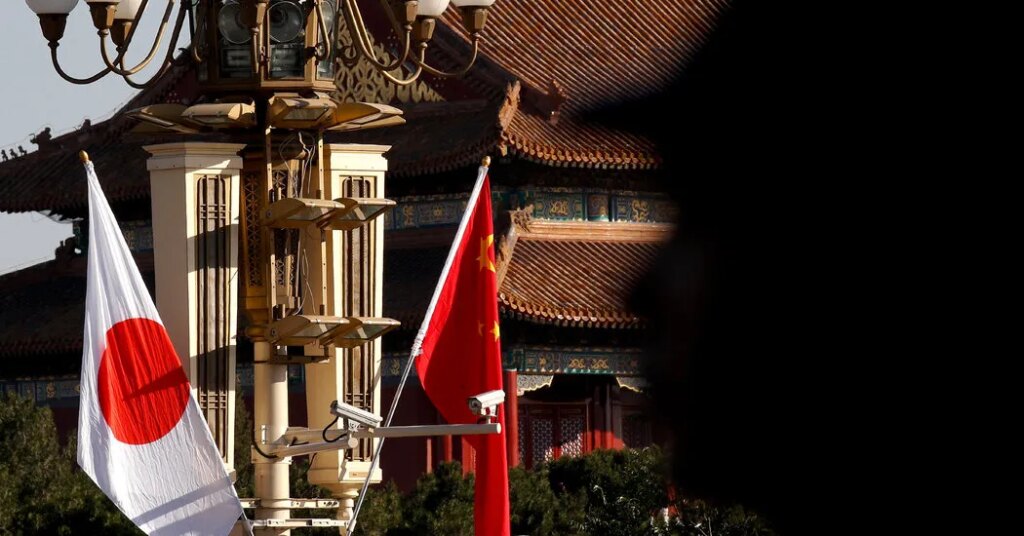
China’s recent pressure campaign against Japan has involved critical minerals, tourism, seafood and even pandas. Now Beijing is taking the dispute to the cultural sphere, targeting a Japanese television drama.
The Chinese government has in recent days focused its ire on “Vivant,” one of Japan’s most popular shows, a cross between “24” and “Homeland” that tells the story of Japanese spies working to protect their country from threats overseas.
Beijing says the show, which features a fictional Chinese intelligence agency called “Xinxi” as the antagonist, promotes negative views of China. The second season of “Vivant,” which premiered in July, includes scenes of Chinese agents torturing Japanese operatives. In the first season, the enemy state was not identified.
“This television series once again reveals that there is a force in Japan that attempts to use cultural products to smear China and spread anti-China sentiment,” a spokesman for China’s Foreign Ministry, Guo Jiakun, said at a news conference in Beijing on Thursday.
China’s criticism of “Vivant” comes amid a broader effort to penalize Japan for comments made last year by Prime Minister Sanae Takaichi. She suggested that Japan could intervene militarily if China were to attack Taiwan, a self-governed democracy that Beijing claims is part of its territory.
The outcry over “Vivant” began on Sunday, when China Central Television, the state broadcaster, condemned the series in a social media post.
The criticism grew so intense that Sanrio, the Japanese entertainment juggernaut behind Hello Kitty, announced on Thursday that it was canceling a merchandise partnership with the show. China is one of Sanrio’s fastest-growing markets; the company generated about $200 million in revenue there in the fiscal year that ended in March, almost double the previous year.
The company said in a statement that it had determined that “certain content associated with this collaboration does not align with Sanrio’s corporate philosophy.”
“Vivant,” which premiered in 2023, focuses on a fictional intelligence operation called “Beppan” that is affiliated with Japan’s military.
The show’s creators have said they did not intend for it to fuel geopolitical tensions. TBS, the network that airs the series, said in a statement that “Vivant” is “completely fictional.”
“The main premise is that it does not degrade any particular country,” Masamine Ryuho, the network’s president, said at a news conference on Wednesday.
China responded furiously to Ms. Takaichi’s comments about Taiwan last year, accusing her of crossing a “red line” and demanding a retraction. Since then, Beijing has reduced the export of rare earths to Japan; urged millions of tourists to avoid the country; and increased military patrols in the seas near Japan. China has also shown a growing preoccupation with efforts by Ms. Takaichi to rebuild the military, accusing Japan of reviving World War II-era militarism.
Ms. Takaichi, an outspoken critic of China, has expressed support for “Vivant.” Earlier this month, before China stepped up its propaganda efforts, she said during an appearance before Parliament that she records the show religiously and hopes to binge watch the second season over the New Year holiday.
China has long sought to control how it is portrayed in films and on television produced overseas. The criticism of “Vivant” serves an important propaganda aim for the ruling Communist Party, analysts said: trying to highlight Japan’s record of atrocities during World War II.
The People’s Daily, the Chinese Communist Party’s mouthpiece, wrote on Thursday that the series accused China of employing “torture methods used by the Japanese army during its invasion of China” in the run-up to World War II.
William Chou, a Japan expert and senior fellow at the Hudson Institute, a think tank in Washington, said that “Vivant” was an appealing target for China because of its popularity, and because Beijing felt it could help feed a propaganda narrative.
“The Chinese are hunting for excuses,” he said. “They’re creating reasons to fuel this outrage, this cognitive warfare.”
The post How a Japanese Spy Drama Became the Target of China’s Anger appeared first on New York Times.