In Thailand’s carmaking hub of Rayong, China’s largest electric vehicle maker, BYD, built its first factory outside China, a complex the size of 180 football fields. Twenty miles south, a plant once run by General Motors is now owned by China’s Great Wall Motor. A 10-minute drive away, Ford took over a vehicle assembly plant from the Japanese automaker Suzuki.
All of this happened in the past five years — evidence of an industry in upheaval.
For decades, Japanese automakers dominated Thailand. They arrived in the 1960s, built supply chains and transformed the country into the “Detroit of the East.”
Then the Chinese automakers arrived.
Today, they control about 85 percent of Thailand’s electric vehicle market, up from almost zero four years ago. Japanese automakers, slow to embrace the technology, have struggled. In 2024 and 2025, Subaru and Suzuki shut down their Thai plants, while Nissan and Honda have scaled back production.
Several Thai auto-parts suppliers that depended on Japanese manufacturers went bankrupt, threatening a supply chain that employs about 700,000 workers.
“It was much faster than anything we had expected,” said Supavud Saicheua, chairman of the National Economic and Social Development Council, the central economic planning agency in Thailand.
“We didn’t think of the full picture,” he added. “The impact on Thailand has been much more adverse than we had thought.”
To some, Thailand is a cautionary tale about the unintended consequences of opening the door to China’s electric vehicle manufacturers. The lesson could resonate elsewhere. President Trump has seemed open to welcoming China’s E.V. brands to manufacture in the United States despite tariffs that effectively block their entry into the market. The European Union is struggling to rein in Chinese vehicles, despite imposing tariffs.
Thailand is trying to contain the damage. Last month, Prime Minister Anutin Charnvirakul traveled to Tokyo to reassure Japanese automakers. A month earlier, he had ordered a review of policies that Japanese firms say put them at a disadvantage.
Few in Thailand think gas-guzzling cars are the future. Electric vehicles made up a third of new car sales in the first seven months of 2026. It is easy to see the consumer appeal of the Chinese cars. Many offer technology like large display screens and autonomous driving at low prices. (Mr. Anutin owns BYD’s electric S.U.V., the Sealion 7.)
But policymakers are concerned about the influx. In the first seven months of this year, about two-thirds of electric vehicles sold in Thailand were imported, primarily from China.
The government is trying to curb the flood. Last month, it unveiled a three-tier tax system that imposes the highest rates on automakers importing vehicles with no plans for local production and the lowest on those that source a large share of their parts locally.
But Ruth Banomyong, a professor of supply chain management at Thammasat University in Thailand, said there was little evidence that Thailand was benefiting. Chinese automakers, he said, operate within a “closed ecosystem” that makes it difficult for Thai companies to enter their supply chains because the core technology remains in China.
He and his colleagues have estimated that 300,000 jobs could disappear within five years if electric vehicles dominate Thailand’s auto market.
“The trickle-down effect is very minimal,” said Mr. Ruth, a former adviser to Thailand’s previous commerce minister.
Tossophol Kunsri, president of the Automobile Labor Congress of Thailand, one of the country’s biggest autoworkers’ union, said Chinese electric vehicle makers often hired Thai workers for short-term contracts in brief production runs, then laid them off without severance pay.
He said the Chinese companies rejected unions. By contrast, he said, he maintained respectful relationships with Japanese automakers, which were willing to negotiate annual salary increases and bonuses.
Mr. Tossophol said that he had complained to the government about the Chinese companies’ labor practices and that the labor minister had agreed to investigate.
“We’re standing at a crossroads,” he said. “Are we still going to be an actual automotive manufacturing base, or are we just going to be a market for cheap Chinese E.V.s?”
‘We Thought It Was Still Far Off’
In 2011, Netsana Sakulpolpanya started working at a car parts factory in Thailand’s Samut Prakan Province, making exhaust systems and mufflers for Toyota, its biggest customer.
Her company embodied the homegrown industry that supplied Japan’s automakers. Ms. Netsana earned $440 a month operating molds and pressing machinery.
Her first years were a boom. In 2012, she received an extra five months of salary and a $740 bonus. The money helped her care for her disabled sister and pay for her niece’s education at a university.
In 2022, Thailand’s prime minister at the time, Prayuth Chan-ocha, declared electric vehicles crucial to the country’s economic future and its fight against pollution. He set a target for zero-emission vehicles to account for 30 percent of the country’s vehicle production by 2030.
Ms. Netsana said union leaders had warned workers about the changes that electric vehicles could bring.
“We honestly thought it was still far off,” she said.
Then the government rolled out tax cuts and subsidies and allowed electric vehicles to be imported for two years before automakers had to meet local manufacturing requirements. A free-trade agreement between China and the Association of Southeast Asian Nations meant the vehicles faced no customs duty.
Within months, Chinese brands like Changan, GAC Aion, Neta and Chery were driving on Thai roads.
Ms. Netsana watched orders fall. Overtime disappeared. Her company began telling workers to stay home some days and cut wages to 75 percent of normal pay.
In September 2023, Srettha Thavisin, a billionaire real estate developer, became prime minister with a mission to court foreign investment. His first stop was China. Chinese carmakers were looking abroad to escape a domestic market saddled with overcapacity and brutal price wars.
Mr. Srettha said he felt he had little choice but to court them. Otherwise, they were likely to have gone to Vietnam or Malaysia. In hindsight, he said, his government should have tracked more closely how many Thai workers the Chinese companies employed and how much they sourced from Thai suppliers.
Ms. Netsana’s company declared bankruptcy and shut down in 2024. Nearly 900 Thai workers lost their jobs without severance pay.
Ms. Netsana, 49, now earns $11 a day working at a supermarket. She said she did not apply to the Chinese factories because a friend told her that they hire only young workers.
“I blame the government for failing to manage the transition fairly,” Ms. Netsana said.
A Factory Under Scrutiny
At BYD’s factory in Rayong, workers intertwined multicolored wires into wiring harnesses, the nervous systems of electric vehicles. A sign warned: “No playing with mobile phones or loafing on duty.”
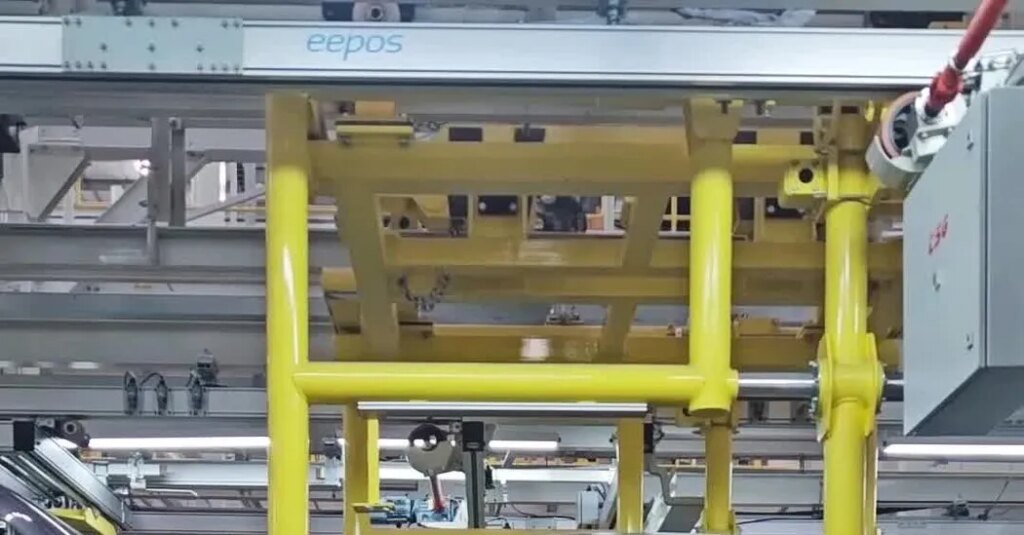
Elsewhere, robotic arms welded together the frame of the BYD Atto 3, an electric sport utility vehicle. When it launched in Thailand, customers lined up overnight to buy it. This section operated around the clock.
An overhead monitor displayed the day’s production target of 4,000 cars. By 3.52 p.m., 3,409 were complete.
Opened in 2024, the BYD factory exports cars to across Southeast Asia, Australia and Europe. But American and European trade regulators have scrutinized it, questioning whether it functions as a final assembly plant to circumvent tariffs.
Asked what percentage of car parts came from China, Benson Ke, BYD’s general manager in Thailand, said there were so many components that “it’s difficult to go into great detail.”
He said BYD bought steel sheets locally and assembled batteries in Thailand with local partners. The factory employs 5,600 workers, 94 percent of them Thai, he said, and has received “high ratings for genuine localized manufacturing” during inspections.
When we first met Mr. Ke, he was at a Bangkok motor show unveiling new models. Several attendees said they were considering buying their second BYD.
Mr. Ke welcomed the government’s policy to raise excise taxes on imported vehicles, saying it would help control supply and price competition.
It is easy to see why. BYD has invested more than $1 billion in its Rayong factory.
Yet on a recent visit, signs of BYD’s connections to its Chinese supply chain were plentiful. BYD used Kuka robots, once German-owned, now controlled by China’s Midea. Boxes carrying wiring components bore Chinese addresses. Battery cells were imported from China.
To Thai consumers, it might not matter.
Nithi Thuamprathom, a Bangkok-based automotive reviewer with 1.2 million YouTube subscribers, said his Thai viewers asked him to review Chinese electric vehicles that offered features like adaptive cruise control and 360-degree cameras at prices that often undercut Japanese competitors.
“The era of Japanese carmakers’ enjoying 60 years of easy profits in Thailand is over,” Mr. Nithi said. “Now they have to adapt to real competition.”
The post After Welcoming China’s Electric Vehicles, This Country Is Paying the Price appeared first on New York Times.