On paper, Alejandro González Iñárritu’s new movie had all the trappings of a hit.
The Oscar-winning director had assembled a star-studded cast led by the inimitable Tom Cruise. He had a twisty and surprising script that uses satire to tackle ambitious topics, and a talented team that built set pieces impressive enough to match.
But he was still nervous about the execution.
“The acting tone was the most scary part for me,” Iñárritu told Business Insider shortly before the movie’s opening weekend. “Tone, you cannot write — you have to feel it and hear it.”
Four days later, the verdict at the box office came in: “Digger” was a bomb. The climate-change satire starring Cruise, John Goodman, Riz Ahmed, Sandra Hüller, Michael Stuhlbarg, Jesse Plemons, and Emma D’Arcy made $8 million in its opening weekend on a reported $180 million budget, making it the lowest opening weekend for Cruise in 19 years. The movie is projected to bring in only $50 million worldwide by the end of its theatrical run.
To add insult to injury, film critics, who helped make his previous work like “The Revenant” and “Birdman” Oscar darlings, lambasted Iñárritu for even attempting something as grandiose and ambitious as “Digger.”
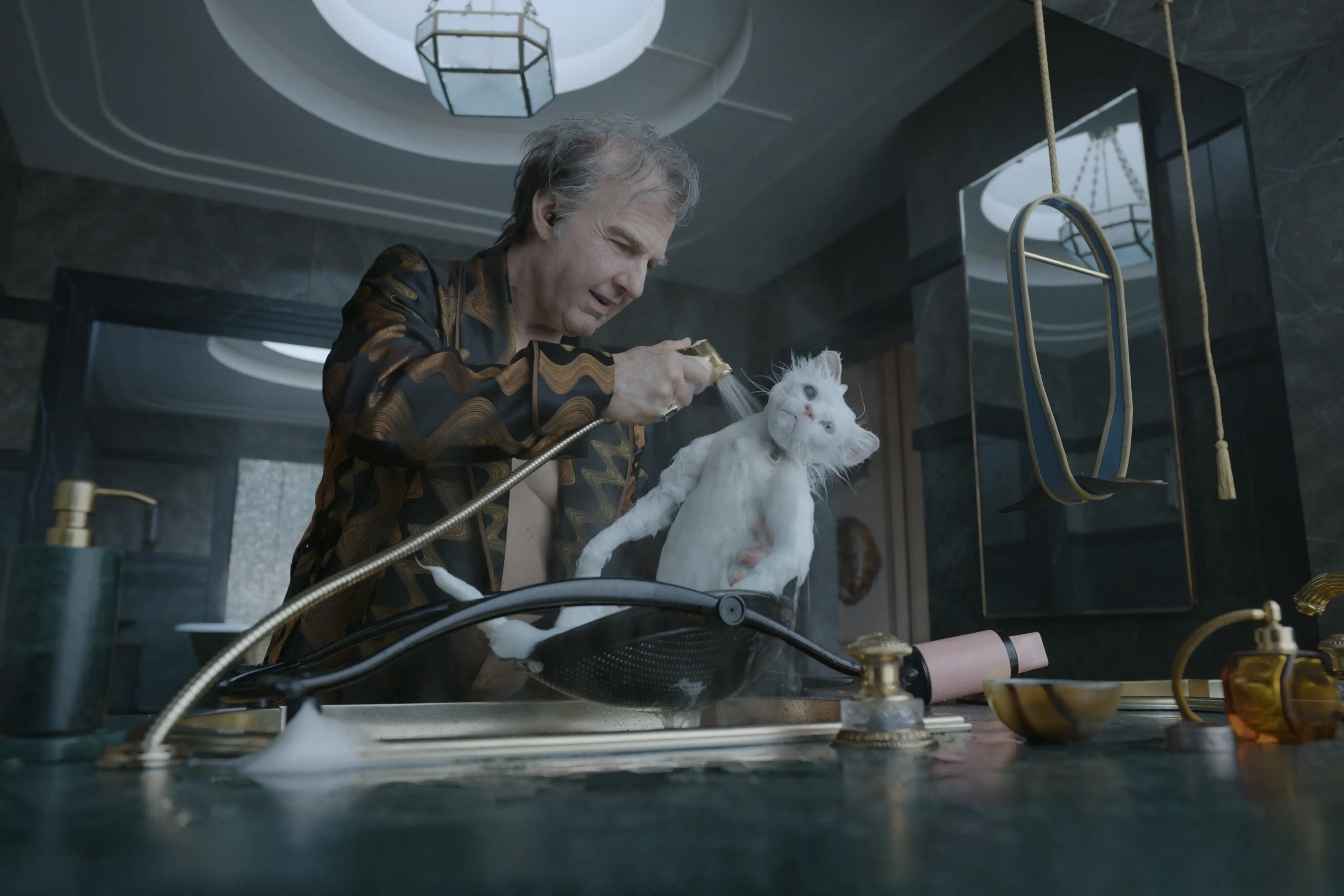
The Hollywood Reporter called it “so meta that you watch in excruciating weariness as it disappears up its own ass.” IndieWire described it as “so detached from human truth that its most believable character is a one-eyed animatronic cat.”
The movie currently holds a 53% critic rating on Rotten Tomatoes, the lowest for Iñárritu and lowest for Cruise in close to a decade.
Not everyone disliked the movie. Anne Hathaway, Mandy Patinkin, Jane Fonda, and Iñárritu’s close friend Guillermo del Toro all shared positive reactions on social media after the movie opened. “Love the arts FUCK the charts,” del Toro wrote on X.
The movie has proved divisive in part thanks to its plot twists, the basics of which we’ll reveal here. (Stop reading now if you don’t want spoilers!)
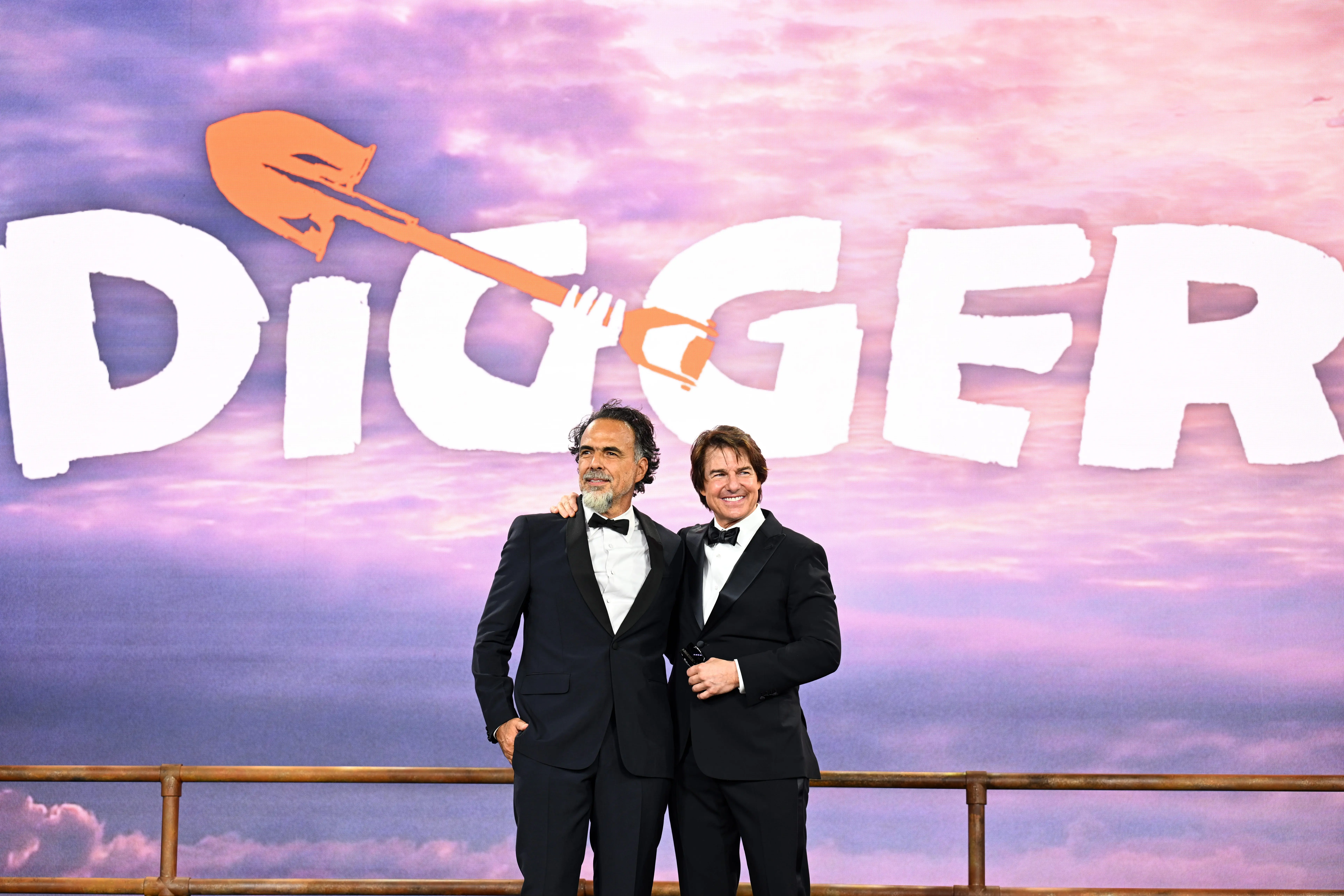
“Digger” follows oil tycoon Digger Rockwell (Cruise), who learns one of his wells in the Arctic has exploded and a chunk of a glacier is racing towards Europe to wreak havoc. But about a half hour into the movie, it’s revealed that the saga of Digger Rockwell is actually a stage play. Rockwell is being played by an actor named Curtis Markson in a satirical stage production titled “Fossil Fools.”
At the movie’s end, there’s another twist: “Fossil Fools” is based on actual events that happened years prior. There really was a Digger Rockwell, and one of his wells did explode, causing an environmental catastrophe that changed mankind. Markson is performing the play in of an audience living decades after those events occurred, and the world is still paying the price.
It’s an ambitious attempt by Iñárritu to deliver commentary on climate change while stretching the audience’s capacity for nonlinear storytelling. Whether it was successful or not depends on whom you ask. But if Iñárritu has learned anything from making “Digger,” he said it’s that “satire is a motherfucker.”
For the latest interview in Business Insider’s Director’s Chair series, Iñárritu spoke about traveling to the Arctic, choosing the movie’s ending, and the unique way he worked with Tom Cruise to develop the script.
On reading the script to Tom Cruise ‘like an 8-year-old’ and what ‘Digger’ is really about
Business Insider: You have said the idea for this movie came to you ten years ago. What was that idea, and how did it evolve?
Alejandro González Iñárritu: I can tell you it started when we ended the shooting of “The Revenant.” We struggled with a lot of weather — dramatic changes at the locations where we were shooting in parts of Canada. Things were happening, weather-wise, that had never happened before.
A one-degree difference in the climate, people don’t understand what that means. You say, “Well, the planet is 1.5 degrees hotter,” and people go, “Who cares?” That’s the difference between water and ice, and we experienced that dramatically. It was surprising. We were shooting ice in the summer.
So Sabina Berman, my writing partner, and I, started thinking. The Arctic was melting. The powerful people were excited because, with the ice receding, there were suddenly more channels to transport more materials. The absurdity in that was the beginning of this, the narrative madness.
I would think the next step is: How am I going to tell this story using my own brand of creativity?
I think as a storyteller it’s our duty to try to say or express a story in the most original way possible. The original title on the script was “Blah, Blah, Blah,” and that’s what this story is about. It’s about the most scary weapon that all human beings have: the tongue. That’s the weapon. We didn’t want to tell a story about climate change, or about politics. I hope this story transcends politics. We wanted to talk about the human nature of the blah, blah, blah.
The result of the blah, blah is no one is listening to each other. The movie’s brutal final few minutes show the result: a dystopian world.
Language is a tool. It’s a bridge to bring a common reality. But it’s also a weapon to destroy. Once an idea comes — an ideology, a religion, whatever — suddenly the reality that is experienced by the body, not our abstract thought, becomes almost a reality. I think it’s one of the traps that we are now in as a society.
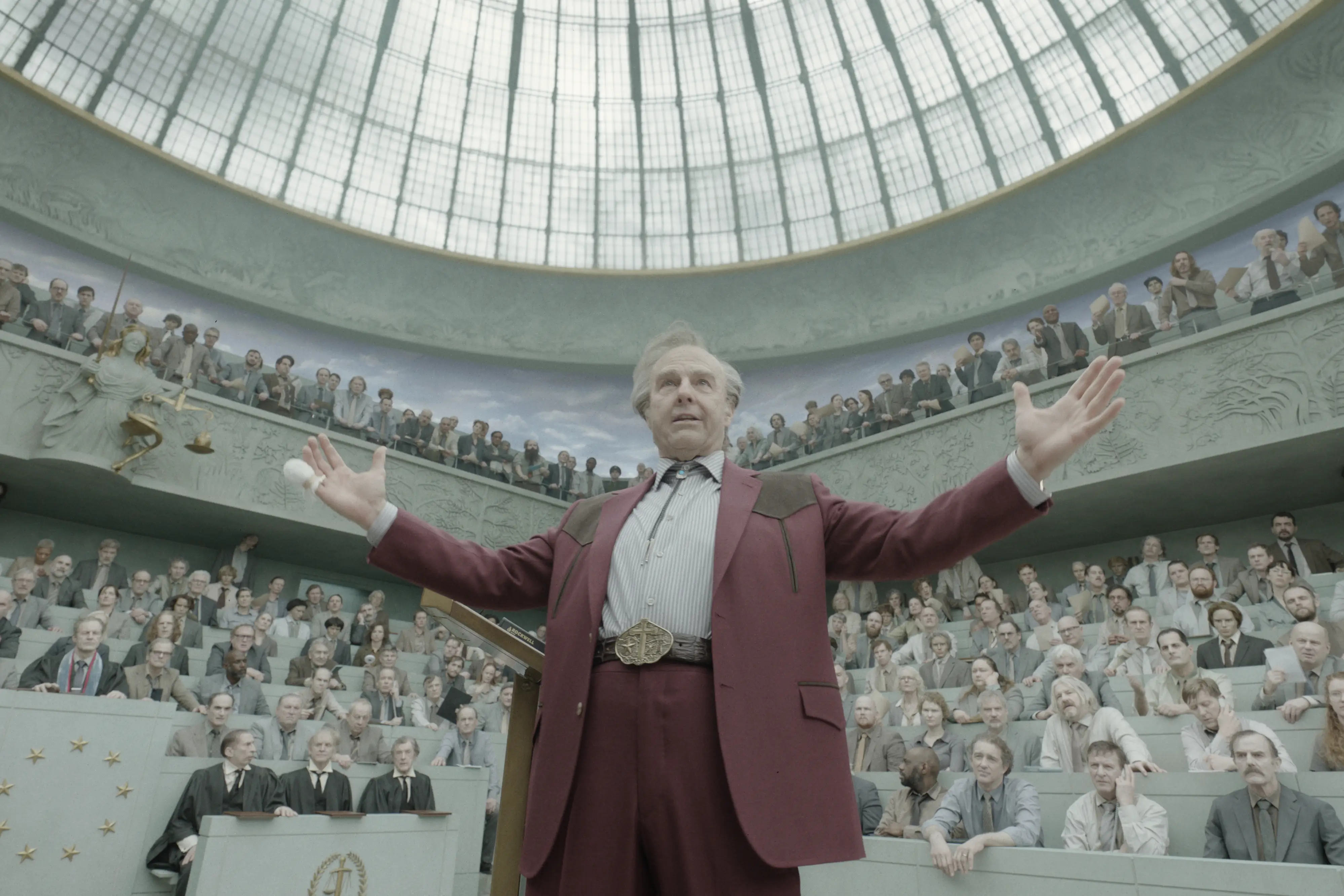
Then you need someone as big and as brash as the Digger Rockwell character to take us on that journey, right? Did you need to cast someone at Tom Cruise’s level to accomplish this movie?
Let’s start even before that. Before the casting, I realized that nobody cares about an abstract thought or reflection. Perception has become reality, and for the last nine years, the reality seems to be secondary to the stories people are telling us. They want us to believe things for a reason. But nobody cares what I think.
So I realized the only way to explore this phenomenon is we need a character. It can’t be a political commentary or a “Saturday Night Live” sketch. We need a strong character to navigate the story truthfully.
Once I had that, I knew I needed an incredible actor who can sustain this weight on his shoulders and deliver it with candor, not preaching, and someone who’s very American, because we are all Digger, in my opinion. The conclusion was that there are not many who can play this, but Tom was it. But will he accept? He was very brave and was never scared.
You didn’t send him the script; you read it to him. In that unique experience, could you tell while reading that you had him hooked?
He asked me to do that, read it to him.
Had an actor ever asked you before to read the script to them?
Never. But I have to say, I thank him because it was useful for him. He said he needed that, to hear it. He didn’t want to come in with his own perceptions; he wanted my years of knowledge that I put into the material. That surprised me.
But he was like a kid; he’d react with worry and excitement throughout the telling, like, “What’s going to happen!” [Laughs.] I felt like I was reading the story to an 8-year-old. It was fantastic, the curiosity.
Did you read it with a Digger Rockwell voice? Or act bombastic when the president spoke?
You are exactly right. I’m a terrible actor, but I knew where we were going. So I would play a little bit with the pauses, the power. I was trying to point him to where I was thinking. And between lines, I would explain to him how I thought I would shoot a sequence and why, for him to have some images.
On struggling to figure out the movie’s tone and doing rewrites
Are you a filmmaker who thinks of the visual before the dialogue?
It’s both ways. Like a song, sometimes you have the lyrics first, and sometimes it’s the melody that’s first. In this case, when I read it to Tom, by that time, I had so many images. The universe of “Digger” was already built in my head. We were building sets in Canada in 2019.
Doing that reading to Tom helped me so much because it was the first time, after years of writing, hearing those words out loud. And things changed. It helped me with things that worked and things that didn’t work.
You gave us breadcrumbs to follow before the big reveal of what the movie really is, right? The cat’s head almost coming off its body at the start of the movie, Riz Ahmed’s character, Dr. Ganesh, coming in from a door that seems to lead nowhere.
Yes. You are on the money. The corridor we discussed because I said, “No, theater is like that.” That was one of the most difficult aspects, because I had to be thinking in two channels: One, a director of theater, Hannah (Sophie Wilde), and one as the film director.
The decisions as Hannah were sometimes challenging as a film director because I had to shoot in three walls, with all the limitations, trying to take advantage of the gags and the theater play. But the most difficult thing was the tone of the theater play.
The theater play is a satire; she wants black satire. The projection of the voice, you have to talk very strongly; in cinema you can whisper. So every lens for the theater scenes was wide — I wanted to see the feet, hands, which normally in film and TV shows you have close-ups. I wanted to show the whole concept.
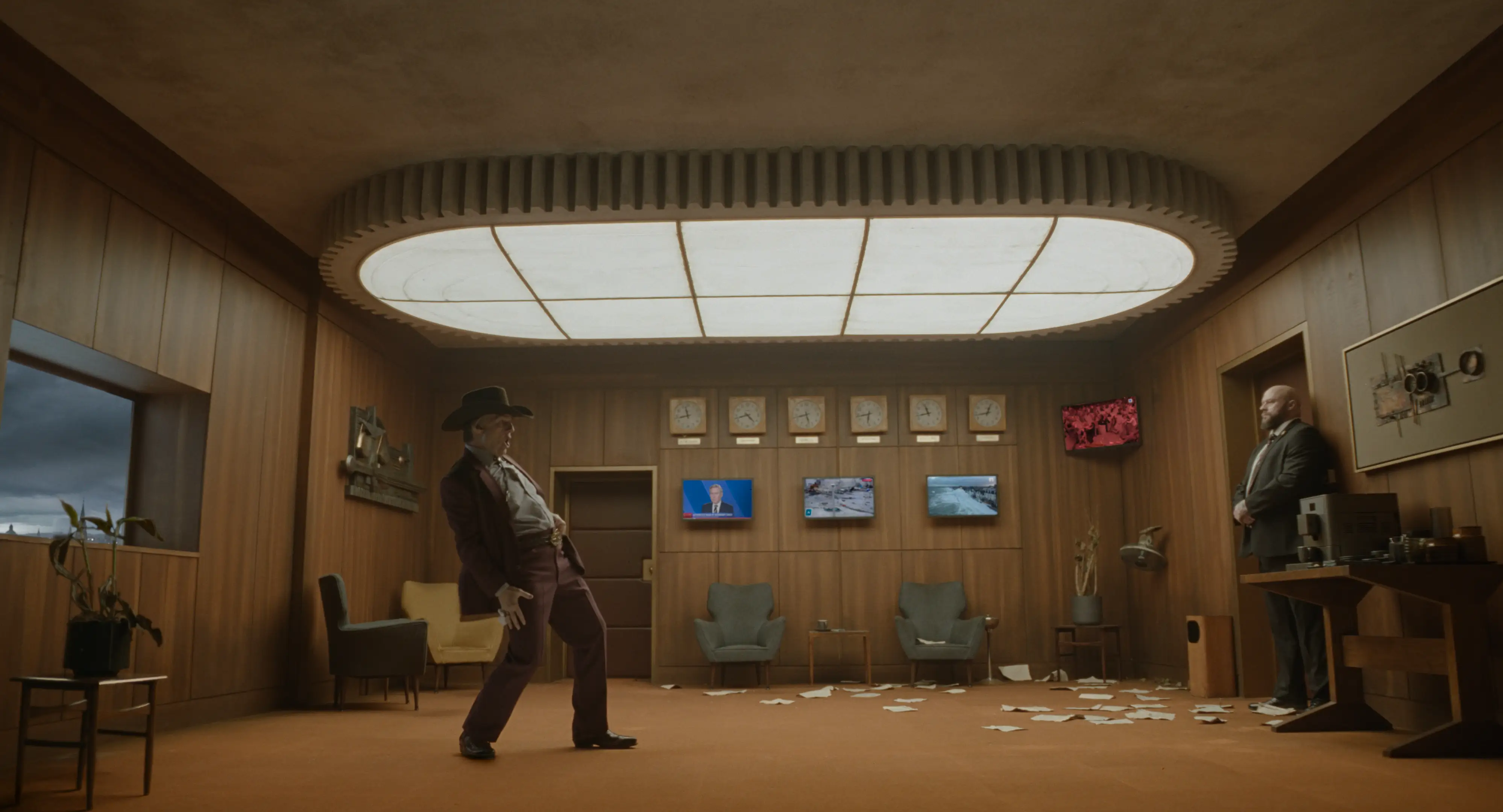
And then the scenes that are off set, that’s when you go in tight with the lens.
Exactly. I changed the language. The sound design, the palette, everything changes. There are two realities.
With the visuals I did in advance, everything was pre-staged; I knew the camera angles. It was very prepared for the VistaVision because it was expensive. But when the actors arrived, we were rehearsing and rehearsing. Sometimes the scenes were super funny and I was cracking up. But then I’d watch the dailies the next day and I said, “This is crap.”
So we would return to the rehearsals. We would do it, I’d watch the dailies and realize, “This is too naturalistic, this is not a comedy.” So to find the speed and the tone of the first 30 minutes was the most challenging thing for you to believe that it’s a film, but that there’s something off. But then when the reveal happens, it isn’t a trick; it plays like a theatrical production. I wanted to be honest. That was the scariest.
It seems your actors felt that uncertainty as well. Michael Stuhlbarg told me that the whole cast discovered what they were actually making through the rehearsal.
The tone. And then I had to rewrite scenes to do the right tone. I was lucky to be editing at the same time, because we had a hiatus.
In the hiatus, I rewrote the whole long table scene completely. Because it was not working, it was too much. It didn’t have the dramatic tension that it needed, despite it being a satire.
It was a luxury to be able to be moving the pieces, to change things around, but you need an amazing cast to do all that. John Goodman, Jesse Plemons, Riz Ahmed, Michael Stuhlbarg, all of them, I felt like I had a great jazz band. I was obsessed with the rhythm. We found the tone together. It was a joy but it was scary. We couldn’t find it for a while.
On finding the movie’s ending and feeling like he was writing a documentary
Speaking of rhythm, was it a challenge in the edit to find the right moment where you have the tree fall and the giant hand coming in to fix it, basically revealing what we’d been watching was an illusion?
Every shot in the film was pre-designed, pre-lit. We built huge walls of fabric in Pinewood Studios, and with a little camera I staged every single scene with stand-ins, reading the words, measuring the timing of the words, measuring every height of the windows, the light direction; I storyboarded. There’s nothing in any frame that is incidental. It was all preconceived.
I wanted to give the audience a lot of context. To have all the reasons why these guys were the way they were, because of the world they inhabit. I wanted people to feel lost in the frames, in the windows. That was decided. But again, the challenge was the tone to match it all.
What I found fascinating, going back to the star power, is how you end with Tom Cruise in “Digger.” In “Birdman,” Michael Keaton has his big closing moment at the end of the movie. Leonardo DiCaprio is alone in the wilderness in the final frame of “The Revenant.” Cruise is very much part of the ensemble at the end of this movie. He’s among his cast mates celebrating the end of the show, and then you take us to what’s happening outside of the theater. There’s no big final shot for Tom. Was that always the intention?
It always was like that. Always.
When you do a film like this, reality and fiction do not stay still, and the last nine years have moved so fast.
So if you made this movie a few years earlier, it would have a completely different ending?
It would have been another movie. It was the same story: Greed, power, the stories we tell ourselves; we have never spoken so much and heard so little. But the approach was all the disasters were going to be shot in real locations in water tanks, but we changed all that and put it on TV screens and iPads — framed reality. To show that we are so certain in our opinions that we are lost in our stories.
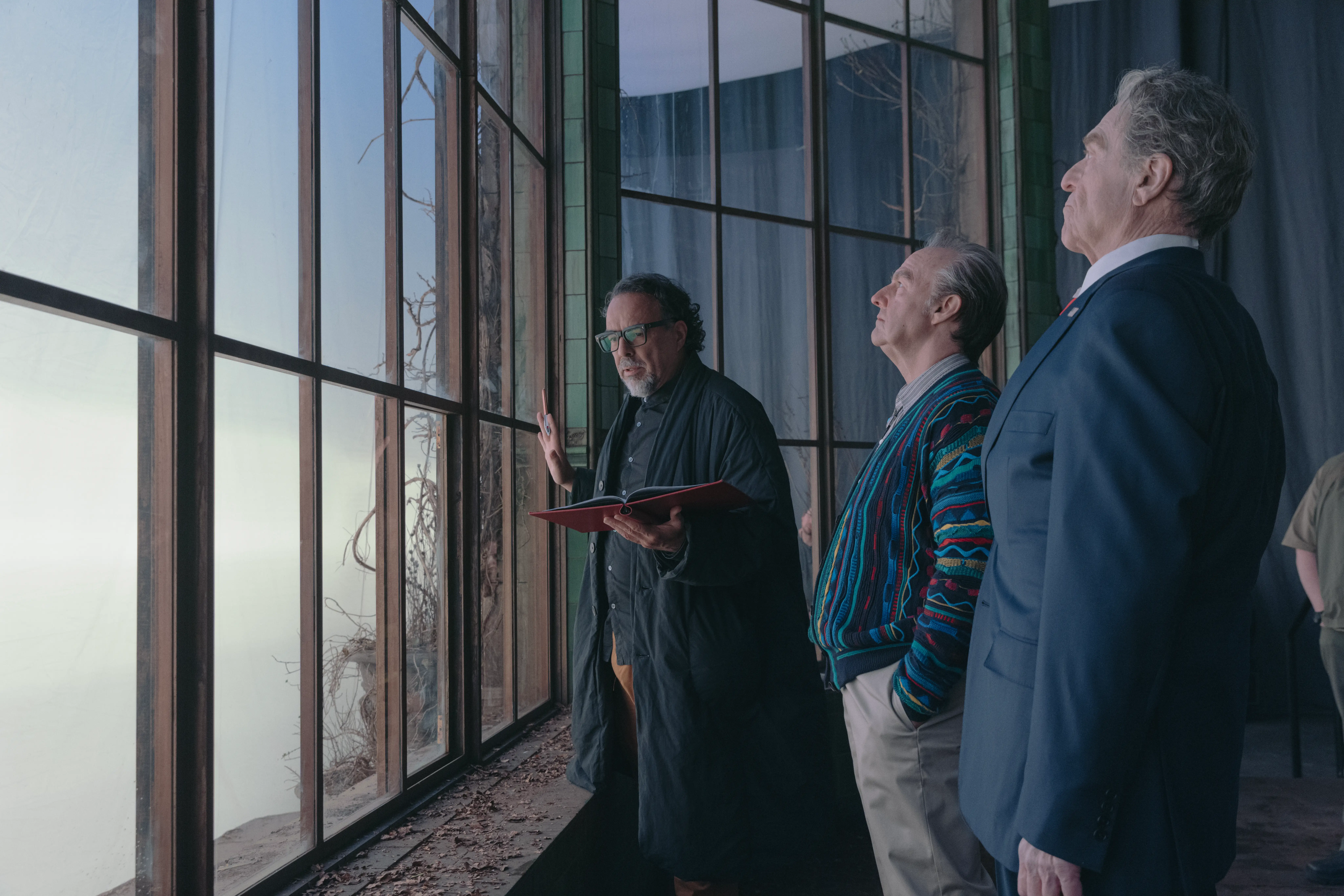
At a moment, honestly, I felt lost. How can I tell this story? It’s so complex. I felt like I was writing a documentary. What the fuck is this?
So the pandemic happened, I made “Bardo,” and as time passed, “Digger” collapsed two times. It was very traumatic. I lost three years of my life, lost pre-production. I traveled to the Arctic twice. I interviewed every single scientist available. Everything Ganesh says is exactly what could happen. This is science-based, this movie.
So reality wasn’t enough for me in the film. It’s the crossroads of reality and imagination. But there was a time that the more we stretched our imagination, it would become reality! [Laughs.] When we started this movie, no ice shelf had been detached; we thought that was a huge stretch of reality. That was crazy to imagine. Now, Greenland is in the conversation.
That’s where the people coming together to see a play comes from. I was on this walking holiday with my family, and suddenly I saw these glaciers melting. That’s when I realized that only by separating from the representation of reality is it more real. We see reality through a representation; we get together, and we can separate ourselves from what we see. That’s the key.
Are you concerned because of the political climate that we’re in, and your own concerns about getting the story right, that this film will get sucked into a vortex of noisy commentary?
Absolutely. Because nobody cares about it because we hear about it all the time. The news is satire. Everything is performative, Jason. The commentary will end up matching what’s in the movie.
This interview has been condensed and edited for clarity.
“Digger” is in theaters now.
Read the original article on Business Insider
The post For Alejandro González Iñárritu, the scariest part of making ‘Digger’ wasn’t the climate catastrophe appeared first on Business Insider.