Etihad Airways is bringing a new aircraft to its fleet in 2027, and I got an early look at what its premium seats will be like.
At Dubai’s annual Arabian Travel Market trade show in September, the UAE airline unveiled mock-ups of the new first- and business-class cabins planned for its future Airbus A330neos.
Etihad said the first of 15 new A330neos will enter service in September 2027, serving regional and medium-haul routes from its Abu Dhabi hub.
There are just four first-class suites, followed by 24 business class seats. Both cabins have privacy doors, lie-flat seats, 4K screens, Bluetooth connectivity, and wireless charging.
It’s notable that Etihad is continuing to expand First beyond its flagship Airbus A380s. The choice makes sense, as the post-COVID premium travel boom continues to drive global airline revenue.
Sitting inside the future A330neo cabins revealed much about how Etihad maximized space, as well as a few trade-offs that weren’t immediately apparent.
Here are eight things that stood out most.
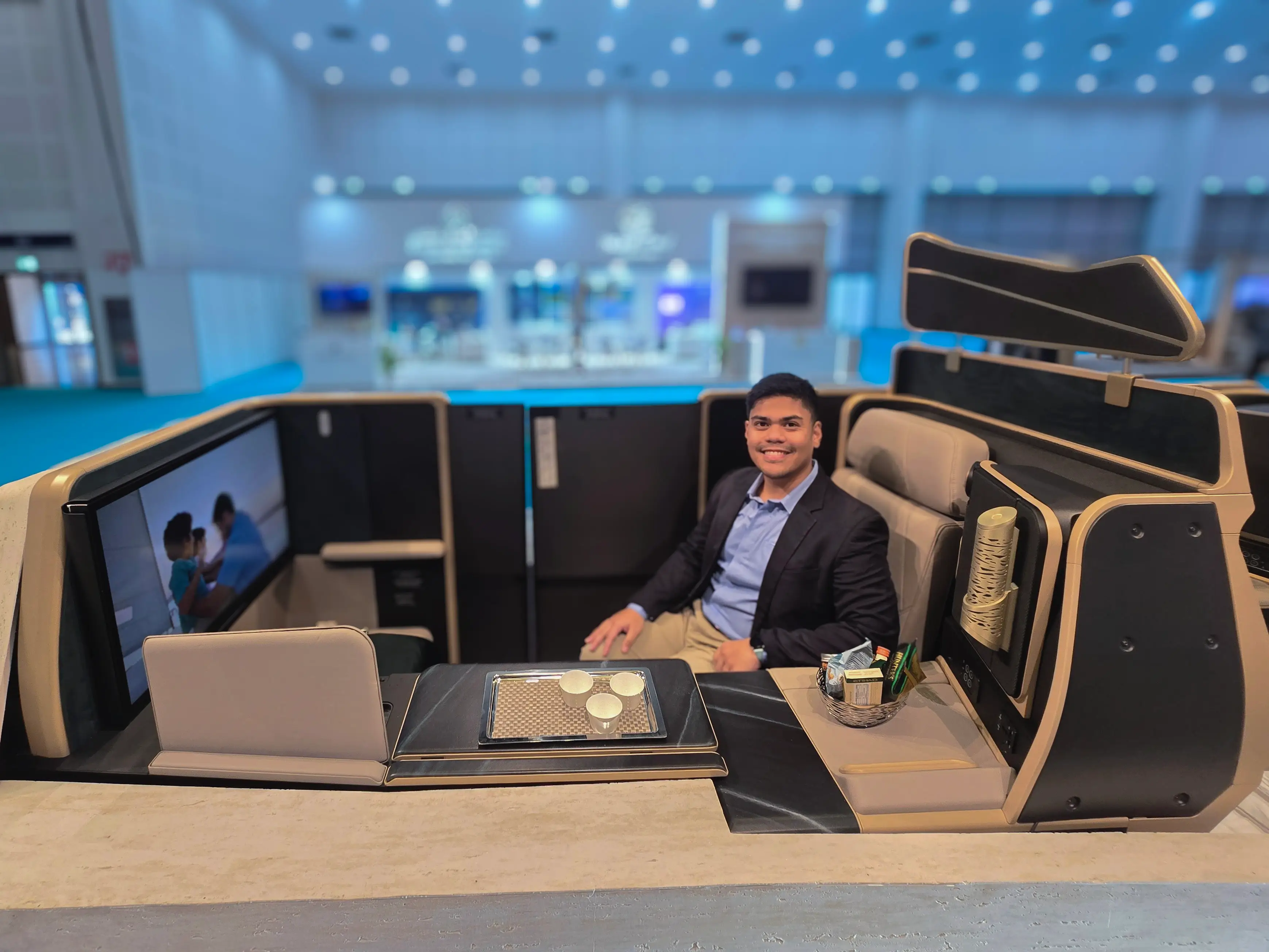
First Class felt more like a hotel room than an airline seat.
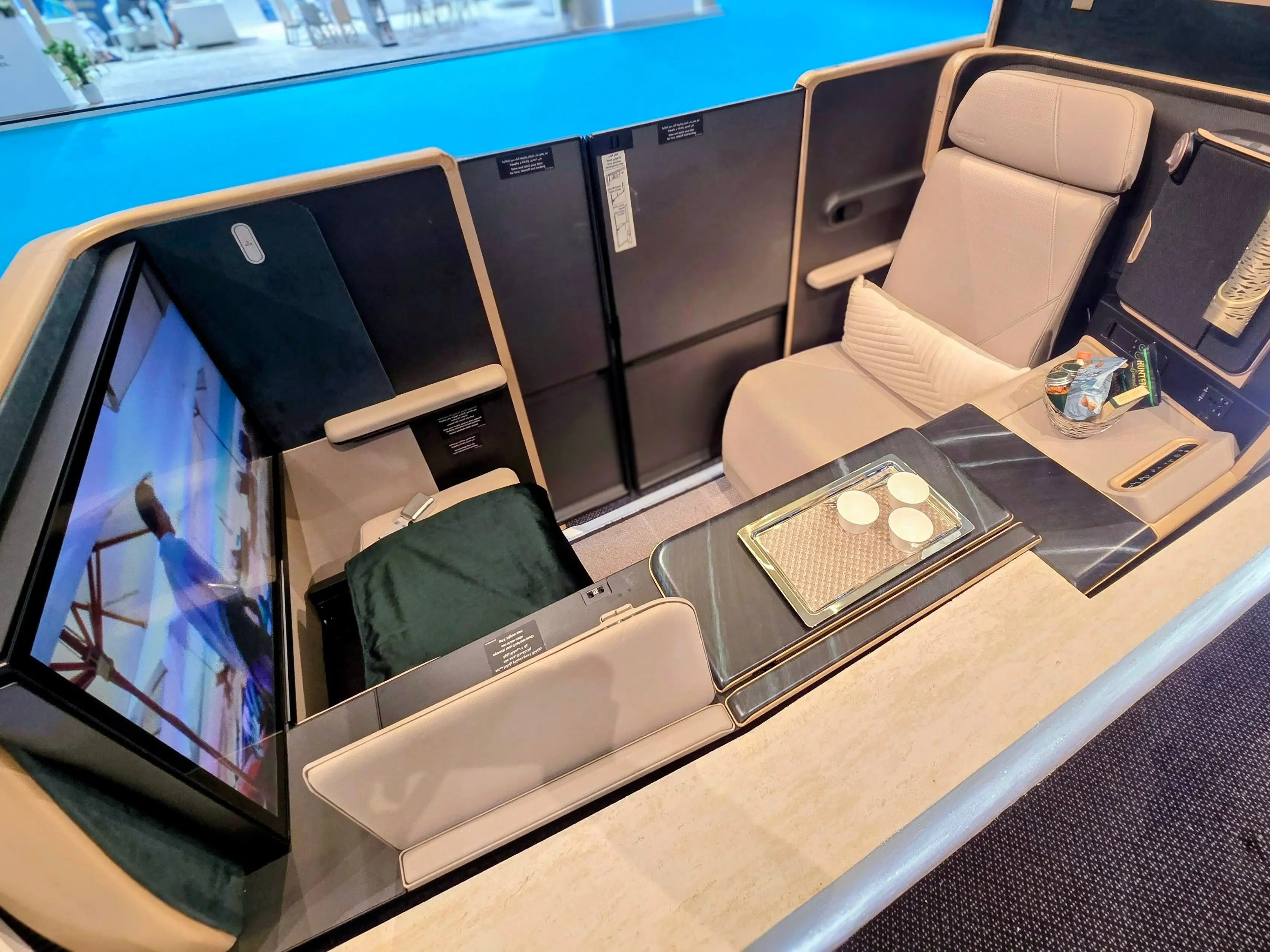
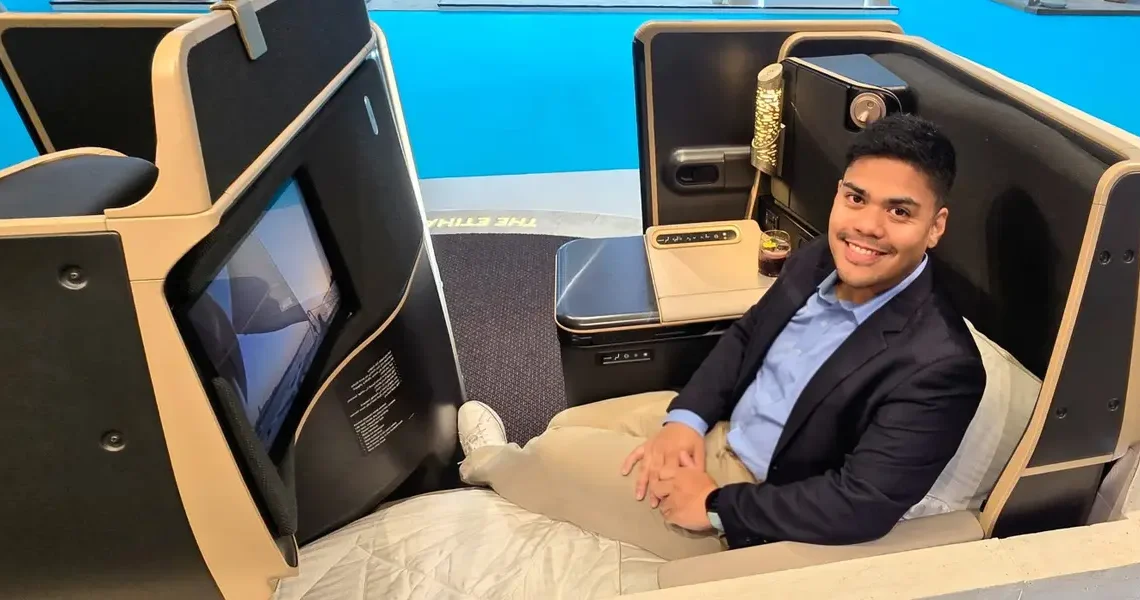
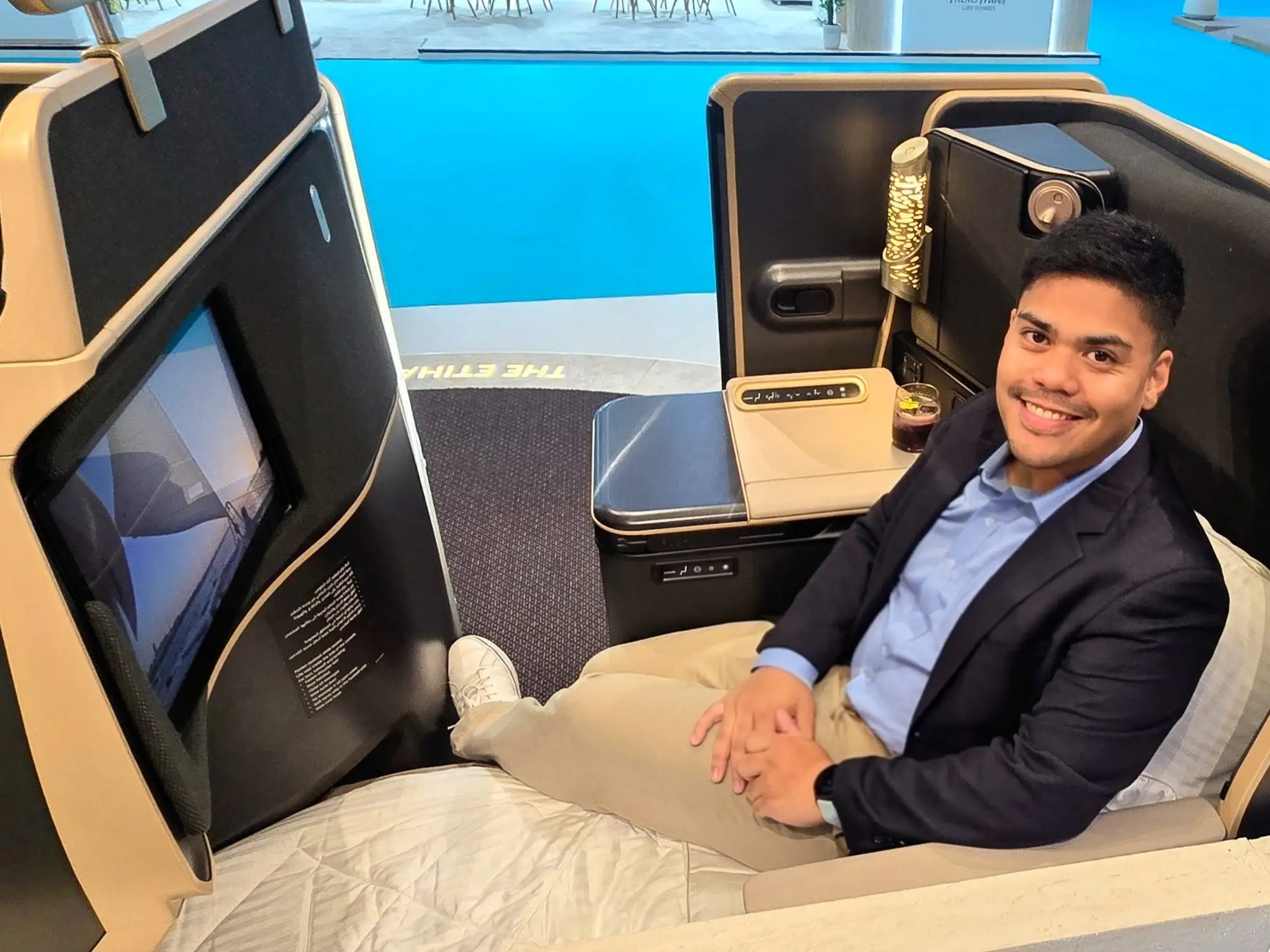
Once I sat down, the suite felt surprisingly spacious for everything Etihad packed around me.
The leather felt premium, the finishes weren’t tacky, and the different materials worked well together. It still felt roomy amid the screen, companion seat, console, and privacy walls.
The seat didn’t feel dramatically larger than some business-class cabins I’ve flown, though. Sitting in it reminded me of Gulf Air’s Boeing 787 Apex Suite.
An enormous 32-inch 4K screen connects to Bluetooth.
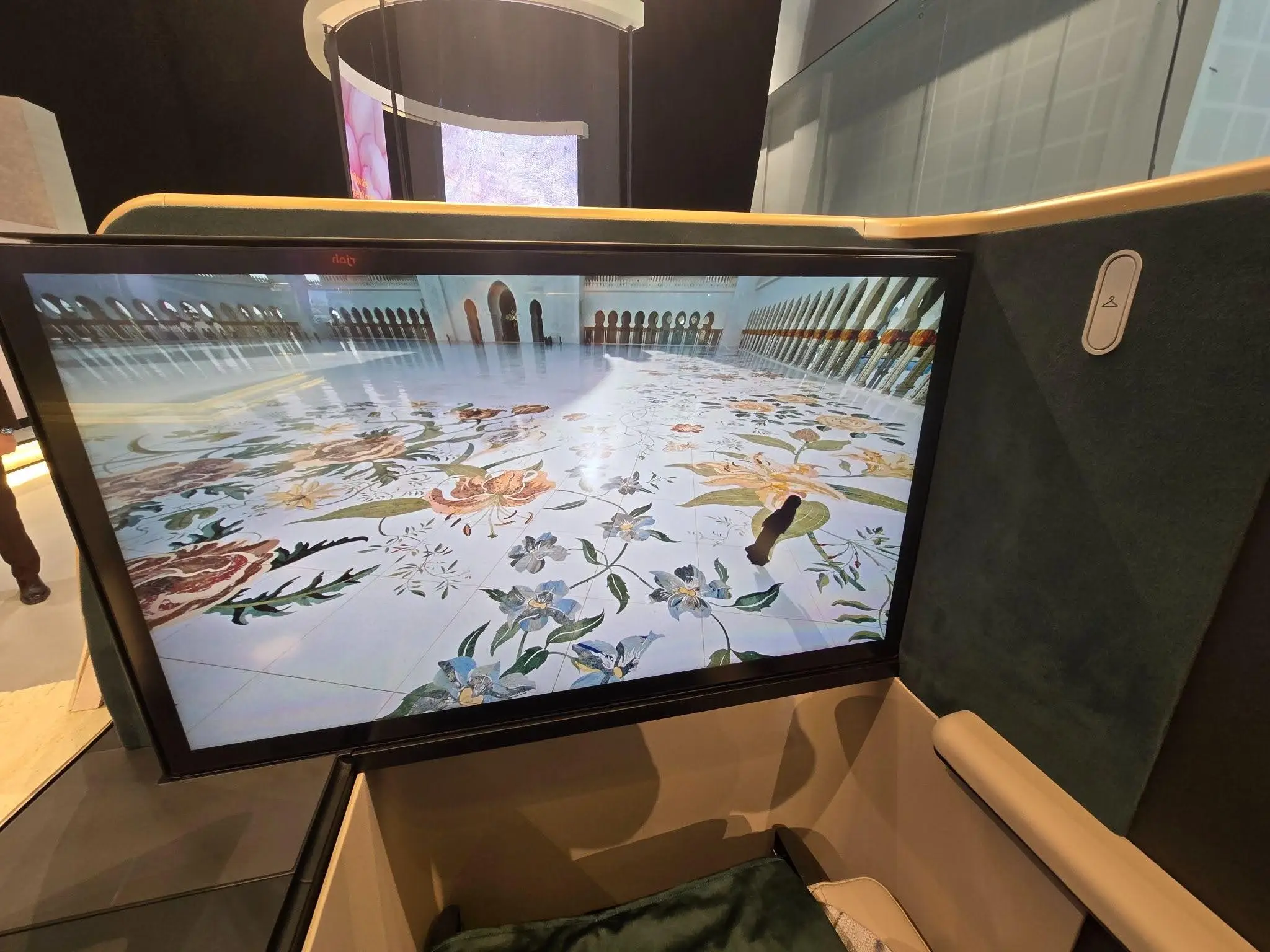
The 32-inch 4K screen dominates the First suite, fully occupying the space in front of it. Its minimal borders make it appear larger, almost like having a miniature movie theater.
One listed feature I appreciated in both new premium cabins was Bluetooth connectivity. It would allow me to pair my own noise-canceling headphones with the entertainment system.
That said, business class’ 17.3-inch screen felt noticeably compact after experiencing First’s massive display.
Both cabins had sleek controls and wireless charging.
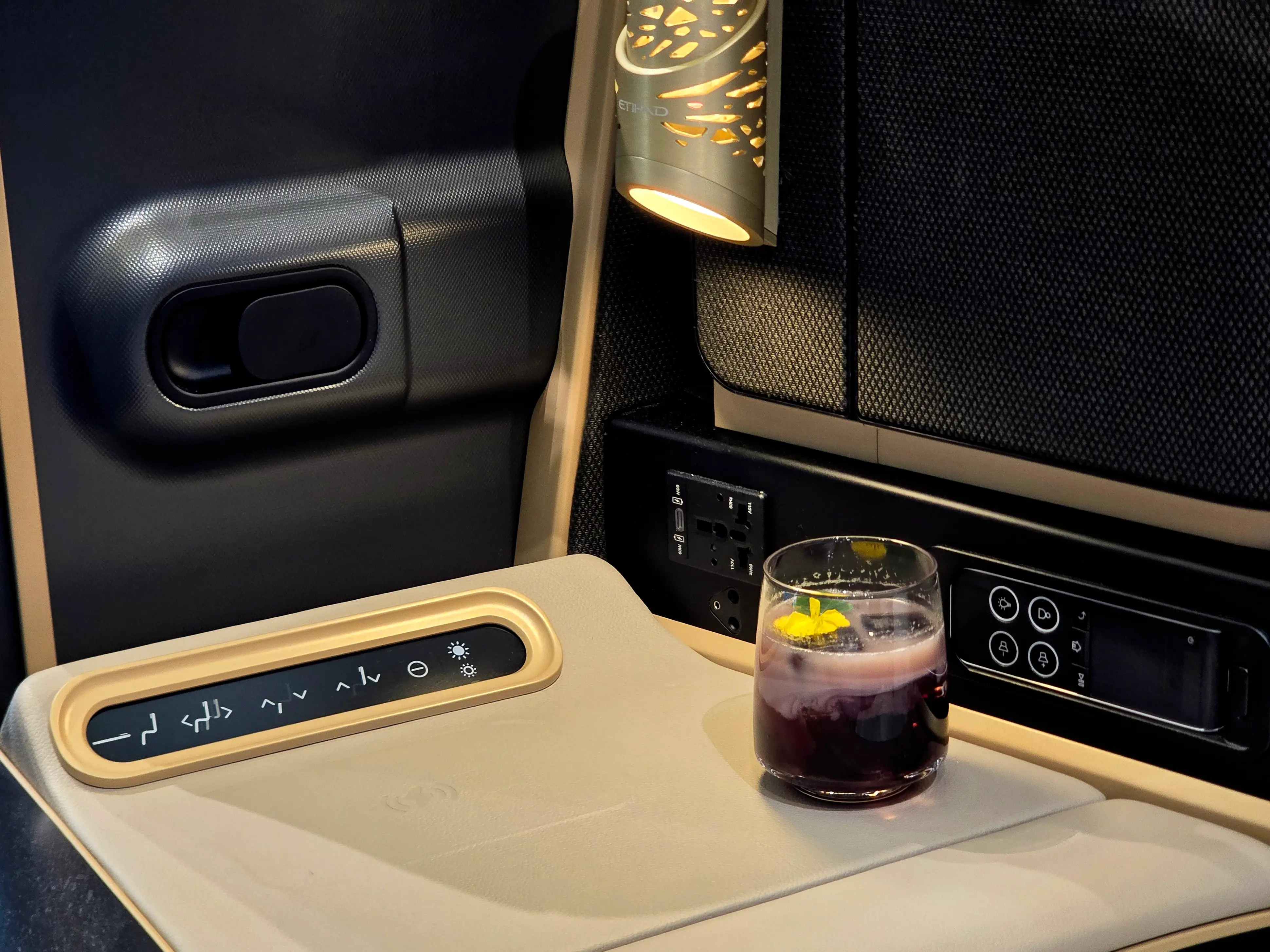
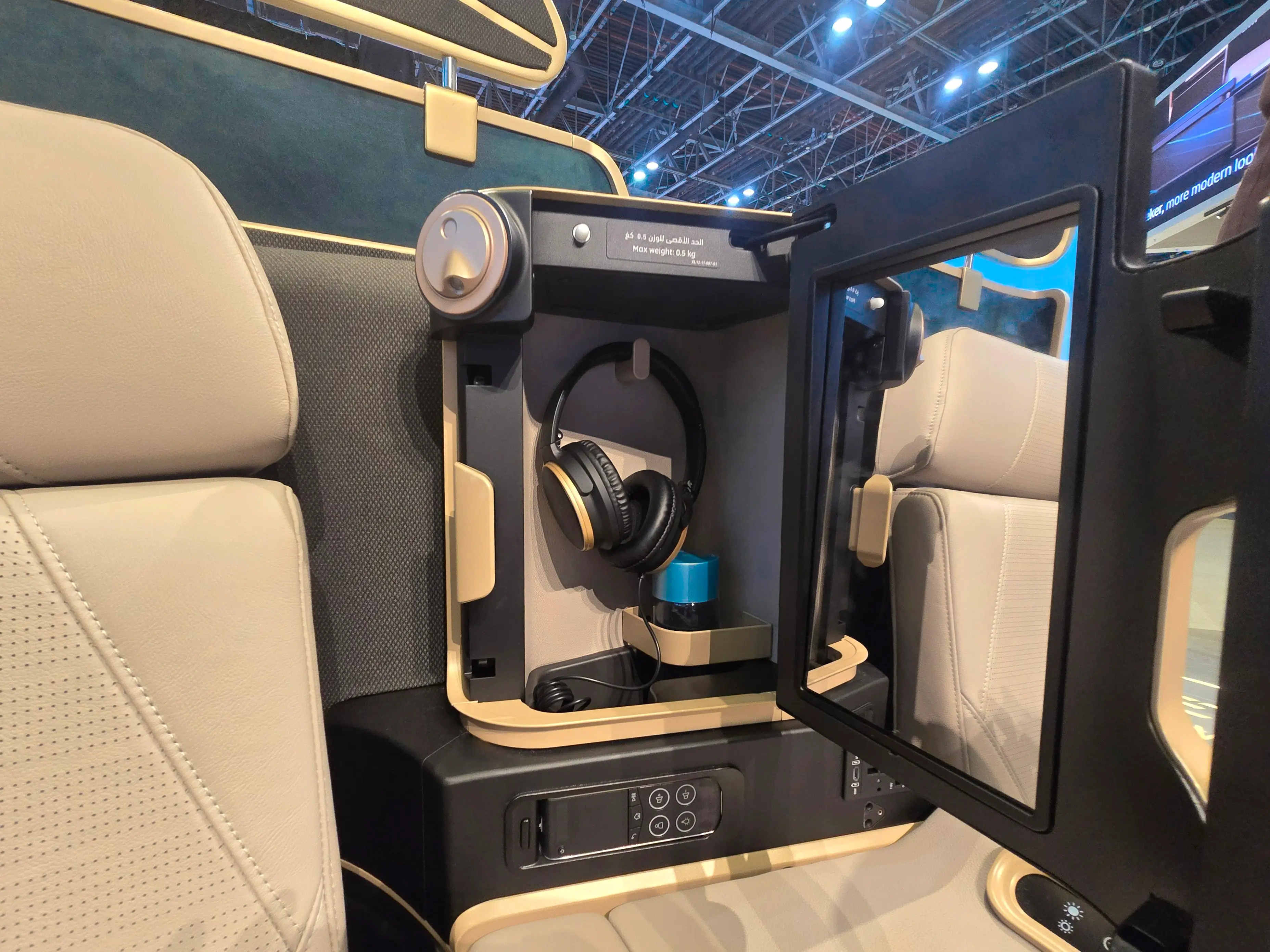
Etihad’s first and business cabins had sleek control panels integrated beside the seat. There are settings for lighting, seat positions, and privacy.
Wireless charging, TV controls, and headphone storage were all within easy reach. The mock-ups also had a 60-watt USB-C and a 110-volt universal power outlet.
There was also a second control panel beside my hip when I laid flat.
The first-class buddy seat could double as a compact coworking space.
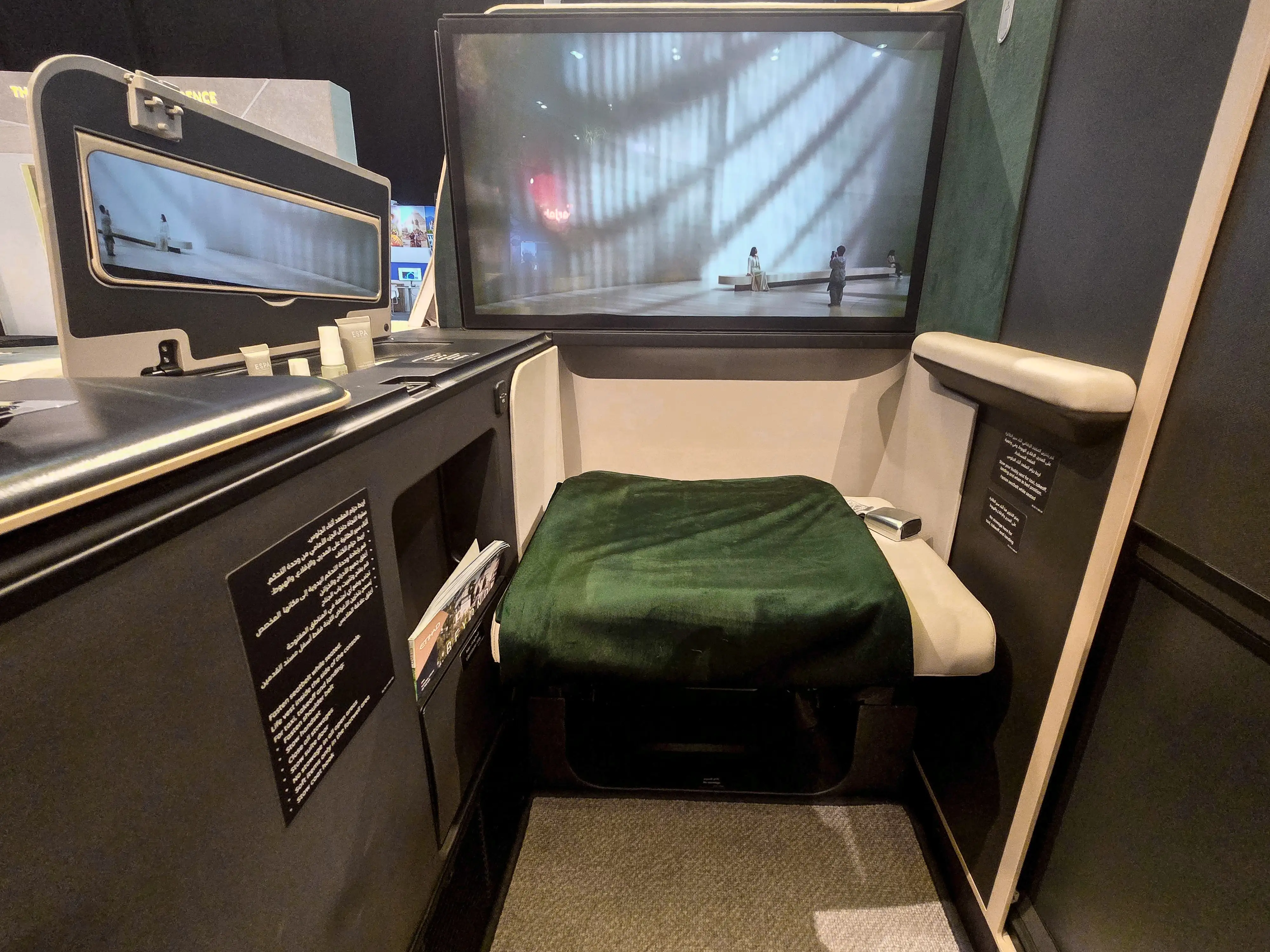
Etihad promotes the buddy seat in First for dining or socializing. I immediately saw another use: Working face-to-face with a colleague. Though with limitations.
At 161 centimeters tall, my legs already extended well into the space between us. Put two 180-centimeter passengers opposite each other, and I expect their knees would become well acquainted.
I couldn’t test the dining table, so I’d wonder whether two laptops or full meals actually fit.
Also, both people need to be traveling in First Class. Etihad said travelers in Business or Economy could not join them, telling me: “Cross-cabin guests are not allowed.”
First has its own hidden “personal powder room.”
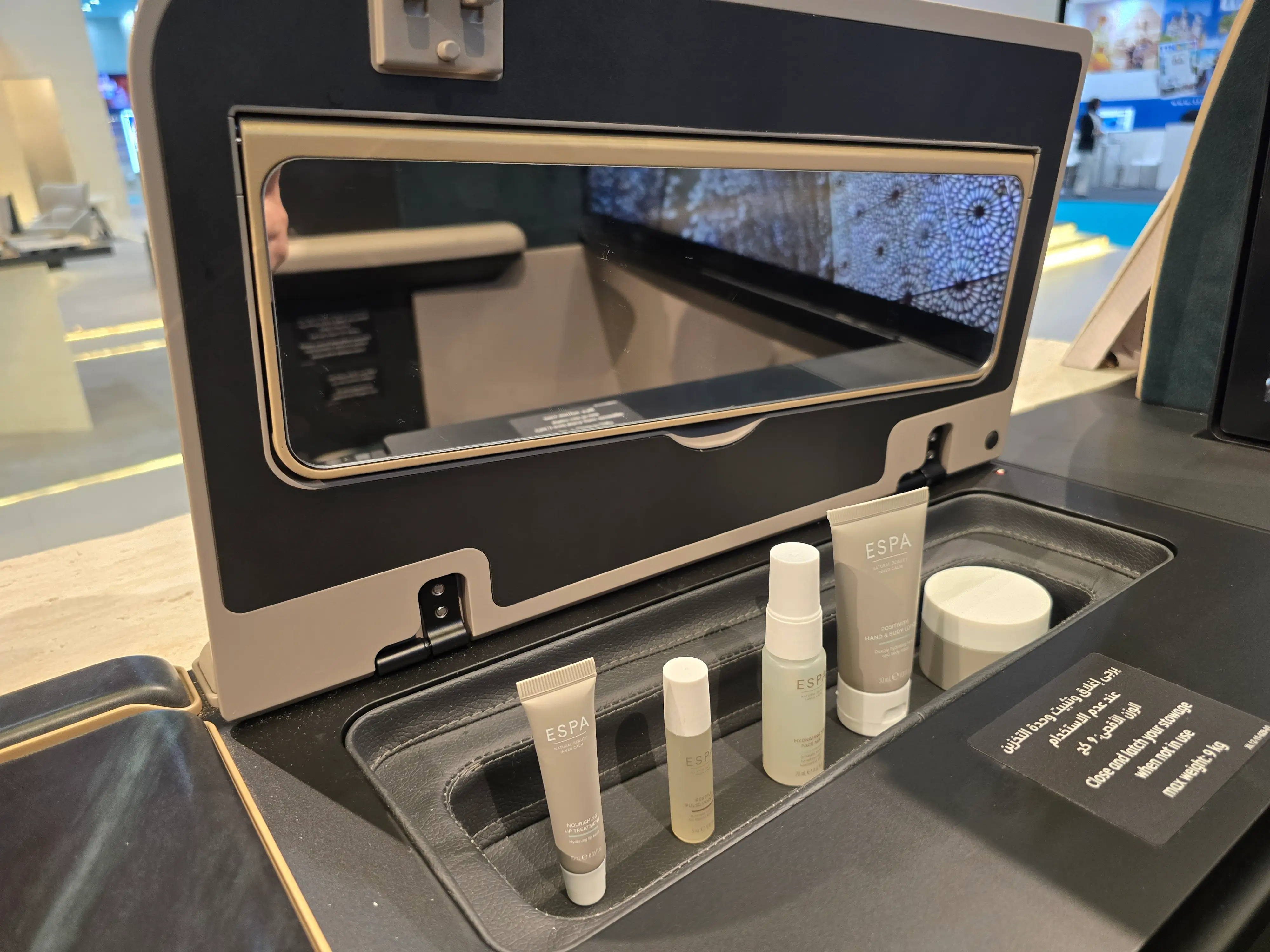
I would’ve missed the drawer Etihad calls the “personal powder room,” had I not known about it. Despite the name, it isn’t a separate room. It’s a deep vanity compartment with a mirror and space for toiletries.
During the walkthrough, Etihad shared that first-class passengers will also receive a Giorgio Armani amenity kit with ESPA skincare, premium loungewear, slippers, and a full turndown service.
Meanwhile, business-class passengers receive a different amenity kit with LaNeige skincare, while loungewear and slippers are available on longer flights.
The privacy doors worked better than I expected.
Lying flat with the manual privacy door closed, the rest of the cabin almost disappeared from view.
In both cabins, I couldn’t see over the walls or through obvious gaps. My head and feet didn’t feel exposed, making the seat feel like my own room in the sky.
First and business class are surprisingly close together.
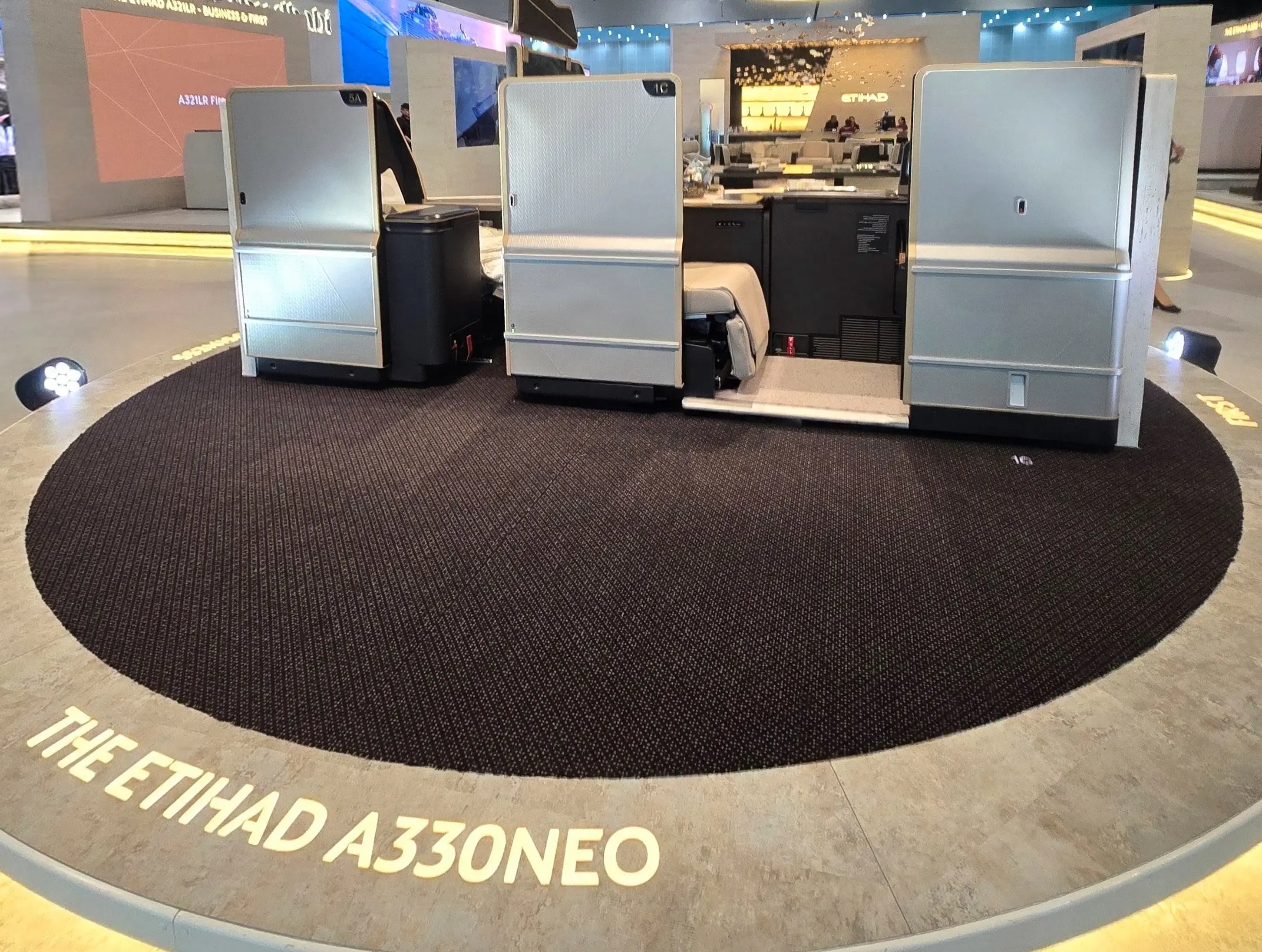
The divider behind First made the cabin feel separate while I was sitting inside my suite. Walking out told a different story.
The four first-class suites sit directly ahead of business class. One step took me from First into the next cabin. An Etihad representative confirmed to me that first and business are physically connected.
I’m used to premium cabins with clearly defined sections and physical separation, so the transition surprised me. That’s one of the trade-offs to squeezing first class into the smaller widebody.
Business maintains many of the perks of First, but in a tighter space.
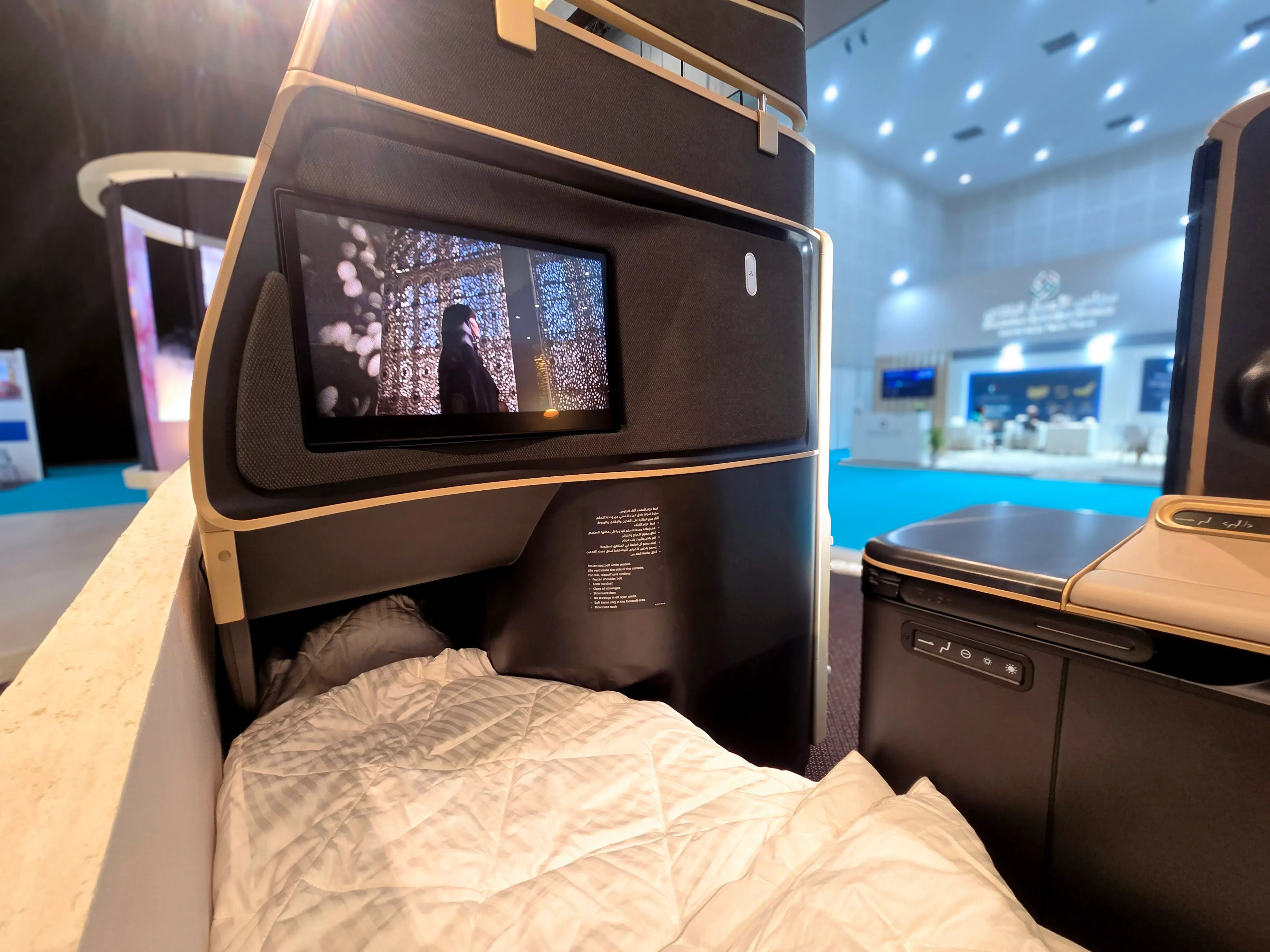
Business was already configured as a bed when I climbed in, giving me a chance to see where its smaller footprint became noticeable.
At my height, I fit comfortably with plenty of headroom. There was less open space toward my feet, with the space extending beneath the screen.
That contrast ultimately summed up both cabins for me. First uses its extra space to create something akin to a private room, while business-class borrows similar features into a more compact suite.
These cabins won’t be cheap, though.
A few minutes inside a mock-up can’t replicate several hours in the air. But sitting inside both cabins showed me far more than renderings or measurements could.
Still, these upgraded premium cabins will likely come at a steep price. In April, a round-trip first-class ticket from New York to Abu Dhabi on Etihad’s Boeing 787, which features one of Etihad’s newer cabin products, costs about $6,000, versus roughly $3,800 in business class and $400 in economy.
It remains to be seen whether the pricey first-class experience in the air justifies the upgrade.
Read the original article on Business Insider
The post I toured Etihad’s new first and business cabins coming to future Airbus jets in 2027. These 8 things surprised me most. appeared first on Business Insider.