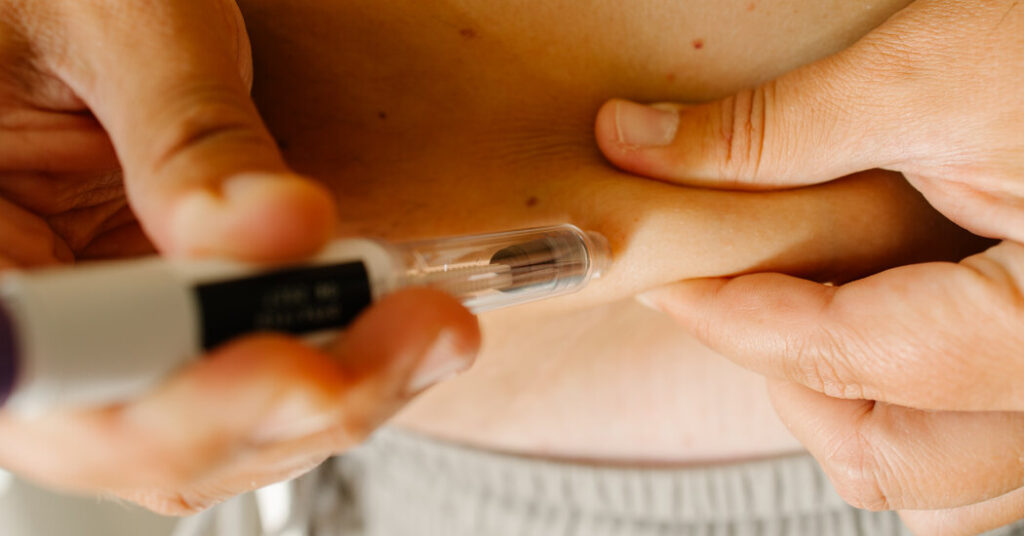
A large new study confirms what many people have long suspected: A sizable number of people taking drugs like Ozempic have no medical reason to do so.
The study, an analysis of the medical records of more than 92 million U.S. adults, identified more than 1.1 million who were taking GLP-1 medications, without any record of an issue that would make them eligible, like obesity or diabetes. While the researchers didn’t examine why people took these medications, doctors said many people are probably using them simply to shed some pounds or in the hope they might deliver other, buzzy potential benefits.
“You see it all over the place. You have people describing publicly their experience with these medications, some good, some bad,” Dr. Babak Orandi, an obesity medicine specialist and transplant surgeon at N.Y.U. Langone Health, and the lead author of the study, published Tuesday in the journal Obesity.
The positive anecdotes, he said, “may open up people’s curiosity to say, ‘Hey, maybe that could work for me.’”
Technically, GLP-1s have only been approved for a few conditions, including obesity and diabetes. The Food and Drug Administration has also approved some GLP-1s to prevent heart attacks and other cardiovascular issues and to treat sleep apnea, both in people with obesity, and to treat kidney disease in those with type 2 diabetes.
But the drugs have become a cultural phenomenon, with the public discourse about them and the aggressive marketing of the medications generating far broader interest.
“It’s the first time that I can recall that the general public knows so much” about a drug, said Dr. Nils Krüger, a researcher at Harvard Medical School who has studied GLP-1s.
These “off-label” prescriptions, as doctors call them, became far more common as the study went on, jumping 15-fold between 2021 and 2025. And researchers say those findings are almost certainly an undercount, since they may not capture people who are accessing the drugs through telehealth platforms or taking compounded versions.
Shedding some weight is perhaps the most obvious reason people without obesity or diabetes might turn to the drugs. More than one in three of those taking a GLP-1 drug off label had a normal body mass index. Patients taking the drugs off label were also much more likely to have had a documented eating disorder than those who were not taking one of these medications. While the number of patients with eating disorders was still a small fraction of patients, doctors said it was still cause for concern.
Beyond weight loss, there are a host of other reasons people may be seeking out these drugs, outside experts said. For example, the study found that patients taking a GLP-1 drug off label were more likely to have high blood pressure or high cholesterol.
People might think, “‘Oh, it’s being used for vanity purposes,’” Dr. Orandi said. But he said that he has talked with patients who are interested in whether the drugs might help for other issues that aren’t included on their labels.
Scientists are in the early stages of studying the drugs for other possible uses, including improving fertility, curbing cravings for alcohol and alleviating brain fog. While researchers need far more data to determine if the drugs work for these purposes, doctors said they are already seeing patients try them, in the hope that they will.
Dr. Andrew Kraftson, a clinical professor at the University of Michigan Medical School who treats patients with obesity, noted that the new study also highlight how many doctors seem to be prescribing these drugs to patients who do not appear to qualify for them.
Busy primary care doctors whose patients request the drugs may think, “Well, what can it hurt,” he said.
“But still,” Dr. Kraftson added, “we totally are not giving comprehensive care in these situations,” Dr. Kraftson expressed concern that some doctors may not fully be assessing whether a patient could benefit from the medication, and whether any potential benefits outweigh the possible risks.
There is little data on how the drugs might affect people without obesity or diabetes, because they were largely excluded from major clinical trials.
These medications might pose unique risks to people who are not overweight, Dr. Krüger said. Those risks include malnutrition, as well as muscle mass loss, side effects of the drug that can affect anyone but that could be especially concerning in people with lower starting B.M.I.s.
“We don’t know how this will play out,” Dr. Krüger said. “It’s like this big Ozempic experiment.”
The post GLP-1 Prescriptions for People With No Medical Need Are Climbing appeared first on New York Times.