In recent months, the Trump administration has moved to shutter several government laboratories that studied how wildfires affect human health, air quality, wildlife habitat and forest ecosystems.
Though the labs’ research was long term, some scientists say the cuts could hinder efforts to protect people and the environment from wildfires as soon as this summer. The smoke billowing across much of the country Friday heightened these concerns.
At the Environmental Protection Agency, the administration has almost completely dismantled the scientific research office, which studied the health effects of exposure to pollutants including wildfire smoke for more than a decade.
When President Trump returned to office in January 2025, scientists in the E.P.A.’s Office of Research and Development were analyzing the chemicals in wildfire smoke, including toxic metals like copper, lead and zinc, according to a summary of their research at the time.
The office also operated one of the world’s only labs that specialized in controlled human-exposure studies, in which volunteers breathed in wildfire smoke and other pollutants while researchers monitored them for chest pain, respiratory inflammation and other health effects. That lab was closed last summer.
“Eliminating the Office of Research and Development and its national research programs means there is likely to be less organized and strategic research to address threats from wildfire smoke,” said Bryan Hubbell, who left the E.P.A. research office last year and now works at Resources for the Future, a think tank.
At the Forest Service, the administration has proposed to shutter 57 of 77 research labs across the country as part of a reorganization that involves moving the agency’s headquarters to Salt Lake City from Washington.
One of those labs, in Seattle, developed real-time smoke-tracking maps used by firefighters and local governments. Another, in Wenatchee, Wash., studied when and where to light controlled blazes to reduce wildfire risk, improve forest health and restore wildlife habitats.
Representatives for the E.P.A. and the Forest Service did not immediately respond to requests for comment. Both agencies have previously said that they are still conducting pioneering scientific research.
“There’s a strong commitment to research and to science in the reorganization,” Tom Schultz, the Forest Service chief, told The New York Times in April.
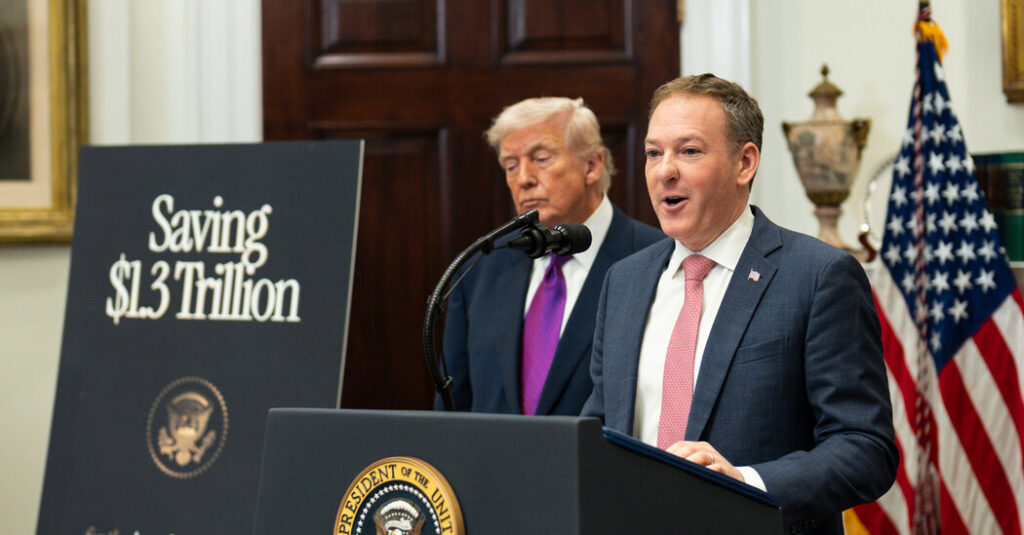
Lee Zeldin, the E.P.A. administrator, said in a statement Friday that the agency was continuously monitoring how smoke from Canadian wildfires was affecting air quality across the United States. He said this data would be publicly available via two online tools, the Air Quality Index and AirNow’s Fire and Smoke Map.
The post Trump Administration’s Cuts Targeted Wildfire Research appeared first on New York Times.