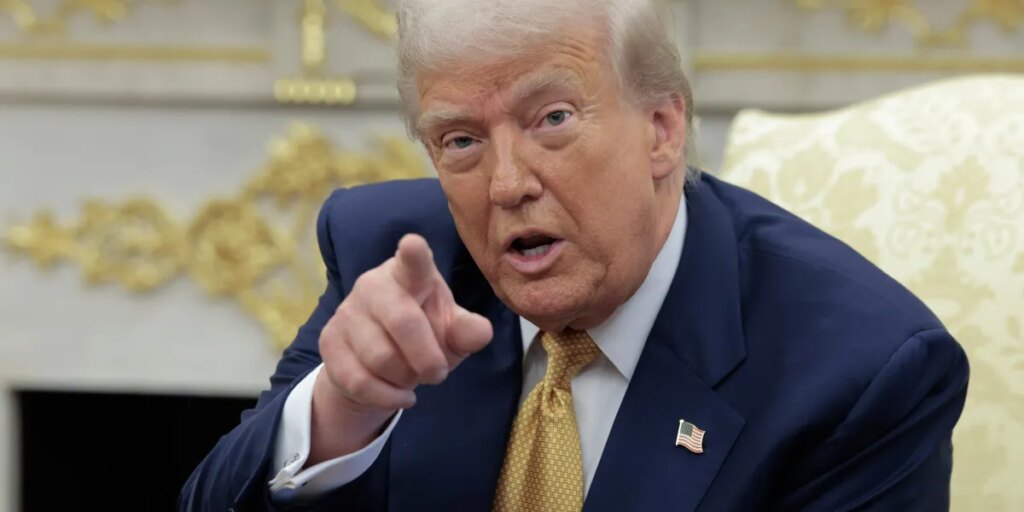
President Donald Trump’s sweeping tariffs were supposed to raise billions of dollars in government revenue while reviving American manufacturing. Instead, after a Supreme Court ruling forced the Trump administration to reimburse much of the money it collected, it’s now looking for workarounds to impose tariffs anyway.
One such workaround will take effect later this month, when the Trump administration imposes 25% tariffs on many imports from Brazil. The fresh tariffs, announced this week, arrived after the Office of the U.S. Trade Representative conducted a yearlong investigation under Section 301 of the Trade Act of 1974 that concluded Brazil had engaged in unfair trade practices.
The move revives a battle the Trump administration has waged specifically against Brazil since last year, when the White House imposed tariffs totaling 50% on certain Brazilian imports after Brazil’s former president, Jair Bolsonaro, was accused of leading a conspiracy to overturn his reelection loss in 2022. Bolsonaro was later sentenced to 27 years in prison.
Still, the administration’s actions against Brazil may also be the beginning of an alternate plan to implement tariffs in line with the President’s wishes despite the questionable effectiveness of such duties so far, experts say.
Tariff disappointment
Since the Supreme Court ruled in February that Trump could not use the International Emergency Economic Powers Act, or IEEPA, to impose tariffs, importers have been issued about $71 billion in refunds, according to the U.S. Treasury’s monthly statement. With $166 billion in refunds set to be paid out in total—and domestic manufacturing having increased a measly 1.1% year-over-year as of June—Trump’s tariffs are turning out to be more of a drag than a boon for government revenues, said James Knightley, ING’s chief international economist.
“The hope was tariffs were going to be a big revenue raiser, and right now it appears that actually tariffs are going to be potentially a loser through the second half of this year,” Knightley told Fortune.
It’s these very lackluster results thus far that may motivate the administration to push even harder to implement its tariffs, Knightley added.
Just after the Supreme Court struck down many of Trump’s tariffs in February, he implemented a temporary 10% global import surcharge citing section 122 of the Trade Act of 1974, though this measure lasts only 150 days and expires later this month.
The administration is now taking a slower but potentially more lasting approach: investigating countries’ trade practices under Section 301 of the Trade Act of 1974, like it did with Brazil.
The method, although it requires a sometimes slow-moving investigation and gives businesses an opportunity to comment, is effective. Trump used this approach several times during his first stint in office, including to impose 25% tariffs on roughly $250 billion worth of Chinese imports. Although challenged, Trump’s tariffs on China using this method were not struck down by the courts.
Once an investigation is completed, the tariff rates can also be adjusted without restarting the entire process, Melissa Irmen, the director of advocacy for the National Association of Foreign-Trade Zones, told Fortune.
“If you set the tariff at say 15% and it’s deemed that it needs to be modified, then changing it to 30% isn’t the same involved process,” she said.
The administration has proposed tariffs on dozens of trading partners, including the European Union, following investigations into their enforcement of bans on goods made with forced labor. This could mean Brazil is only the first of many economies to be affected by fresh tariffs.
Business effects
That doesn’t mean the new duties will be immune from lawsuits. Irmen said lawsuits could look to argue the administration failed to prove a foreign practice harmed the U.S. economy. They could also question whether tariffs would remedy the alleged harm.
Regardless, importers are tired of the uncertainty. After the rapid tariff implementations under IEEPA imposed last year, companies had to scramble to comply, she said. Just like last time, businesses could once again pay duties for months or years, only to again seek refunds if courts strike them down.
“We may have the same situation where tariffs are implemented, tariffs are collected for a period of time, and by the time the court decision happens, if it does go the way IEEPA went, we may have to see another refund process again,” Irmen said.
Longer investigations may give businesses more time to prepare, but many businesses will still be left wondering what countries or products Trump will target next, throwing a wrench into their long-term planning.
“Uncertainty is just not a good thing in any kind of business planning,” Irmen said.
More tariffs could also raise prices and make it harder for the Federal Reserve to lower interest rates, Knightley added, which would affect businesses overall.
Still, Trump will likely trudge ahead with his tariff plan—even as he has repeatedly insisted the Fed lower rates—because trade policy could soon become one of the only tools left in his arsenal.
Some polls have predicted Democrats may win the House and split the Senate following the midterms. If Republicans lose control of Congress and Trump struggles to pass laws that further his agenda, he may rely more on his executive power, said Knightley.
“If you can’t do tax and spending, you’re going to be more limited to areas where the president has executive powers,” he said. “And trade, of course, is one of those.”
The post After the Supreme Court killed his first tariffs, Trump turns to a new legal workaround to impose 25% tariffs on Brazil and possibly others appeared first on Fortune.