People are giving away their most powerful tool to AI: The ability to think.
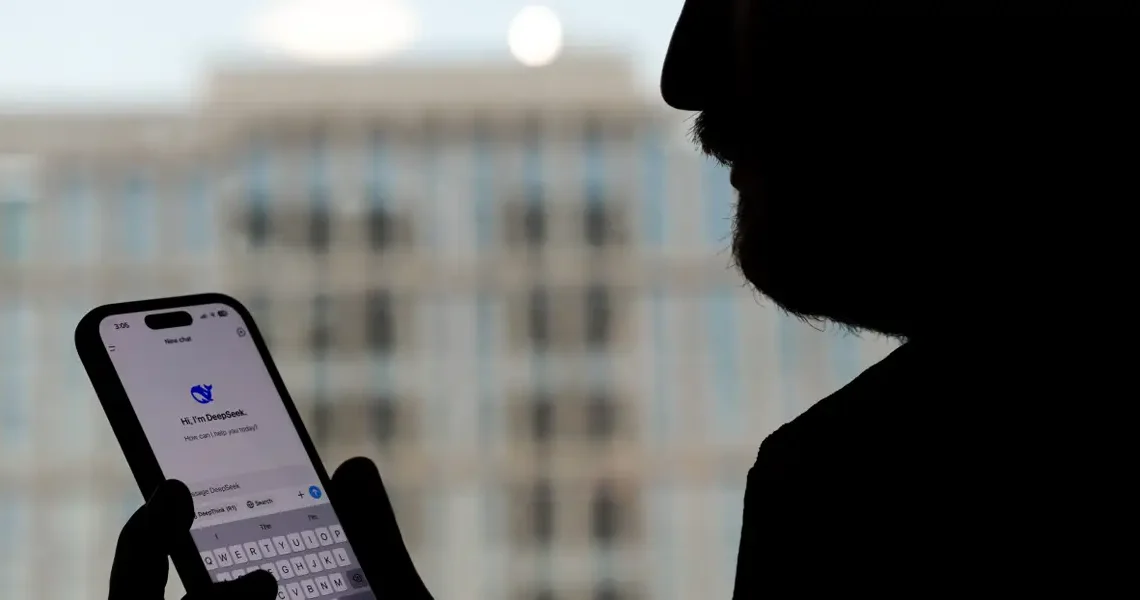
Across TikTok and Substack, users are posting about how they have become so dependent on AI that they use it to make basic and personal life decisions — what to eat, what to wear, how to phrase a message to friends, or how to navigate a toxic relationship.
What may seem like a harmless convenience is becoming increasingly common. And researchers say it could have profound consequences. The more people rely on AI to make decisions, the less practice they get making difficult decisions on their own.
Over time, that risks weakening the cognitive and social skills people develop through experience, uncertainty, and trial and error. In more extreme cases, AI researchers say it could begin shaping not just what people do, but also the beliefs they hold.
“We want to believe we’re becoming more powerful thanks to our [AI] tools,” Cornelia C. Walther, a Wharton senior fellow and pro-social AI researcher, said. “But in fact, we’re giving away ever more power.”
“We are only half a step away from reliance and maybe in a not-too-far future full-blown addiction,” she said.
Should I stay or should I go?
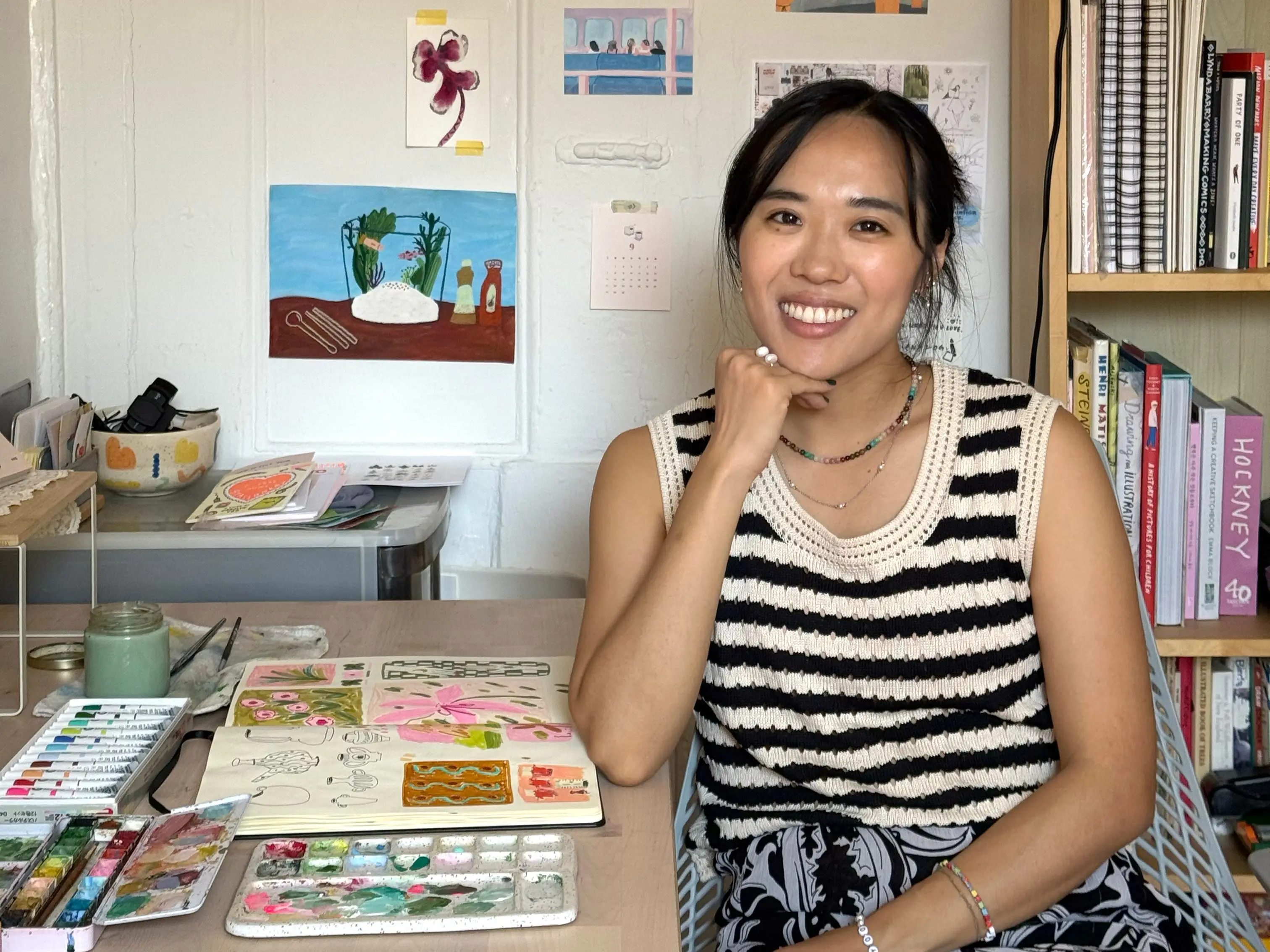
Carolyn Yoo, a former software engineer who worked in tech for nine years until mid-2024, felt the draw of a decision-making chatbot firsthand.
For months, Yoo had been wrestling with the question of whether to leave tech, until she turned to Anthropic’s chatbot, Claude, for help. She spent up to two or three hours a day asking the chatbot to map out different versions of her future.
“I kept seeking AI’s reassurance to confirm whether this was a good life choice,” she said.
“Every single day, whether I was talking to a new person who made me feel a bit unsure, I would go back to it again,” she said.

Other users say they are turning to chatbots to help navigate relationships.
In a Substack post titled, “I’ve Outsourced My Judgement to AI. So Has Everyone Else,” financial writer and comedian Dominic Frisby described how he uploaded his entire WhatsApp exchange with an ex-partner for advice.
“I was stuck in a toxic relationship I couldn’t seem to break out of, even after we separated. At one point, I thought I was going mad,” he wrote.
The bot’s explanation of their relationship and personality types finally gave him clarity on how to move on.
Some apps are capitalizing on indecision by offering AI tools that explicitly claim to help users make decisions on their behalf — Moot is one example.
The AI-powered decision-making app, launched earlier this year, allows users to ask questions, which are debated by different AI personas that then vote on the best path forward.
The rise of ‘cognitive surrender’
Researchers worry that overdelegating decisions to AI could gradually weaken the critical thinking and judgment skills that underpin independent thought.
Over time, people may become less comfortable with uncertainty, less practiced at weighing competing options, and more likely to defer to AI rather than trust their own judgment.
John Nosta, founder of the innovation think tank NostaLab, has warned that a heavy reliance on AI can create a kind of “cognitive codependent relationship,” in which people become more productive in the short term while quietly losing the underlying skills the technology is replacing.
Vivienne Ming, a theoretical neuroscientist and founder of Socos Labs, described the process as a classic case of “use it or lose it.”
By repeatedly outsourcing mental effort to AI, she worries people may engage less often in the kinds of thinking that strengthen memory, attention, learning, and decision-making over time.
Some researchers say the consequences could extend further. What begins with everyday choices could eventually shape how people think about relationships, politics, and society.
Wharton School researchers have dubbed this phenomenon “cognitive surrender,” in which users shift from treating AI as a tool to treating it as an authority, accepting its answers rather than actively evaluating them.
Steven Shaw, a postdoctoral researcher in marketing at Wharton, said people could become “passive followers of unthought thoughts,” adopting ideas generated by AI without fully processing them.
Getting sucked in
So why is AI so hard to resist in the first place, and why are we turning to it for life decisions?
Well, AI doesn’t get tired, impatient, or uncomfortable. It responds instantly and can mirror reassurance back in seconds, often making it an appealing alternative to a friend or partner.
Joanna Stern, chief technology analyst at NBC and author of “I Am Not a Robot,” said that after spending a year using AI throughout her work and personal life, the most unsettling part was seeing the relationship you can have with a computer.
“Even for people that seem well-adjusted, you can get so, so sucked into it,” Stern said in a recent interview on journalist Kara Swisher’s podcast.
But your sycophantic AI best friend isn’t necessarily good for your long-term people skills.
“When AI systems are optimized to please, they erode the very feedback loops through which we learn to navigate the social world,” Anat Perry, a Helen Putnam Fellow at Harvard University, said.
“Over time, this could also recalibrate what people expect feedback to feel like, making honest human responses feel unnecessarily harsh by comparison,” she said.
‘Sit in our own uncertainty’
For Yoo, stepping back from AI meant relearning how to sit with uncertainty instead of immediately reaching for an answer.
She began relying more on notebooks, meditation, writing groups, and conversations with other people.
“The whole purpose is to sit in our own uncertainty and come to our decisions ourselves,” she said. “That’s the only way you can really feel integrity in the choices you make.”
Still, some users say that outsourcing parts of their judgment to AI can help them make better decisions and avoid mistakes they might otherwise regret.
As Frisby writes on Substack, “I’m done with bad decisions. I’ve made enough wrong decisions for one life. I’m 56 now. I just want to make optimum choices and have a really good next three or four decades, or however long I’ve got left.”
Read the original article on Business Insider
The post The hidden cost of letting AI choose your lunch appeared first on Business Insider.