For months, the left-wing candidate in Colombia’s presidential election this Sunday seemed lulled by his lead in the polls.
The candidate, Iván Cepeda, anchored by support from President Gustavo Petro and his base, largely stayed home.
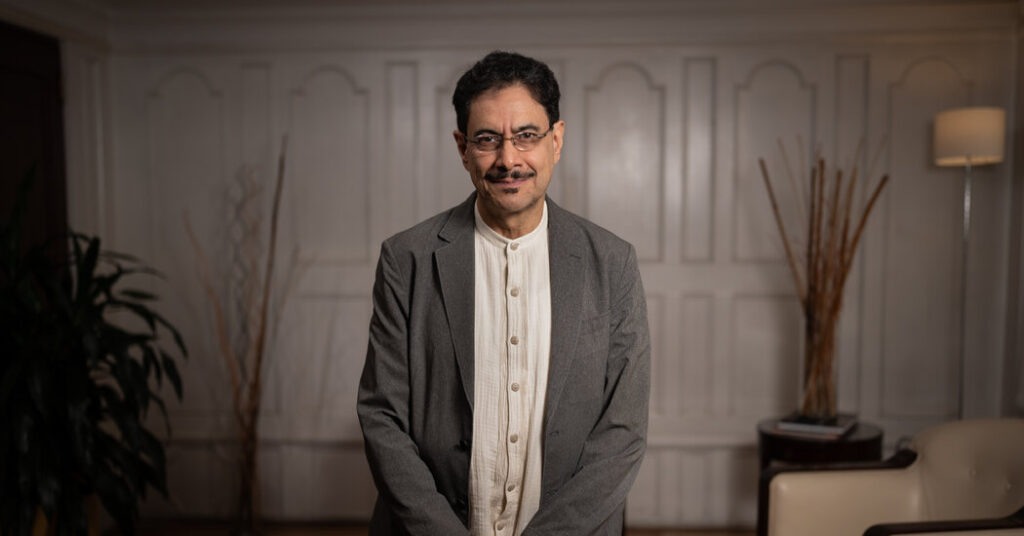
A senator, human rights activist and professor who favors simple, collarless shirts and looks like he just stepped out of a philosophy lecture, Mr. Cepeda, 63, turned down debates and mostly gave interviews to friendly media.
“It was a catastrophic campaign,” said Juan Carlos Flórez, a Colombian political historian, a verdict shared by even Mr. Cepeda’s staunchest supporters. That became clear on May 31, the first round of voting.
A right-wing outsider, Abelardo De La Espriella, stunned the left by winning the most votes, surpassing not only a traditional conservative candidate, but also Mr. Cepeda, propelled by a campaign that seized on anger at Mr. Petro and a social media blitz.
Days later, Mr. De La Espriella was endorsed by President Trump, who called Mr. Cepeda a “Radical Left Marxist.” Mr. De La Espriella, 47, a criminal defense lawyer who spent much of his career in Miami, has led the polls.
Mr. Cepeda, known for not giving up, has traveled across Colombia, thrown aside his carefully prepared speeches and has begun attacking Mr. De La Espriella.
Is it too late?
Petro’s Heir, for Better or Worse
Mr. Petro took power in 2022, promising sweeping change and hope for marginalized groups and young people.
Experts say Mr. Cepeda’s performance in the May election — capturing nearly 41 percent of votes, to Mr. De La Espriella’s nearly 44 percent — shows that Mr. Petro accomplished something once unimaginable: He turned the left into a viable political alternative in a country where left-wing politics have long been associated with a violent insurgency.
But after a rocky four years, many working-class Colombians say their hopes have dimmed.
Mr. Petro expanded social programs and access to public higher education. His government gave subsidies to older people and to unemployed young Colombians. Poverty dropped to a historic low, according to the national statistics agency.
But his term was plagued by scandal, a troubled state takeover of the health system and runaway spending that left Colombia with what a former finance minister under Mr. Petro called a profound fiscal crisis.
Edwin Fernay, who lives in Barranquilla, said Mr. Petro had a golden opportunity.
“He surrounded himself with the wrong people and lost it all,” Mr. Fernay said. “He burned it up.”
Even some people who benefited from Mr. Petro’s policies say they are worse off.
Ramón Montañez, a doorman in Bogotá, said a move to increase wages had been a bald attempt to get votes, and had cost him his job. His employer — saying he could no longer afford him — was installing security cameras.
“The increase to the minimum wage?” he said. “What it did was leave a ton of people without work.”
Mr. Cepeda has tried to respond to this anger.
In an interview with The New York Times, he said he would prioritize the “health crisis,” the fiscal deficit — without hitting social spending — and energy.
Mr. Petro, an environmental crusader, halted oil and gas drilling, eliminating a key export and forcing Colombia to import gas. Mr. Cepeda said he would seek a more gradual transition toward clean energy.
Mr. Cepeda’s campaign has sought to portray Mr. Petro’s agenda as incomplete, rather than failed, a message that appears to resonate with some voters.
Andrés Rodríguez, a mathematician attending a rally in Bogotá, said what Mr. Petro started needed more time. “If the little that has been done is broken, the country is going to go right back to how it was before,” he said.
“Those who had nothing,” he added, “will just disappear.”
‘No Regrets’
Security concerns are helping the right win elections across Latin America, and Mr. De La Espriella’s promise to crush cocaine-trafficking groups has galvanized many Colombians.
Mr. Cepeda has pushed a diametrically opposite proposition: peace.
Daniel Coronell, a prominent Colombian journalist, said Mr. Cepeda had been critical to creating a movement for victims of the state.
He exposed a string of state-ordered assassinations of leftist leaders, including his own father. He revealed ties between brutal paramilitary groups and right-wing politicians, including Álvaro Uribe, a popular two-term president. And he sought to hold the military accountable for killing thousands of civilians, whom soldiers dressed up in fatigues to pass off as enemy fighters.
Mr. Cepeda has been criticized for advocating less for victims of left-wing armed groups, but he was a key figure in the landmark 2016 peace accord that saw the country’s oldest leftist rebel group agree to disband.
Mr. De La Espriella has accused Mr. Cepeda, whose parents were communist leaders, of maintaining ties to leftist armed groups, who, he claims, are now forcing residents in conflict zones to vote for him.
Mr. Cepeda counters that those Colombians understand the true toll of war.
The election comes as the Trump administration is pushing Latin American leaders to join its military campaign to eliminate drug traffickers — Mr. De La Espriella has said he would sign on.
Mr. Cepeda has flatly refused.
Echoing President Claudia Sheinbaum of Mexico, he says he seeks “a relationship of mutual respect, of respect to our sovereignty, of cooperation” with the United States — but not a joint drug war.
“The anti-narcotics policy that has been carried out,” he told The Times, “has failed spectacularly.”
He recently discarded Mr. Petro’s “Total Peace” plan, which critics say allowed armed groups to expand while military cease-fires were in place.
His own plan, he says, will involve further implementing the 2016 peace accord with the Revolutionary Armed Forces of Colombia, or FARC, reopening negotiations with another major leftist guerrilla group and offering drug-trafficking groups a path to surrender.
“I have no regrets about working for peace in Colombia,” he said. “On the contrary, I say it with complete pride: I have dedicated two decades of my life to seeking peace. And I will continue to do so.”
As for the persistent claim that he is a secret communist, Mr. Cepeda called it “fable and mythology.”
“I am a democrat with a long track record,” he told The Times.
What’s Next?
Analysts say the right-wing candidate has, in a twist, rattled enough voters since the first round that the runoff could be close.
Mr. De La Espriella has promised to “disembowel the left,” govern by decree if needed and legally pursue his opponents.
Mr. Flórez, the historian, said Mr. Cepeda “came out looking defeated” from the first round, and was further undermined by Mr. Petro, who claimed electoral fraud.
But as an emboldened Mr. De La Espriella hardened his message and, according to Mr. Flórez, “ate Mr. Cepeda alive” with online attacks, he had scared people.
“It pleased those who share his hatred of Petrismo,” Mr. Flórez said. “But for those who hadn’t made up their minds, for the undecided, for those caught in the middle, it frightened them.”
Mr. Cepeda has recently tried to seize on doubts about Mr. De La Espriella in an effort to appeal to the center.
“He is a lawyer with a deeply unscrupulous history,” he told The Times. “He is a man who does not respect norms, and I am certain he will not respect the Constitution.”
Mr. De La Espriella has responded with online taunts. “Where did that Tibetan monk tone go?”
He Has Not Changed
Mr. Cepeda’s campaign has jumped into high gear, flooding social media in a last-minute flurry to reach voters. Photographs have appeared of the somber Mr. Cepeda smiling, along with A.I. cartoons of him as a cat.
Personally, however, he has not changed.
“He doesn’t hug people, doesn’t go around greeting everyone,” said Gabriel Becerra, his campaign manager. He still wears the same old blazers and collarless “Mao” shirts.
But Mr. Cepeda has let voters see more of him. His wife, Pilar Rueda, a fellow human rights advocate, has joined him on the trail and spoke to The Times of her husband’s remarkable “coherence.”
“He lives his beliefs,” she said.
He has spoken of their three chow chows, one named Raiza, a variation on the name of Mikhail Gorbachev’s wife. And he has described his recovery from two bouts of cancer, sharing his spiritual guides: Pope Francis and Pope Leo XIV, Socrates, Hannah Arendt.
Not changing who he is, Mr. Cepeda believes, is precisely what sets him apart from his rival. “I am not going to put on makeup,” he said, “or turn myself into a product for the sale of ideas.”
Genevieve Glatsky contributed reporting.
The post Trump Called Him a ‘Radical Left Marxist.’ Can He Be Colombia’s President? appeared first on New York Times.