LONDON — I arrived late last week to another ordinary day in Westminster: bitter cold, gray skies spitting rain and a British government teetering on the brink of collapse.
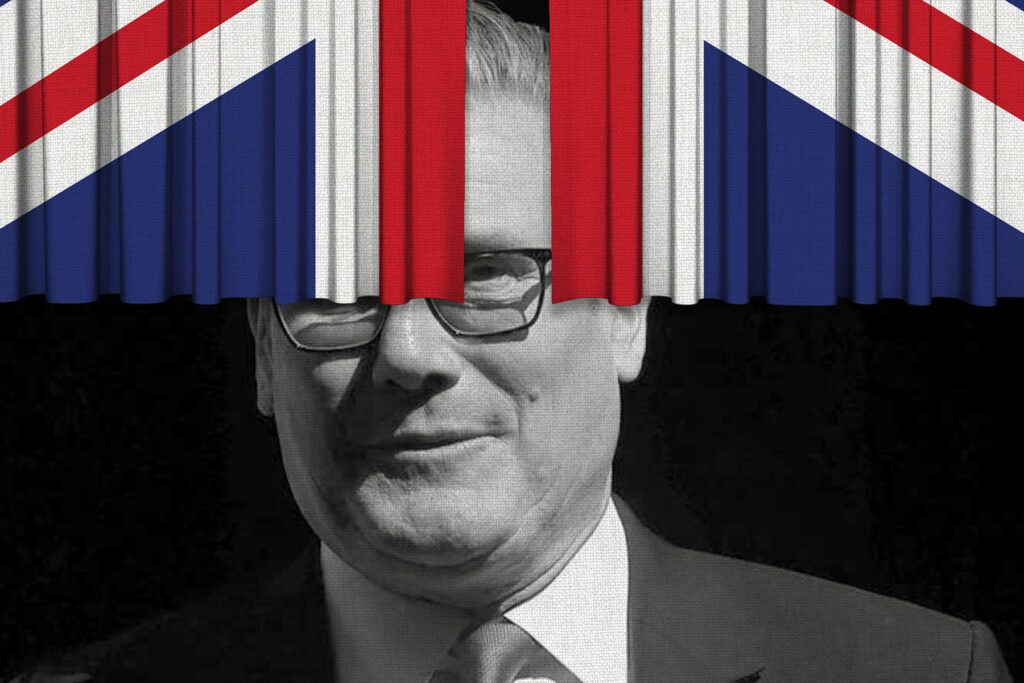
Prime Minister Keir Starmer has been fighting for his political life since the disastrous local and regional elections on May 7. Labour lost nearly 1,500 of the more than 5,000 council seats up for grabs, while the insurgent right-wing Reform UK party, led by Nigel Farage, gained nearly as many. Starmer was already under pressure after the release of the Jeffrey Epstein files forced his ambassador to the United States, Peter Mandelson, to resign. But the election triggered a broader crisis of confidence within Labour: Nearly 100 of the party’s 402 members of Parliament have publicly called for him to step down.
Less than two years ago, Starmer walked into 10 Downing Street after delivering Labour one of its largest electoral victories since World War II. Last week, it looked as if he would be forced out imminently. An anticlimactic resignation by his health secretary and hesitation among potential successors have since temporarily delayed any move against him.
“They always fight to the end,” one former government minister told me. “He’ll try to throw everyone else under the bus and will get through every week as much as he can.”
If past is prologue, though, Starmer doesn’t have much longer. Britain has had six prime ministers since 2016, a period in which the country’s departure from the European Union demanded unusually stable leadership. Instead, leadership challenges became a national pastime, thrilling Westminster insiders and exhausting much of the country.
The revolving door at Downing Street has fueled questions about whether Britain has become ungovernable. A better question may be when a leader last seriously tried to govern. Despite years of political turmoil, Britain’s two major parties have largely avoided confronting some of the country’s biggest structural problems. The struggling National Health Service is politically untouchable, as are the rising costs of state pensions. Housing and infrastructure projects are axed to preserve parking lots and railways are constrained to protect bat habitats.
After the covid-19 pandemic, incumbent governments across the West faced a reckoning. Voters punished left- and right-leaning parties alike for rising inflation and deteriorating public services. Britain risks becoming a case study in what happens when that message goes unanswered.
“Labour has lost the trust of the country,” one Conservative MP told me, pointing to the party’s pledge not to raise job taxes before doing so shortly after taking office. Chancellor Rachel Reeves wasted no time introducing £40 billion in new taxes in her first proposed budget. “But what’s happening reflects the U.K.’s many systemic challenges, weak economic growth and a lack of opportunity,” the MP added.
Sounds familiar. “We’re seeing the economic collapse we saw under the Tories, just faster under Labour,” one Reform MP said. “Both parties were guilty of raising taxes as a solution to the problem. Both parties have been guilty of increasing state intervention.”
While political scandals have damaged the prime minister who campaigned on ending “the chaos of sleaze and division,” there is a growing sense that he would be on firmer ground had the government addressed Britain’s dire economic conditions. Despite a recent uptick in forecasts, the economy remains stagnant. Growth remains around 1 percent, inflation is cooling but expected to rise and taxes are near historic highs.
Voters are exhausted. Support for the major parties is waning, as Britons turn to Reform and the Greens for new ideas. Starmer has one of the lowest approval ratings for a prime minister on record.
But the voting public isn’t the only threat to political leaders. Bond markets are watching Britain with growing skepticism as debt-servicing costs nearly rival the country’s education budget. British 30-year gilts, or government bonds, hit 5.79 percent earlier this month, their highest since 1998. “Keir Starmer is going,” and “whoever replaces him will be more left-wing,” says one senior figure in the Reform party. Last week, in anticipation of a new leader, a Labour MP suggested investors would need to “fall in line” if a new prime minister were to turn on the spending taps. The Reform source adds: “Flippant comments about the bond market will lead to some kind of financial crisis. The public finances are completely unsustainable.”
It’s a bold prediction, and one that could benefit Reform, which continues to lead in polls for a general election. That needn’t come until 2029, but Reform now expects it sooner.
“We’re working on the basis of a general election next year,” the Reform figure said. The party is building its vetting process to find 600 parliamentary candidates, many expected to come from the ranks of local councilors elected earlier this month. “My fear is what happens after we win. We cannot mess it up. The policies must be in place.”
The trouble is, for all Reform’s interest in challenging the political consensus on immigration, its spending plans resemble those of its peers. There is still no major British party willing to be honest about the country’s fiscal straits.
This has perhaps been Labour’s biggest missed opportunity. After 14 years of Conservative rule, the party enjoyed an electoral landslide in July 2024. It was a mandate, a moment to tell the truth. Instead, its leaders chose to maintain the illusion that spending could continue as normal, immediately offering significant pay raises to public-sector employees while failing to even trim the country’s spiraling welfare budget.
Starmer is now paying the price, and it appears a snap election in a postindustrial town in northwest England may determine his future. Andy Burnham, the Labour mayor of Greater Manchester, has resigned to run for Parliament in Makerfield. If in that June 18 by-election he defeats the Reform candidate — a local plumber recently elected as a councilor — he is expected to challenge Starmer as the leader best positioned to stop Reform.
A town called Makerfield, in other words, will make or break the prime minister. It sounds like something from a British pantomime, except pantomimes are meant to be funny and deliberately absurd. Outside Westminster, few are laughing.
The post Keir Starmer hangs on to a disunited kingdom appeared first on Washington Post.