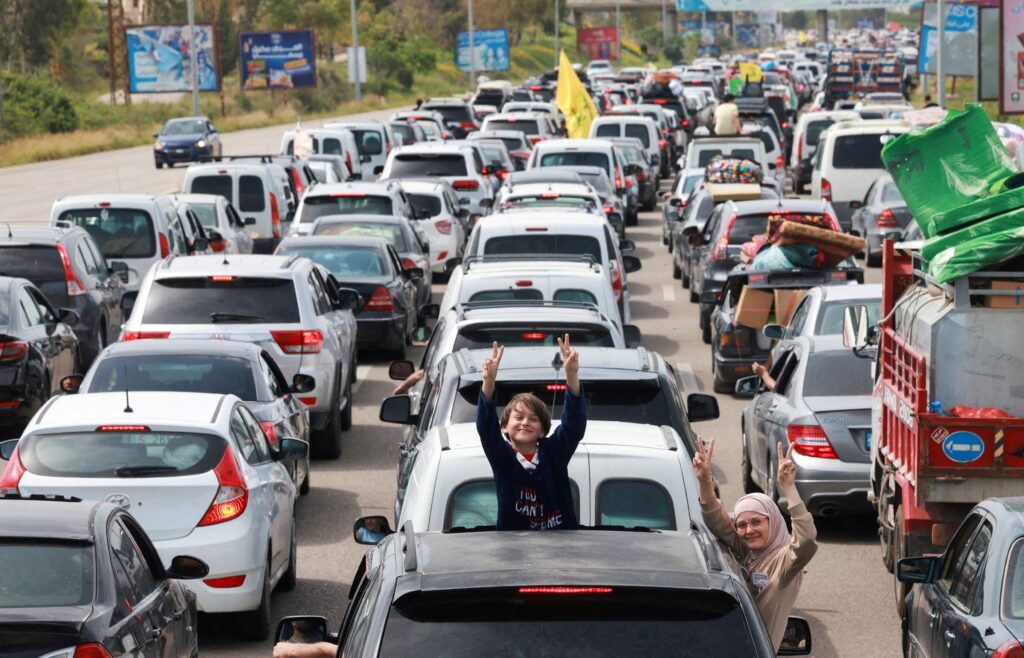
HAIDAB, Lebanon — Families packed into cars with mattresses lashed to rooftops, many waving Hezbollah flags, and streamed into southern Lebanon in the first hours of a tentative ceasefire early Friday, rushing home after six weeks of Israeli bombardment that has killed more than 2,100 people across the country.
While the 10-day truce was greeted with celebrations and relief by many in Lebanon, the exact parameters of the deal remain unclear. Hezbollah, the Iranian-backed militant group that is Israel’s main target in Lebanon, has not confirmed it will honor the ceasefire, and Israel has said its ground forces will not withdraw from Lebanese territory.
Nonetheless, the pause in fighting in Lebanon appeared to signal diplomatic progress to end the war in Iran. President Donald Trump has said the United States and Iran are “very close” to a peace deal and has suggested a second in-person negotiating session could be held in the coming days.
Trump warned Hezbollah not to derail the fragile ceasefire, in a social media post early Friday: “I hope Hezbollah acts nicely and well during this important period of time,” Trump posted. “It will be [a] GREAT moment for them if they do. No more killing. Must finally have PEACE!”
He later cautioned Israel against violating the truce: “They are PROHIBITED from doing so by the U.S.A. Enough is enough!!!”
Hezbollah and Israel have fought each other on and off since the 1980s, but the most recent round of conflict was triggered by Hezbollah when it attacked Israel in retaliation for the late-February killing of the Iranian supreme leader, Ayatollah Ali Khamenei. For weeks, beginning in March, Israel carried out a devastating air campaign against Lebanon. At its apex earlier this month, Israeli airstrikes killed more than 350 people in a single day, Lebanese authorities and aid groups said.
After the ceasefire went into effect late Thursday, relief agencies and religious groups mobilized to aid families on their return to battered towns.
“Today is a day of love and peace since this is the first day of the ceasefire,” Cardinal Béchara Boutros Raï, who was traveling with a Vatican convoy to deliver 30 tons of humanitarian aid, told reporters at a stop in the small Christian town of Haidab.
Since the start of the war, the Vatican and Catholic charities have organized several aid convoys to southern Lebanon, led by the Apostolic Nuncio to Lebanon, Archbishop Paolo Borgia.
Pope Leo has voiced criticism of war in the Middle East, earning Trump’s ire.
As some of the displaced returned home on Friday, vendors along the roadside had set up to sell Hezbollah flags to passing cars. The group had also unfurled fresh banners and flags along the route south — a visible effort to project strength and claim the ceasefire as a victory, even as the terms of the truce remained bitterly contested.
In the latest round of fighting in Lebanon, Israel destroyed nearly 37,000 homes and more than a million people were forced to flee, according to Lebanon’s government figures. At their height earlier this month, Israeli airstrikes killed more than 350 people in a single day.
Even though thousands of people clogged the streets Friday, many decided to remain in shelters. Only half the people staying at one shelter in Qraiyeh, in southern Lebanon, left Friday morning, said Hassan Tlaas, who was displaced from the town of Kfar Fila early in the war. “Many people do not have a home to return to, three families here left this morning and came back to the shelter after finding out their homes were destroyed,” he said.
The ceasefire terms don’t say what is next for the Israeli ground forces that pushed into Lebanese territory during the war. Lebanese President Joseph Aoun said Friday that his government would work to “secure the withdrawal of Israeli forces from the occupied southern territories,” according to a statement. In a televised address later that day, Aoun added that there would be “no agreement that infringes on our national rights,” signaling that peace negotiation with Israel will proceed.
Israeli Defense Minister Israel Katz said his forces would not withdraw. The Israel Defense Forces “will continue to hold all the areas it has cleared and captured” in southern Lebanon, Katz said in a recorded statement Friday. Katz referred to a six-mile band of Lebanese territory along the Israeli border as a “buffer zone” and said it “has been cleared of terrorists and weaponry and is empty of residents.” He added: “It will continue to be cleared of terror infrastructure.”
Katz also called for southern Lebanon up to the Litani River to be demilitarized “either through diplomatic means or through the continuation of the IDF’s military activity at the end of the ceasefire.”
The Trump administration brokered the Lebanon ceasefire in Washington between the Lebanese government and Israel. Hezbollah was not part of the talks.
The ceasefire between Iran and the United States is set to expire in five days. The first face-to-face talks between U.S. and Iranian negotiators last weekend failed to reach a peace deal after 21 hours of meetings. Both sides accused the other of moving the goalposts.
Vatican aid convoys to south Lebanon will continue, said Vincent Gelot, Lebanon director of the French Catholic nonprofit l’Œuvre d’Orient, in case “the ceasefire doesn’t work out, so that the people in the south can have some supplies.”
George reported from Islamabad, Pakistan. Steve Hendrix in London and Lior Soroka in Tel Aviv contributed to this report.
The post Displaced Lebanese families rush home as fragile ceasefire takes force appeared first on Washington Post.