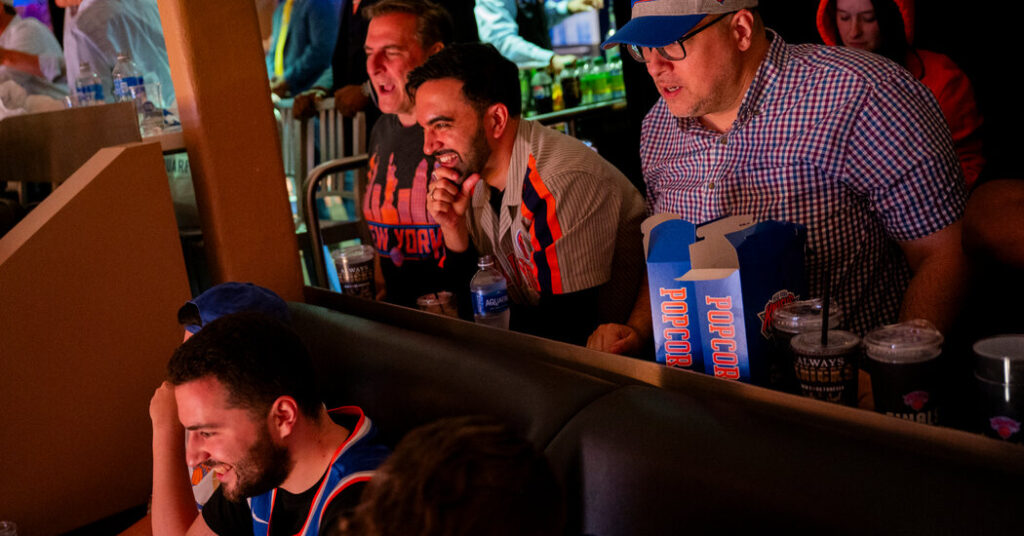
When Mayor Zohran Mamdani said he would attend Game 3 of the N.B.A. finals, he made it clear that he intended to pay his way.
He would not sit on celebrity row, nor be anywhere near President Trump and the bulletproof box he occupied at Madison Square Garden on Monday. In fact, the mayor would not be sitting at all: His $1,000 ticket was designated standing room only, just above the so-called nosebleed seats.
Mr. Mamdani was able to buy from a pool of house seats reserved for V.I.P.s and the well-connected — a common practice at sports and cultural venues around the country.
And by paying for his ticket, Mr. Mamdani appeared to avoid running afoul of city rules prohibiting gifts to elected officials.
Still, the mayor took advantage of a privilege not available to the common fan. Had Mr. Mamdani tried to buy tickets directly from the box office, the cheapest option, had he been lucky enough to snare one of the few face-value tickets released by the Knicks last week, cost more than double what Mr. Mamdani paid. Tickets on the secondary market were going for several thousands of dollars more.
The city’s Conflicts of Interest Board found in a 2000 advisory opinion that gaining special access to “‘hot’ tickets” was not likely to violate rules against accepting gifts, especially if the politicians paid for them. But if an event is sold out, that could change the calculus, the board said.
In the opinion, the board said public officials should reach out to the board in advance “because of the clear opportunity for misuse of one’s position and because of the complexity of the issues relating to tickets.”
“Public servants who fail to do so act at their own peril,” the opinion continued.
Mr. Mamdani’s spokeswoman did not comment when asked if the mayor had sought guidance from the board.
“The mayor paid out of pocket for a face-value, standing-room-only ticket — close to $1,000 — to represent New York City and be present with fellow New Yorkers as their mayor at Game 3 in this historic moment for the city,” a spokeswoman, Dora Pekec, said in an email. “He purchased the ticket directly from M.S.G. and attended with city and state elected officials.”
In most cases, elected officials are allowed to attend sports or cultural events without paying for their tickets if their attendance is related to their official duties.
Former Gov. David A. Paterson of New York said he believed that Mr. Mamdani was fine to attend the Knicks game so long as he had paid for the ticket, and did not deprive normal fans of the opportunity to buy a seat for the game. Neither seemed to be the case, he said.
Mr. Paterson is something of an expert on these matters. He was fined $62,125 by the state ethics commission, a record at the time, for seeking and taking free tickets to the 2009 World Series from the Yankees.
“A lot of people who have that ‘in,’ they will brag about it,” Mr. Paterson said in an interview. “I think the incident for me changed my outlook on that kind of thing.”
For his part, Mr. Mamdani bears little similarity to his scandal-plagued predecessor, Eric Adams, who accepted free tickets to the Garden for a Billy Joel concert and a Knicks game, in exchange for what he described in city disclosures as “official acts.”
Richard Briffault, a professor of legislation at Columbia Law School and former chair of the New York City Conflicts of Interest Board, said Mr. Mamdani’s payment for the ticket obviated any ethics concerns. “Ethics people only really care about it if it’s free,” he said.
“Maybe it’s a more general commentary on our society that to those who have, more is given,” Mr. Briffault added. “I’m assuming in England there’s a royal box at various places.”
Mr. Mamdani is well aware that accepting any sort of benefit runs the risk of seeming to contradict his carefully honed populist image. Though he earns $259,000 a year, lives in a rent-free city-owned mansion, and has a retinue of chauffeured SUVs at his disposal, he continues to ride the subway, dines at local restaurants in Queens, can occasionally be spotted riding a CitiBike, and pointedly avoided attending the opulent Met Gala.
Mr. Mamdani is well attuned to the exorbitant prices of sports tickets, from the Knicks’ playoff run to the upcoming World Cup games. For the latter, he was able to secure 1,000 tickets for a public lottery at $50 apiece, far below what tickets now cost and are being sold for on the secondary market.
On Monday, Mr. Mamdani was accompanied by three state lawmakers, including State Senator Michael Gianaris, the deputy majority leader. Mr. Gianaris said he had had fun, but would have enjoyed it more if the team won. He referred all questions about his ticket acquisition to City Hall.
State Senator Julia Salazar also attended and confirmed that the legislators had each paid roughly $900 each. She made it clear that she saw no problem with paying for house seats. Paying the Garden rather than an online reseller like StubHub was in fact far better, she added.
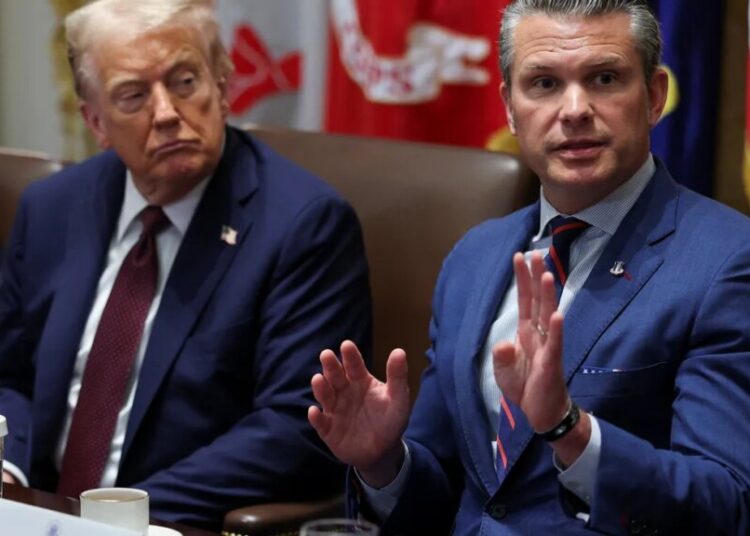
Mr. Trump, for his part, apparently would have preferred to sit courtside, where he was a frequent presence before he became president. But the Secret Service nixed that idea because of security concerns, two people familiar with the matter said.
Davis Ingle, a White House spokesman, declined to reveal how Mr. Trump had acquired his tickets, but said that he “made history as the first sitting president to attend an N.B.A. finals game.”
Even so, there is typically an increased security presence around house seats, even in the higher sections. When Mr. Mamdani sat in the cheap seats at a Knicks game last fall, the mayor’s security team coordinated with Garden officials to scout out the seat area before he arrived.
But even in the rafters on Monday, Mr. Mamdani attracted attention, in part because of his snazzy NuevaYol short-sleeve guayabera, with a Knicks insignia over the chest.
Did the mayor indulge in some extravagant and expensive design made especially for him? Hardly. It was designed by a local artist, Danny Peguero, and it cost $125.
The post Mamdani’s Nosebleed Knicks Ticket and the Fluid Benefits of Being Mayor appeared first on New York Times.