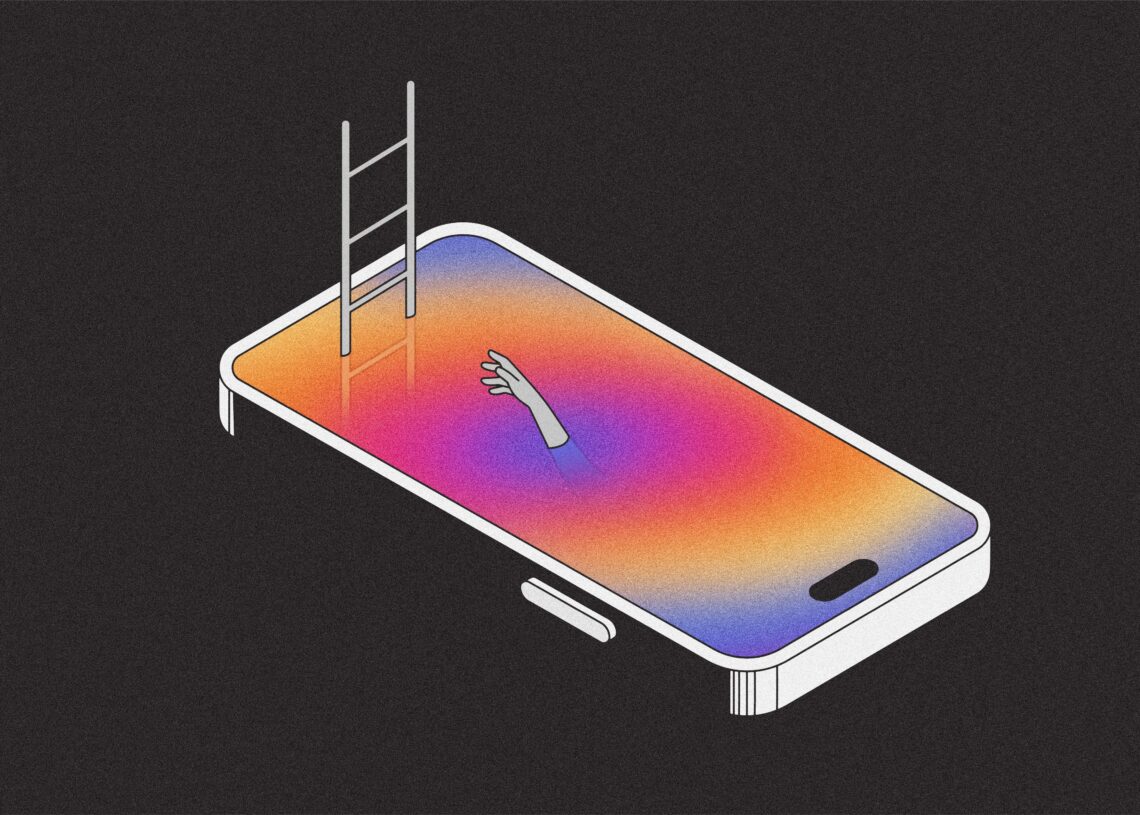
The young woman described to a jury what it was like to lose control of her life to social media.
She began as a child, she said, and over time the habit expanded to fill nearly every available hour — late nights bleeding into early mornings, sleep gradually displaced. She would try to stop and find herself returning in a loop she could not escape. As her use intensified, so did her distress: anxiety, depression and a growing fixation on her appearance.
“I wanted to be on it all the time,” the 20-year-old testified in the landmark trial against Meta and YouTube, before a jury found the companies negligent and ordered them to pay her $6 million in damages.
The verdict in California and another case in New Mexico in March mark a turning point in the long-running effort to hold Silicon Valley companies accountable for products critics say are engineered to be as addictive as tobacco or gambling.
The science has been moving in parallel with the court’s recognition. A growing body of research links heavy social media use not only to declines in mental health but to measurable cognitive effects — on attention, memory and focus — that in some studies resemble accelerated aging.
Science also suggests we have more control than we realize when it comes to reversing this damage, and the solution is surprisingly simple: Take a break.
Two weeks
The average American spends roughly 4½ to 5 hours on their phone a day, according to surveys, and even if someone’s use is on the lower side of two to three hours a day, that still adds up to 1½ months in a year not doing something else.
“All of us have a somewhat unhealthy relationship with our phones,” said Kostadin Kushlev, an associate professor of psychology at Georgetown University.
“Digital detoxes” can sound like a fad. But in one of the largest studies to date, published in PNAS Nexus and involving more than 467 participants with an average age of 32, even a short time away produced striking results — effectively erasing a decade of age-related cognitive decline.
Noah Castelo, an associate professor at the University of Alberta School of Business, said the study grew out of his own experience. Now 35, he got his first smartphone in college and began to notice how it reshaped his time: “These technologies can interfere with activities that were otherwise engaging, like having dinner with friends.”
Their time online decreased from 314 minutes to 161 minutes, and by the end of the period the participants had improvements in sustained attention, mental health as well as self-reported well-being.
The improvement in sustained attention was about the same magnitude as 10 years of age-related decline, the researchers noted, and the effect of the intervention on depression symptoms was larger than antidepressants and similar to that of cognitive behavioral therapy.
But two things were even more mind-blowing to Castelo and Kushlev, a co-author of the study: Even those people who cheated and broke the rules after a few days seemed to have positive effects from the break; and in follow-up reports after the two weeks, many people reported the positive effects lingered.
“So you don’t have to necessarily restrict yourself forever. Even taking a partial digital detox, even for a few days, seems to work,” Kushlev said.
Researchers differentiate between internet use on phones versus computers, with phones being much worse than computers. Kushlev said the phone use is more “compulsive and mindless.” With the phone, people could be on social media while taking a walk, or watching a movie, or talking with somebody and so forth. It basically interrupts these other activities. In all of those cases, the researchers found that while you’re on your phone, you are not paying as much attention to the social activity you’re doing, and you enjoy it less.
“Even a little bit of distraction during those activities brings down what you could have experienced in the emotional quality of the experience — bringing less-satisfying conversations, less-satisfying relationships,” Kushlev said.
In the case of the woman who sued Meta and YouTube, jurors rendered a verdict against the companies by a vote of 10-2 after wrestling with the evidence for days.
Afterward, Meta immediately vowed to appeal both verdicts. The company said it takes steps to keep young users of its systems safe and has denied the allegations. A spokesman for YouTube similarly said it would appeal, saying it is a “responsibly built streaming platform, not a social media site.”
‘Goldilocks’ problem
The research into digital detoxes and how to define them is still in its early stages, raising questions about whether more targeted approaches — blocking only social media for a few hours, or restricting mobile internet at certain times of day or days of the week — might prove as effective.
In November, a Harvard study published in JAMA Network Open of nearly 400 people found that even a short break can make a measurable difference: After just one week of reduced smartphone use, participants reported drops in anxiety (16.1 percent), depression (24.8 percent) and insomnia (14.5 percent). Other experiments point in the same direction — whether decreasing social media use by an hour a dayfor one week or stepping away from just Facebook and Instagram. Growing concern about the effects of social media has led some governments to impose restrictions on young users — Australia, for example, has moved to limit access for children and teens, and similar proposals have surfaced in parts of Europe and the United States.
But John Torous, an associate professor and staff psychiatrist at Harvard Medical School and the lead author of the JAMA Network Open study, said the research points to a more nuanced reality: Not everyone is affected in the same way.
A central challenge, he said, is identifying who is most vulnerable — and why.
Over the past decade, Torous added, the evidence has come to resemble a “Goldilocks” problem.
“For some people, their use is too much or too little, and for others it’s just right. To identify who is harmed by it is very important,” said Torous, who also directs the digital psychiatry division at Beth Israel Deaconess Medical Center.
Among the groups he and his team are studying are those who are more prone to what scientists have dubbed “social comparison” or judging themselves in relation to others — particularly around appearance — and feel worse as a result; those whose sleep is disrupted; and those who turn to the internet to compensate for a lack of connection in their offline lives.
A larger study — spanning more than 8,000 participants across 23 countries — is now underway. Led by Steven Rathje, an incoming assistant professor of computer science at Carnegie Mellon University, and funded in part by the National Science Foundation, it asks participants to limit their use of TikTok, Instagram, X and Facebook to no more than five minutes per app each day for two weeks. Data collection will continue through September, with findings expected early next year.
One question the study aims to answer is whether a pattern seen in earlier research holds: that the United States and other Western countries experience more severe negative effects from smartphone use.
Rathje is cautious about explaining why. One possibility, he suggests, is cultural — life in highly individualistic, perfectionistic societies may amplify the psychological toll. That idea aligns with broader research showing that anxiety disorders are more common in high-income countries than in lower-income ones.
“It suggests something about the stress levels in these places — how competitive they are,” he said. “But ultimately, it’s still quite a mystery.”
The post This detox may erase 10 years of social media brain damage, researchers say appeared first on Washington Post.