NYC building inspectors turned a blind eye for over a decade to gaping cracks across the façade of a doomed Brooklyn tenement — even during on-site visits — before the deadly collapse that killed eight people, The Post has learned.
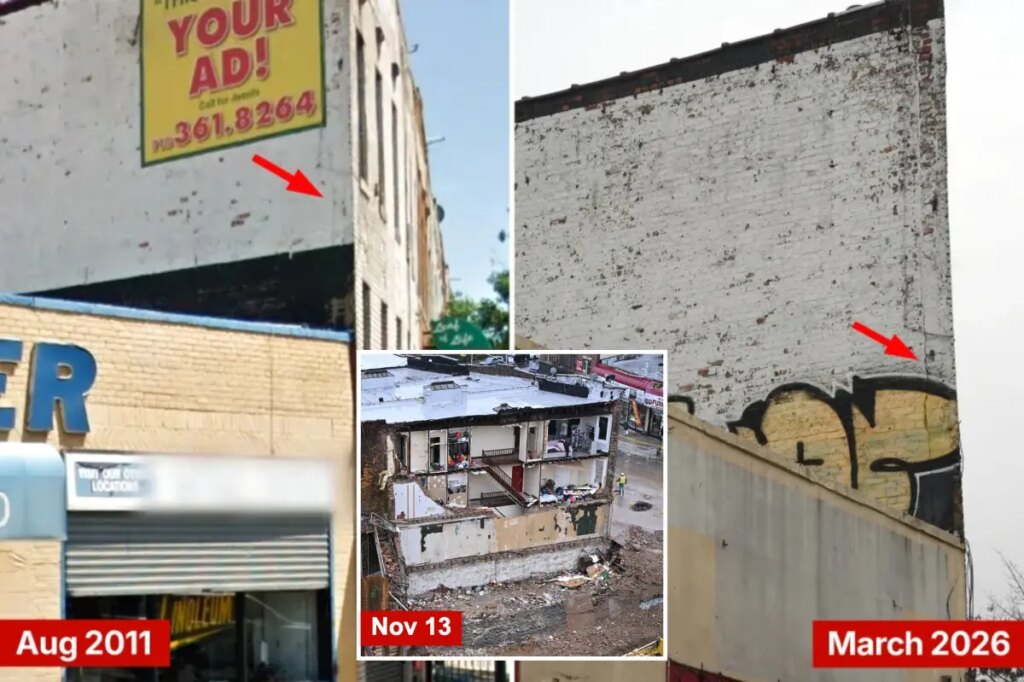
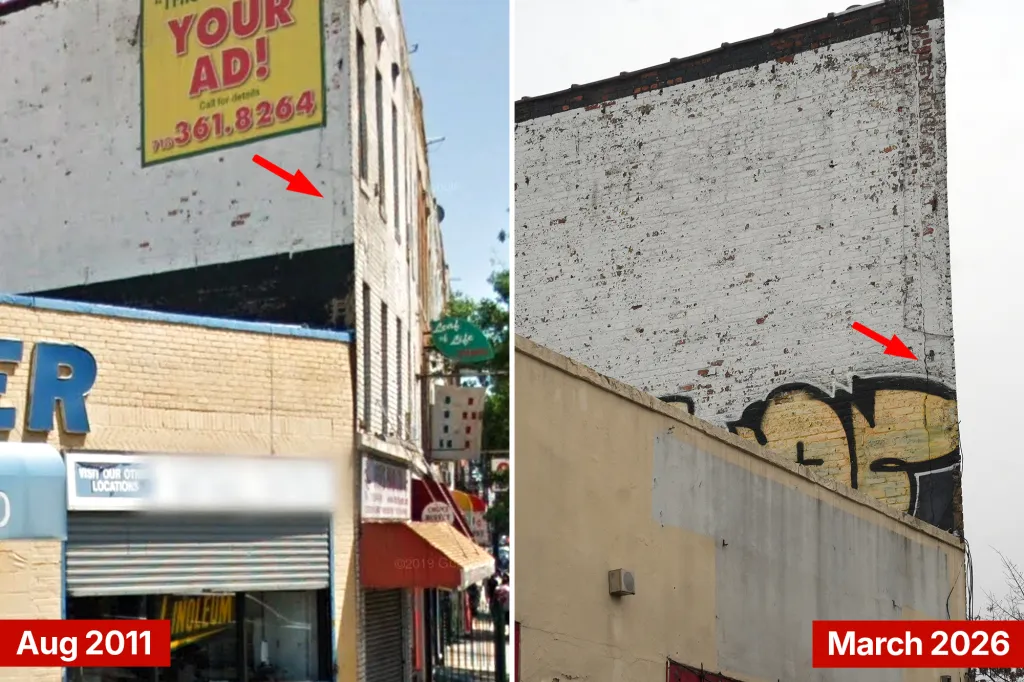
Damage along the Flatbush building’s brick façade was visible as early as 2011, and grew more pervasive in the ensuing years, a review of Google Earth images shows.
Yet there’s no public record of the NYC Department of Buildings issuing fines, warnings — or even documenting the façade’s shoddy shape.
Advertisement
Instead, the agency wrote a slew of summonses for illegally hanging a sign which read, “This Could Be Your Ad.”
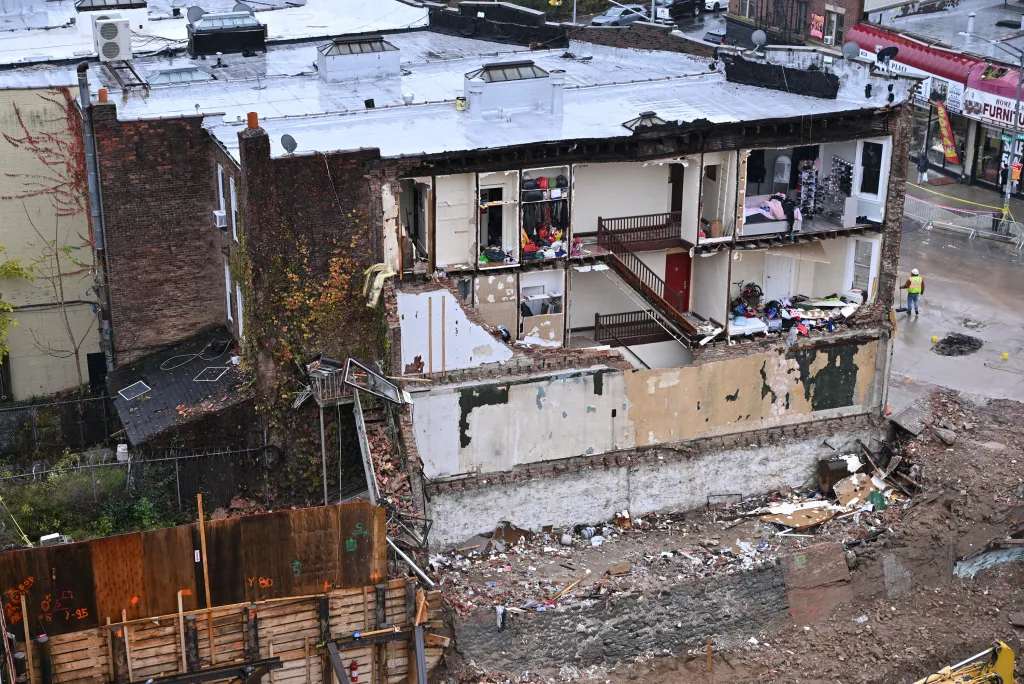
Following a site visit in May 2019, DOB inspectors slapped notorious slumlord Olufemi Falade with 13 summonses for improperly displaying the sign along the north side of 1321 Flatbush Ave. – the same section of the building that crumbled Nov. 11 next to an adjacent construction site under excavation, agency records show.
Nine of the 13 summonses remain unpaid, with Falade owing $170,000 in fines, records show.
Advertisement
Councilwoman Joann Ariola (R-Queens) said it’s a travesty that city building inspectors “overlooked” the building’s obvious structural decay for many years.
“The DOB saw these cracks years ago and did nothing about it, yet City Hall keeps telling us to trust the agencies and accept less oversight,” she said.
“Now we have a tragedy. These agencies don’t care about public safety; they care about easy summonses and pushing political agendas, and there needs to be more accountability across the board.”
Advertisement
Numerous real estate experts claimed the building’s damage might have fallen through the cracks of government bureaucracy because the DOB is too understaffed to deal with development projects throughout NYC.
“They certainly could have [flagged it] but the DOB inspectors are spread thin and only look at the subject of the complaint and then move on,” said a city-based real estate lawyer.
However, the source added, “the owner of the building that collapsed should have taken action to deal with the crack – it’s clear negligence.”
Advertisement
An NYC-based engineer who asked not to be named said, “Many buildings have cracks, and nothing comes of them, but if construction work is being done they should be flagged and monitored.”
In the past year, the DOB has also failed to act on damning reports prepared by private firms that warned of potential structural issues with the building.
In November 2025, a geotechnical reportprepared for a project to raze a one-story building next door at 2625 Bedford Avenue and replace it with a three-story, mixed-use development warned that if cracks on nearby buildings, such as the 1321 Flatbush Ave. site, are “identified in the pre-construction survey,” they “should be monitored with gauges to determine possible growth of any cracks.”
Movement or “crack monitoring” gauges are measuring tools typically used on construction projects to track tiny shifts and deformations in buildings, retaining walls or soil, so engineers can spot instability and intervene before a collapse happens.
Advertisement
The report, prepared by Queens-based International Geotechnical/Structural Lab Inc., was filed with the DOB.
In March, Brooklyn-based Quiver League released a “pre-construction inspection report,” also filed with the DOB, that alerted Yossi Kopfstein, executive vice president of construction contractor Promont NYC, to potential dangers.
It noted the Flatbush Avenue building’s “north façade” was “in poor condition with noticeable cracks” – triggering the need to monitor the wall during demolition and other construction work next door.
Advertisement
The DOB refused to answer questions about why its inspectors never cited the structural damage at the site until it was too late – or took enforcement measures to get it fixed. It also blew off questions about whether the building was equipped with gauges to monitor further damage during the excavation work next door.
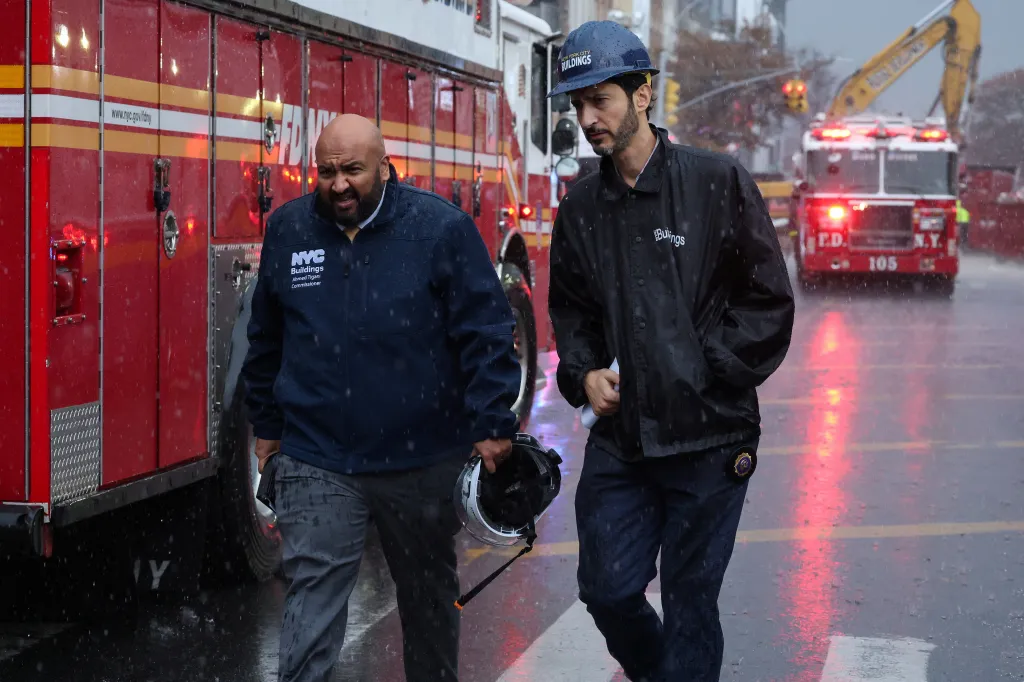
Instead, DOB Commissioner Ahmed Tigani — who was appointed to the post by Mayor Zohran Mamdani in January — said in a statement that an investigation into the collapse remains ongoing, adding the agency “is doing everything we can to understand exactly how this collapse occurred, so that the responsible parties can be held to account.”
Kopfstein, Falade and Robert Fischman, who owns the Bedford Avenue property, did not return messages.
Advertisement
Two weeks after Quiver issued its report, the DOB did issue a stop-work order and a $2,500 fine for failing to provide proper overhead protection for the neighboring properties.
In April, a DOB inspector determined N Tech Design, which Fischman hired for the demolition at the site, ignored the stop-work order by working anyway; the company was fined $10,000.
But after N Tech paid off the fine, the DOB greenlit construction to continue – never addressing the obvious foundation problems next door.
Advertisement
The post NYC inspectors ‘overlooked’ large cracks on doomed Brooklyn building years before it collapsed appeared first on New York Post.