In winter, houseplants don’t face the freezing, harsh weather that their outdoor cousins do, but they still must cope with challenging environmental conditions indoors. Lower light, drier air, cold drafts and temperature changes can all affect a houseplant’s health.
Some plants, such as pothos and snake plant, tolerate changes somewhat easily, but others, including fiddle-leaf fig and croton, are often fussy. But a few key adjustments can keep your plants happy and well until the warmth of spring returns.
Light
With shorter days, the most obvious challenge to houseplants is light. Plants receive five to six fewer hours of light per day, and because the sun sits lower in the sky, it emits a more dispersed, weaker energy. Christopher Satch, who teaches at the New York Botanical Garden and is a leading plant consultant at nycplanthelp.com, says not getting the light right is the most common mistake people make.
“Light determines just about everything,” Satch says, “as light is how plants get calories.” Light creates heat, which can influence watering. It also determines in which direction the plant will grow, how many leaves it can support and how fast it grows. Light can even, under certain circumstances, determine which part of a plant pests will occupy.
For plants marked as needing low or medium light, such as the ZZ plant, pothos, snake plant, peace lily and Chinese evergreen, Satch recommends two to three hours of direct sun a day. They can also be set in the indirect, ambient light of a north-facing window. The larger the plant, such as bushes or trees, he says, the more direct sun the plant needs. Leggy growth, old leaf drop, leaning stems and loss of variegation are telltale signs of too little light.
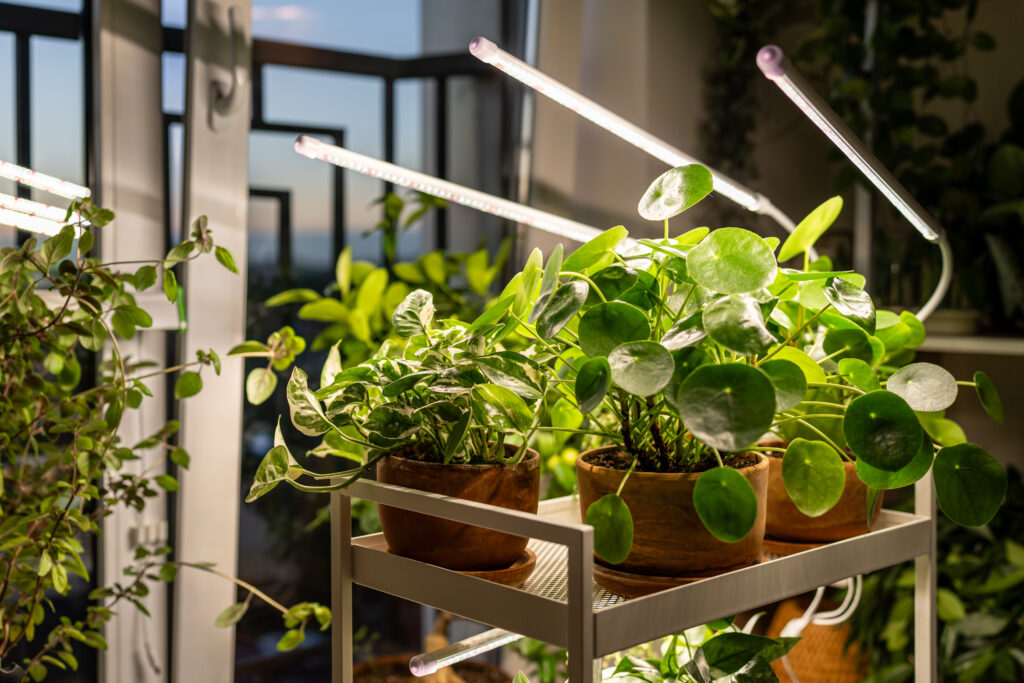
Succulents such as jade, aloe vera and echeveria may need supplemental light, which you can provide by placing a grow bulb 12 to 18 inches above the plant. But make sure to research the recommended usage to avoid burning your plants. (Note: The popular Christmas cactus requires bright indirect light and can scorch from too much direct light.)
Humidity
As temperatures drop outside, home heaters turn on, raising the temperature but often drying out the air. Pothos, peace lily and snake plants aren’t as affected by lower humidity, but plants such as fiddle-leaf fig and crotons need at least 40 percent humidity. Calatheas, which include prayer plants, rattlesnake plants and peacock plants, can’t tolerate dry air and will signal this through crispy, brown tips. Boston or maidenhair ferns will brown at the edges before dropping leaves and potentially attract spider mites.
“Those are the most common houseplants that are going to potentially benefit from a humidifier,” says Emily O’Gwin, living collections gardener at the U.S. Botanic Garden. “And they sometimes might want a little more water. You can even spritz them with a little spritzer if you want. They don’t have as thick of a cuticle, so there’s not really a whole lot protecting them from the dry air.” Setting the plant atop a tray of water with pebbles will also increase humidity.
Temperature
Older homes with single-pane windows often allow cold drafts to seep in, making houseplants, which are most often from tropical, subtropical or arid regions, more vulnerable to chilly temperatures. If leaves touch window panes, they can experience cell damage and droop or curl. “Most of your tropical houseplants are not looking for [cold drafts],” Satch says. “All of your cacti and succulents are not looking for that. They all want to be kept warm — room temperature or warmer.”
Although chilly drafts can threaten a houseplant’s health, overly warm, dry conditions can also have an effect. Generally, plants do best when set three feet or more from radiators or forced air vents. In warmer, airtight homes running at 70 degrees or higher, plants may need more watering to compensate for the temperature.
“You’re probably going to be watering the least in spring and fall indoors and the most in winter and summer,” Satch says. “For the simple fact that in summer you’re getting blasted with more sun, that means more heat in the window. And in the wintertime, your heat is just simply on.”
Having said that, if you keep your home at a cooler temperature (about 68 degrees or lower), then cutting back on watering is appropriate. Houseplants, especially monstera and philodendron, will suffer from a wet, cold environment.
Watering and fertilizing
The best rule is to water only when the soil is dry. Soil will dry out at different rates at different times of the year. “[Plants] tend to dry out every seven days,” Satch says, “but if you’re by the radiator, you might be watering in the winter every three days. You might be watering every four days. It all depends on temperature and the light circumstance.” Bottom line: Check the soil with your finger or a soil monitor before watering.
“The only way plants can really communicate is by changing color or by wilting,” O’Gwin says, “so just keep an eye out for color changes. Like a pothos, for example, if it’s getting too much water, its leaves might turn really yellow. They might get super yellow, and then it’s time to slow down.” Similarly, a fungus gnat infestation is a sign that you’re probably watering too much.
Because plants instinctively slow their growth in winter, most don’t need fertilizer. “It can force the plant to put out new growth that it doesn’t have the light to support,” O’Gwin says. “So you definitely want to be careful not to overfertilize. It’s better to err on the side of less fertilizer for all houseplants.” A white, green or pink crust on the soil indicates you’re fertilizing too much.
In general, if you’re stuck with a houseplant problem, contact an expert.
“There are so many things that can go wrong,” O’Gwin says. “Like it could be a nutrient deficiency, it could be underwatered, it could be too much water. Sometimes you’ll see yellow dots that could be either a fungus or a pest. … It gets complicated.”
The good news is that most university extension programs answer plant care questions at no charge, including the University of Maryland Extension. Botanic gardens, including the U.S. Botanic Garden, often have helplines, too.
Karen Hugg is an ornamental horticulturalist and the author of “Leaf Your Troubles Behind: How to Destress and Grow Happiness Through Plants.”
The post How to keep your houseplants healthy over the winter appeared first on Washington Post.