As a young reporter in Washington, I covered the defense scandals of the mid-1980s, when weapons makers tattooed the words “waste, fraud and abuse” on the national imagination with their $640 toilet seats, $435 hammers and executives charging taxpayers to kennel their dogs.
Two decades later, as a financial writer, I watched bankers put their private interests ahead of their public responsibilities, nearly wrecking the global economy in the bargain. As the federal government mobilized to avert a second Great Depression, the financiers had one priority: ensuring their bonuses were paid on time and in full.
Weapons makers and Wall Street certainly managed to alienate average Americans. But I don’t think I’ve ever seen an essential industry act as entitled and out of touch as the AI gang.
Exhibit A: Just days after resigning in disgrace, former Nvidia CEO Jensen Huang reportedly paused his active dating life long enough to entertain an improbable comeback attempt, backed by some of his equally clueless tech industry colleagues.
Dude, read the room.
Put aside for a moment that Nvidia’s board already has dismissed the idea. Overlook, if you can, Huang’s serial philandering, which allegedly included a Nvidia subordinate, which is a violation of the company’s code of conduct, and a possible Chinese intelligence asset, which is a violation of common sense.
The chip impresario who cultivated an aura of indispensability is no longer the right guy to helm the world’s most important chipmaker. He may not realize it, but he’s damaged goods.
Multiple congressional committees, federal prosecutors and securities regulators are all probing Nvidia’s role in the flow of advanced AI chips to China. The first of what is likely to be several shareholder lawsuits has been filed in the Northern District of California, alleging that Nvidia and Huang violated federal securities laws and misled investors for more than a year about the company’s activities.
On Thursday, Rob Bonta, California’s attorney general, served Nvidia with an investigative subpoena asking whether the company’s chips or confidential information went to China and whether Nvidia misled investors.
“He’ll be tied up in knots in eight or nine committees before we get to all of the state-level prosecutions and the shareholder lawsuits. So if Jensen Huang could possibly be in any way exonerated from all this, which is inconceivable, he couldn’t do his job because he’s going to be full-time testifying,” said Jeffrey Sonnenfeld, senior associate dean for leadership studies at the Yale School of Management.
Huang may be an extreme example of the AI world’s image problem. But public sentiment had turned against Silicon Valley even before the ex-CEO set fire to his career. In a Gallup survey this past summer, only 20 percent of Americans said they had a great deal of confidence in large technology companies, down from 32 percent in 2020.
But in a trend that Gallup called “unique” among 14 institutions polled, the share of those expressing very little or no confidence in Big Tech rose from 32 percent to 41 percent in just one year.
The public is recoiling from the industry’s politics, its recklessness and its eccentricities.
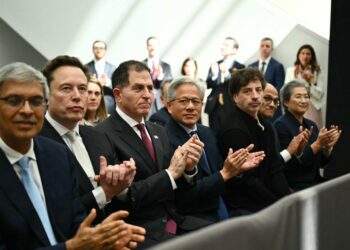
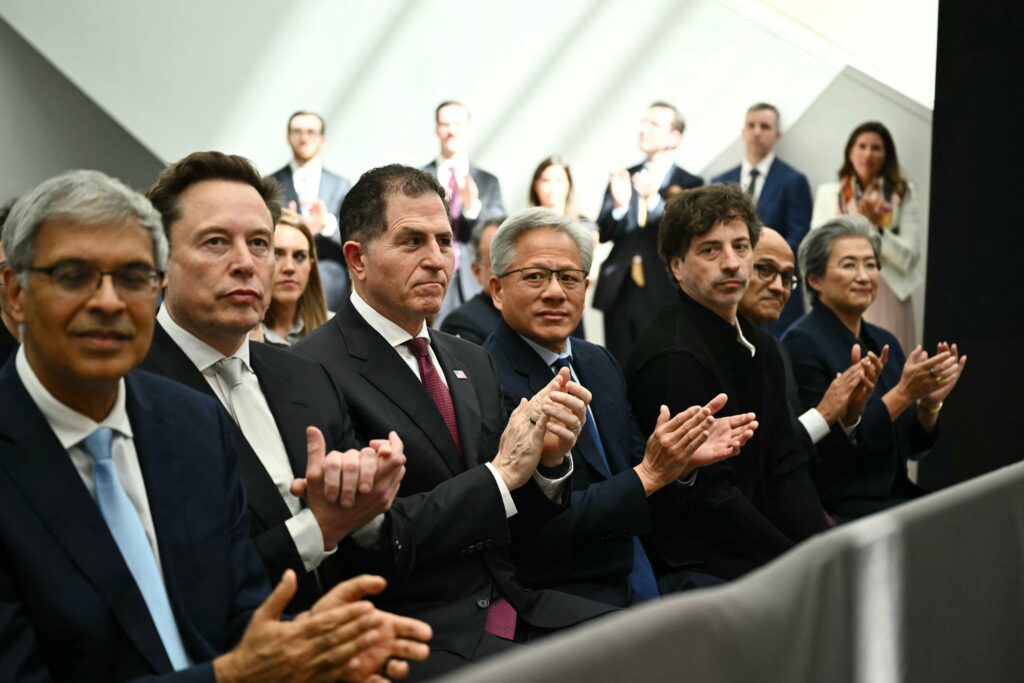
Tech titans like Elon Musk acted as if the Trump era would never end, standing center stage at his inauguration and applauding his light-touch approach to AI regulation even as their own warnings of societal risks escalated. The authoritarian-curious politics of some Silicon Valley denizens tilted so far right as to earn the pejorative sobriquet “Nerd Reich.”
Now that the political winds have shifted following the Democrats’ sweep in the midterm elections, Big Tech’s rhetorical response has been remarkably clumsy. Musk, fresh from spending half a billion dollars in a failed attempt to elect Republicans, implausibly told the New York Times’s DealBook Summit, “I’m not MAGA,” and defended his philosophy as “ideologically quite moderate.”
Alex Karp of Palantir, which is a key supplier for U.S. immigration enforcement efforts, publicly proclaimed his progressive beliefs. Amazon Executive Chairman Jeff Bezos, who now runs the artificial intelligence start-up Prometheus and owns this newspaper, made a point of disclosing that he calls former president Barack Obama for advice.
These high-profile CEOs belatedly seem to recognize the cost of yoking themselves to a divisive and unpopular president.
Making matters worse: A succession of near-daily tech glitches — Microsoft Outlook, the air traffic network, banks and even the National Security Agency’s computers — rattled Americans who have long been frustrated by the tech industry’s relaxed approach to its own shortcomings. The same people who routinely field buggy software now ask the public to trust them to make intelligent machines that we are told might deliver catastrophe while aiming for utopia.
The AI chieftains’ evident — how to say this? — weirdness doesn’t help.
Meta’s Mark Zuckerberg appeared on social media trying to strike an everyman pose by drinking a pint of Guinness. He double-clutched at the first mouthful, acting like he had accidentally imbibed river water.
SNL’s cold open last week satirized the tech elite — Musk, Zuckerberg, Palantir co-founder Peter Thiel, OpenAI’s Sam Altman, Anthropic’s Dario Amodei, and Huang — as “bug-eyed little weirdos” who needed “to learn the difference between a woman who would actually want to have sex with you and a woman who is clearly a spy.”
Until this week, one group retained its affection for the AI crowd. Investors eagerly anticipated Anthropic’s initial stock offering, which turned out to be the largest in history and was heavily oversubscribed.
But after a successful debut on Thursday, the frontier lab’s shares sank 8.5 percent on Friday, dragged down by a broader market plunge that hit all major AI names.
The tech-heavy Nasdaq index lost 9 percent this week and has given back all of its 2026 gains. Nvidia has absorbed some of the worst punishment: Its shares fell 14 percent on Friday and have surrendered almost half of their value since early October.
The tech industry’s image problems are taking a toll on their business prospects. Public opposition to construction of additional data centers is mounting, including in formerly welcoming venues such as Texas and Ohio.
When Americans go looking for a villain, their gaze increasingly turns to Silicon Valley.
Only 7 percent of registered voters said the government is doing too much to regulate AI compared with 69 percent who said Washington needs to do more, according to a Washington Post-ABC News-Ipsos poll in October. Twenty-two percent said the industry is appropriately regulated.
Democratic lawmakers, including Rep. Alexandria Ocasio-Cortez (New York), already say there will be no bailout in the event that what many regard as an AI investment bubble goes pop.
If the past is any guide, things are likely to get worse from here. The Reagan-era defense procurement scandals did not end until an FBI investigation, code-named “Illwind,” led to the prosecution of more than 60 contractors, consultants and government officials involved in a bribery network.
The response to the 2008 financial crisis disappointed those who thought bank executives should pay for having profited from a housing bubble-and-bust that vaporized nearly $11 trillion in household wealth. But the findings of a federal commission of inquiry damaged the reputations of individuals such as former Federal Reserve chair Alan Greenspan and Citigroup chief executive Charles Prince.
For the AI execs, the months ahead will be full of investigations and revelations, perhaps eventually spurring Washington to crack down.
Take it from someone who remembers the defense contractors’ and bankers’ fall from grace. L’Affaire AI is just getting started.
The post Entitled and out of touch, AI CEOs are heading for a fall appeared first on Washington Post.