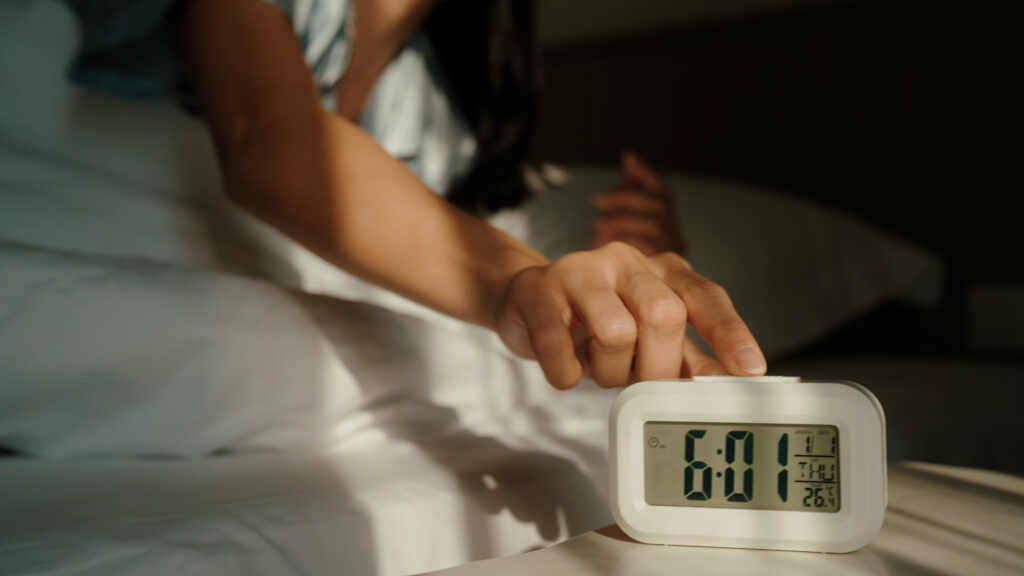
The morning rush often feels like nothing short of a crisis. For our hearts and brains, it’s also the riskiest time of day.
A meta-analysis of almost 12,000 adult stroke patients found that people were 72 percent more likely to have a stroke between 6 and 9 a.m. compared with the remaining 21 hours of the day. Every type of stroke studied saw a morning spike — whether caused by clots, bleeding or even “ministrokes” called transient ischemic attacks.
Heart attacks follow a similar pattern. A separate analysis found that they are 40 percent more likely to happen between 6 a.m. and noon than the rest of the day.
That’s probably because, in many ways, mornings create a perfect biological storm.
In the early hours, melatonin begins to fall and cortisol climbs — peaking shortly after awakening. While you sleep, blood pressure tends to dip by around 10 to 20 percent of your daytime baseline, then starts to rise just before you wake up. Once you get up and start moving, blood pressure surges. That elevation in blood pressure raises the risk of heart attacks and strokes.
But in terms of strokes, the issue is not simply blood pressure. It turns out your blood itself changes in the morning too.
In 2011, researchers from Boston found that our circadian rhythm drives platelets — small cell fragments that form blood clots — to become more likely to clump together in the early morning. And a subsequent study found that a blood protein that prevents clots from dissolving also peaks in the morning hours.
Circadian biology affects far more than our energy. It governs the behavior of many of our bodies’ cells, molecules and even which genes are expressed. And it helps explain why the morning can be a vulnerable time for stroke.
The stroke symptoms people may miss
Strokes are medical emergencies that occur when a part of the brain doesn’t receive enough blood — often caused by a blood clot suddenly blocking a vessel or a vessel bursting. When this happens, brain cells begin dying within minutes, and people can experience abrupt symptoms such as slurred speech, a drooping face, or weakness on one side of their bodies.
Those are the stroke symptoms many people are familiar with. But in one study, about 1 in 7 stroke patients had none of those symptoms.
Instead, many people having strokes experienced sudden trouble keeping balance or loss of vision. These symptoms are more common when blood vessels in the back of the brain become blocked. A helpful way to remember the stroke warning signs from the American Stroke Association is B.E. F. A. S. T.:
- Balance
- Eye (vision) changes
- Face drooping
- Arm weakness
- Speech difficulty
- Time to call 911
Recognizing these symptoms as an emergency — and not brushing them off as “having slept funny” is crucial. Call 911 and don’t wait and “see if it gets better on its own.” Strokes are a leading cause of death in the United States. But the sooner a stroke is treated, the more likely you are to recover with little or no disability.
What ER doctors will ask you
If ER doctors think you had a stroke, the first step is usually a head scan to help determine the location, extent and type. Based on these findings and your medical history, doctors will consider different medication or procedures.
Not long ago, doctors generally wouldn’t perform a procedure to mechanically remove a clot from the brain if it had been more than six hours after symptoms started. They also wouldn’t give a medication, known as tPA (tissue plasminogen activator), to help break up the clot if it had been more than four and a half hours after symptoms started.
So for someone who seemed fine at bedtime, but woke up, say, eight hours later, unable to move their leg, that often meant missing out on these therapies.
But in 2018, multiple major randomized controlled trials found such clear and compelling evidence in favor of extending the window for mechanical removal beyond the six-hour limit that the trials were stopped early. So while tPA is generally still not given past the four and a half hour window, today, for some patients, clots can be removed up to 24 hours after the stroke started.
That’s why emergency room doctors will want to know — either from you or a family member — when you were “last seen well.”
After a stroke caused by clot, many patients go home on medications to help prevent another one, typically including a baby aspirin or another blood thinner, along with treatment for blood pressure and cholesterol.
What I want my patients to know
High blood pressure is one of the most important and treatable risk factors for stroke. It would seem logical that taking blood pressure medication at night instead of the morning might help your body cope with the dawn surge. However, two independent trials — one in the United Kingdom and one in Canada — found that taking blood pressure medications at bedtime didn’t lead to a difference in heart attacks, strokes or deaths.
In fact, in the Canadian trial, people assigned to bedtime dosing were less likely to take their pills compared to the group taking them during the day. For people whose blood pressure medication caused them to urinate more often, taking pills before bed meant disrupting their sleep.
So ultimately, the best time to take your blood pressure medication is the time you’ll take it consistently (and, of course, always check with your physician before making changes). I also advise people to regularly check their blood pressure readings at home — including in the morning before you take your medication. This gives you a more accurate picture than the once-in-a-blue-moon reading you’ll do when you’re stressed and frazzled in the doctor’s office.
The post Your stroke risk is 72 percent higher during these 3 hours of the day appeared first on Washington Post.