The bank offered Paraguayans a sleek financial future with only a credit card tap and a ping on their phones, complete with tantalizing deals of 40 percent cash back on credit card purchases.
It had splashy sponsorship deals with soccer teams, and ambitions to be a billion-dollar start-up. Two out of three adult Paraguayans bought in, from Indigenous people signing up for their first bank accounts to the country’s elites and young urbanites.
But last week, amid charges of insider dealing and collusion between the bank and regulators, the digital illusion vanished. Customers opened their apps Tuesday morning to see the words “Try Later.” Trying later didn’t help.
The bank, Ueno, had collapsed, casting Paraguay, a low-tax nation sometimes billed as the new Dubai, into a spiraling crisis of money, politics and criminal investigations.
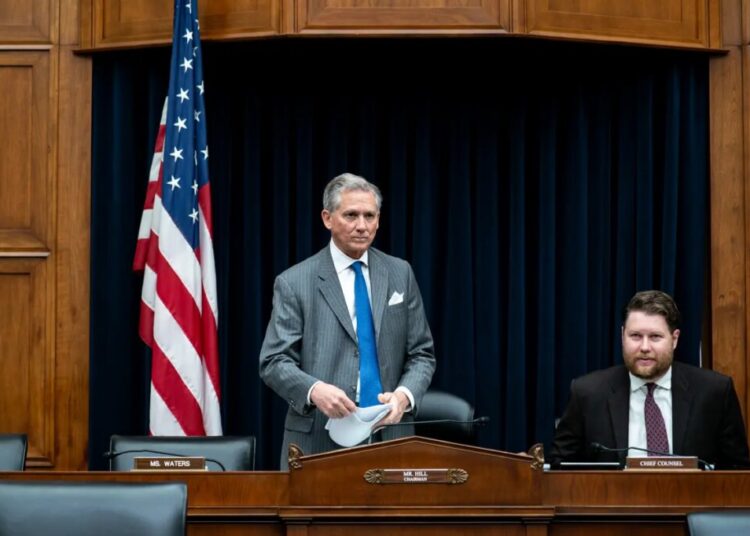
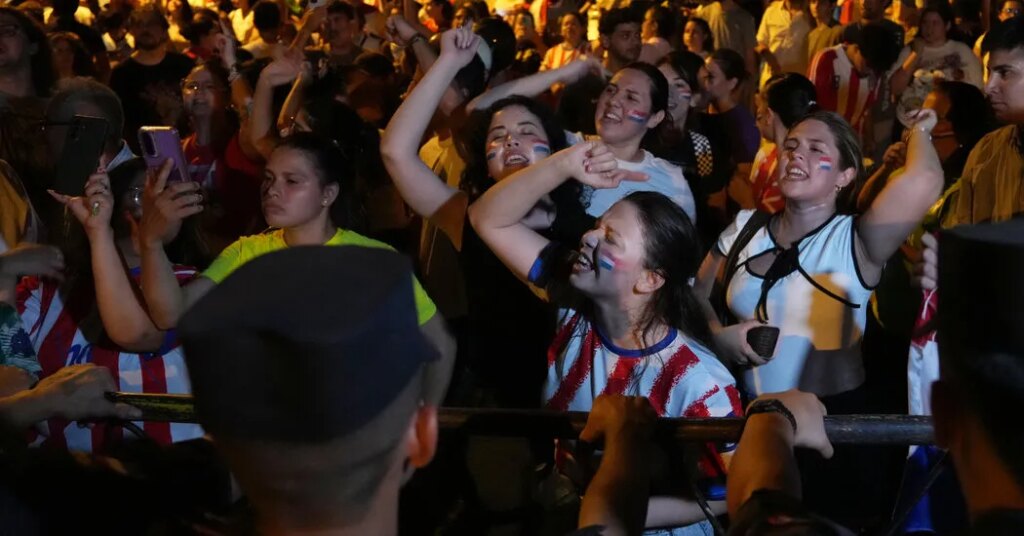
Millions of people, locked out of their accounts, unable to withdraw cash or to use credit cards or the bank’s app to buy fuel, medicine or food. Prosecutors filed charges against dozens of public officials and the bank’s executives, and days of angry protests culminated on Friday night with the unanimous impeachment and arrest of President Santiago Peña, an ally of President Trump who was once an international darling of the right.
On Saturday, prosecutors indicted Mr. Peña, accusing him of funneling nearly a billion dollars of government money to Ueno as its executives made reckless insider loans. At the same time, they said, Carlos Carvallo, the former president of the nation’s central bank, looked the other way and lied to lawmakers as the bank went under.
Mr. Peña, 47, a conservative economist, has denied any wrongdoing. But to his critics the bank’s stunning rise and fall is a parable of how the blurring of political power and private gain can leave millions of people hoodwinked.
“This is a tale of a death foretold,” said Dionisio Borda, 77, a former finance minister under conservative and progressive presidents. He described the scheme, which consisted of diverting hundreds of millions of dollars in unbacked loans to front companies, as “a naked fraud of the Paraguayan people.”
Mr. Peña resigned on Thursday, but Congress refused to accept it, and he was impeached on Friday, a move that denies him the immunity that comes with being a former president.
In a video statement on Thursday, Mr. Peña said he was stepping down to preserve institutional stability, without admitting responsibility for the scandal. “I want to apologize to the people if I have failed them at any point,” he said.
Right before it collapsed, the bank reported having $2.8 billion in deposits, and analysts estimate that a third of that may never be returned. Experts said the crisis was unlikely to spread to other banks, but many fear wider impacts on the economy.
Businesses have been reporting nose-diving sales; many companies with accounts at Ueno could go bankrupt; and a tenth of the social security system’s funds, roughly $450 million, is in jeopardy. Overall, Ueno held nearly $1 billion in public funds. If or when the government will get that money back is anyone’s guess.
And many of the nearly three million Paraguayans with accounts with the bank will be facing anguish over everyday expenses for the immediate future. The state-backed deposit insurance fund is good for up to $38,000 per person, which covers about 97 percent of the depositors. But it could be weeks or months until they are fully refunded.
Paraguay’s elites often have accounts in other banks and money stashed abroad, but cabdrivers, shoe-shiners and street vendors were blindsided. “Inequality is not only that some earn more,” Eduardo Nakayama, an opposition senator, said. “It is that some can lose everything while others lose nothing.”
An Extraordinary Rise
Mr. Peña took office in August 2023. Not long afterward, prosecutors say, he began assembling the pieces to build Ueno into a financial juggernaut that would become one of the sponsors of a gala at Mr. Trump’s Mar-a-Lago resort last February.
Mr. Peña quickly tapped Carlos Carvallo, who had just stepped down as Ueno’s president, to lead Paraguay’s central bank. The agency fast-tracked Ueno’s transition from a digital lender to a full-fledged bank and approved a merger with Visión Banco, an old-school bank that was struggling under a raft of unpaid loans. The central bank also let Ueno keep those unpaid loans off its balance sheet for up to 20 years.
The merger gave Ueno about a million new clients and a nationwide network of branches that got a sharp new look. Government funds began pouring into the bank, and they reached $850 million before the collapse. Until March last year, Mr. Peña was also a shareholder in Ueno Holding, a sister company of Ueno, according to government documents.
Public records show that Ueno’s chief executive, Miguel Vázquez, built a conglomerate of at least 39 companies, including a ride-share app, a tech firm, a newspaper and a travel agency. These companies received lucrative government contracts worth $38 million under Mr. Peña, records show.
Prosecutors say Mr. Peña and Ueno executives worked in tandem: Government funds gave the bank liquidity, just as Ueno was lending huge sums to insider-owned companies. All of this, said experts, fueled the conglomerate’s breakneck expansion.
“Instead of pumping the brakes, they pressed the accelerator,” said Mr. Borda, the former minister.
Mr. Vázquez, 36, cast himself and his bank as ambitious, Silicon Valley-style disrupters with friends in high places. In an 2024 podcast, he spoke about his “loyalty” and “real friendship” with Mr. Peña “through good times and bad.” He likened himself to Elon Musk, said he envisioned Paraguay becoming a “better version of Switzerland” and spoke of creating Paraguay’s “first unicorn,” or $1 billion start-up.
By sponsoring the national soccer team and high-profile events headlined by the likes of Shakira, the bank attracted flocks of new customers, many of whom had never before had a bank account.
For many, that was an exciting new experience. To Baiguejai Etacoro, 25, who was born to a nomadic tribe in the remote Chaco forest in the South American interior, entering the financial system “was interesting.” After signing up with Ueno, he received an $80 loan to buy hair clippers for his barber business. His wife secured $640 for a motorbike.
A Staggering Collapse
Ueno’s rocket-fueled rise was not without skeptics. But banking insiders were hesitant to speak up, some officials said, because the banking sector was booming.
“Everyone was talking about it, wanting to know how they got their money,” said Fernando Arriola, a founder of the Paraguayan Fintech Chamber.
Mr. Peña and his allies largely dismissed any concerns, including in 2024, when the president called a question about potential conflicts of interest as “mean” and “deceitful.” He later labeled criticism of Ueno “financial terrorism.” Last year, asked about his personal wealth and a new mansion, he warned reporters to “watch yourselves.”
But by this April, according to local news reports, regulators had begun to warn about the bank’s unusual lending practices.
In June, midlevel supervisors at the central bank spotted something off, according to an official with knowledge of the investigations who was not authorized to speak publicly.
Ueno had lent almost $150 million to three little-known entities run by Mr. Vázquez’s employees, according to a central bank complaint sent to prosecutors. Dozens more loans followed the same pattern, the official said: immense sums for tiny, Ueno-linked firms with little way of paying them back.
A central bank supervisor, Fernando Rivarola, circulated a 25-page internal memo in July saying that Ueno had become a financial time bomb. His report, which was leaked to the media, urged immediate government intervention.
Mr. Rivarola’s bosses publicly threatened him with a lawsuit, while Mr. Peña moved him to another government agency.
In response to lawmakers’ questions, the central bank issued a report in October. But it failed to assuage their concerns — or those of investors, who started to ditch Ueno’s shares.
The bank scrambled to raise funds and all but implored customers to stay, offering 50 percent cash back.
Before dawn on Tuesday, the central bank said Ueno was insolvent. Regulators seized control, taping “SEALED” signs at the bank’s branches.
Several of the bank’s executives — including Mr. Vázquez — were arrested and taken to jail. That night workers removed the Ueno logo from the national soccer stadium.
On Friday, Mr. Peña was arrested at his residence and transferred to a military base.
A few hours later, Mr. Carvallo, the ousted central bank president, turned himself in. He faces charges of abuse of office for personal gain and falsifying public documents. His lawyer told reporters that Mr. Carvallo had not participated in regulatory decisions regarding the bank. Lawyers for Mr. Vázquez did not respond to a request for comment.
Investigators searched Mr. Vázquez’s home, their findings revealed in photographs and news media reports: a private soccer field, nine luxury vehicles worth $1.4 million and a giant wooden unicorn outside his bedroom.
Daniel Duarte Braga contributed reporting from Asunción.
The post How a Bank Implosion in Paraguay Ensnared a President appeared first on New York Times.