For decades, you exercised financial discipline, sacrificing immediate wants to ensure you have a secure retirement.
But once you retire, you’re left with a daunting new problem: how to spend down what you’ve saved and invested.
Concerns about rising inflation, the financial stability of Social Security, and the likelihood of exorbitant health care expenses create a paradox: Even when retirees have built a healthy nest egg, the dread of depleting it keeps them from enjoying it.
So how do you spend the money without regrets or anxiety?
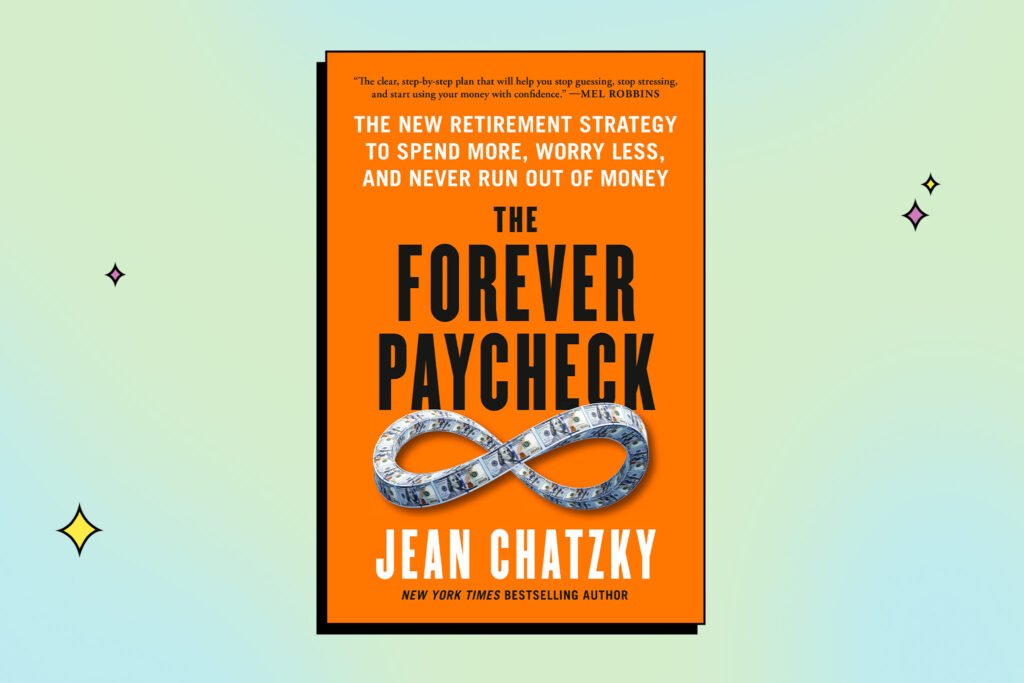
I’ve got a book for that. For this November’s Color of Money Book Club, Jean Chatzky addresses the withdrawal years in “The Forever Paycheck: The New Retirement Strategy to Spend More, Worry Less, and Never Run Out of Money.” Chatzky offers strategies to turn the money you’ve put away into a steady paycheck so you can relax, spend what you earned and actually enjoy life.
Chatzky shares a personal story that resonated with me because I already know I’ll have trouble drawing down on my retirement savings when I’m no longer getting a steady paycheck. I wroteabout my anxiety when my husband retired three years ago.
When Chatzky’s father died in 2005, her mother was 63, and she had $1.6 million in retirement and taxable accounts. Her mother’s fixed income included Social Security and a modest pension from her husband’s years as a college professor. Her home was paid off, and she had a long-term care policy.
“What became more clear with each passing year was that she was comfortable spending her Social Security, the pension dollars, and the interest on her brokerage accounts — but nothing more,” Chatzky wrote.
When Chatzky’s mom died in 2024 at 83, she didn’t have the $1.6 million left. Her retirement balance had grown to $1.7 million.
“She would not spend the principal,” Chatzky said during an interviewfor my podcast.
Here’s a sobering statistic: 67 percentof Americans are more afraid of running out of money in retirement than of dying, according to a study by the Allianz Center for the Future of Retirement.
In the book, Chatzky highlights research that found retirees with guaranteed income from an annuity typically spend twice as much as those relying on lump-sum retirement accounts.
What made the difference in spending comfort?
“I think it’s because they just knew that those paychecks were going to continue to come,” she told me.
In her research, Chatzky explains how many people can feel more at ease spending what they’ve saved.
“The paycheck-to-paycheck mentality that we work so hard to escape during the early stages of our career turns out to be the key to living more comfortably in retirement,” she wrote.
Before she gets to the strategies for creating a retirement paycheck, Chatzky recommends that you know your numbers.
Here’s a game you should try: List the major expense categories you have, then, without checking your bank or credit card statements, guess how much you spend in each category. How well would you do?
“As spending money — with swipes, clicks, dips, taps and so on — has gotten more and more frictionless, it’s also become more invisible,” Chatzky points out in the book. “Only when the bills pour in at the end of the month do we get a sense of how much we’ve spent.”
You need this preretirement baseline to help you create your retirement budget. This will give you a better understanding of what you can live without, so your money lasts longer.
“In retirement, as in life before retirement, money is a limited resource,” Chatzky wrote in the book. “That means making conscious choices about what’s a need, what’s a want, and what’s a wish — and getting very specific about the ones that are deal breakers.”
Next, of course, you’ll build your base retirement paycheck by maximizing Social Security and any pension you have. The hardest part of Social Security is deciding when to claim it. Claiming at 62, when you’re first eligible, can mean a 30 percent reduction. If your full retirement age is 67, waiting until 70 will give you an 8 percent annual increase.
Chatzky offers a thorough discussion of when to take your benefits. Early might make sense for some; late might be a better choice for others. If you haven’t already, create a Social Security account to get an estimate of your monthly benefit.
If you’re fortunate enough to have a pension, you’ve got some choices to make as well. If you’re married, do you want a survivor benefit? (You can’t leave the benefit to someone else unless your spouse signs off on it.)
At the heart of the book are additional strategies for structuring your retirement income so it feels like a paycheck.
For those comfortable with market movements, you can build a self-managed structure with cash buckets, CDs, Treasury bonds and dividend-paying stocks.
For risk-averse individuals, Chatzky suggests creating a paycheck by purchasing an annuity that will provide income for the rest of your life.
“In the simplest form, you take a chunk of money and give it to an insurance company, and in exchange, they give you a paycheck that either starts immediately or starts down the road. And because they pool risk … they actually can give you a better return than you’re likely to get with something like a CD or a Treasury.”
Chatzky concedes she grew up in personal finance journalism, very wary of annuities. Many types of annuities come with high commissions, surrender charges if you want to exit the contract early, and other fees that can make them more expensive than investing in a mutual fund.
“If you’re raising a skeptical eyebrow, you’re not alone, ” she wrote. “For many years, I did as well … The fees were too high, the terms mind-bogglingly confusing.”
But she says her research for the book changed her perspective. She now views them as a useful tool when used properly.
Like much of retirement planning, you need to figure out what’s right for you.
“I still don’t like all annuities,” Chatzky wrote in the book. “But I do believe that if you’re a person who wants to know that you’ll have income that flows for the rest of your life … they can provide guarantees that other products cannot.”
I’m still in the wary camp. However, I agree an annuity makes sense for some people. But as Chatzky stresses, you must be very careful about what you buy, when you buy it and how much money you allocate to them.
If you decide an annuity is right for you, buy only from insurance companies rated A or better, and potentially spread your risk across multiple companies to stay within state guaranty fund limits, Chatzky said.
“I am going to buy an annuity,” Chatzky told me. “I never thought I would say that, but I’m actually gonna take some of my money — not all of it, just a chunk — and buy a paycheck that I know will continue to come for the rest of my life, and then I’ll invest the rest.”
In “The Forever Paycheck,” written in collaboration with AARP, Chatzky doesn’t prescribe a single “one-and-done” solution. She guides you through a range of options to turn your money into a steady stream of income, tailored to your financial goals, lifestyle, and risk tolerance.
To prudently enjoy your retirement savings, you need a strategy. Fear isn’t a plan.
Follow Michelle’s financial advice show, Dollars & Sense with Michelle Singletary, on Apple Podcasts, Spotify, YouTube or wherever you get your podcasts. Want Michelle to answer your money question on the show? Email [email protected].
The post How to turn your retirement savings into a steady income stream for life appeared first on Washington Post.