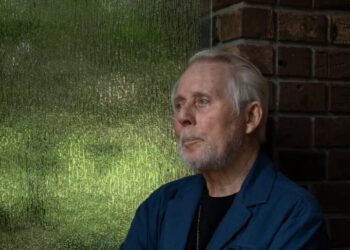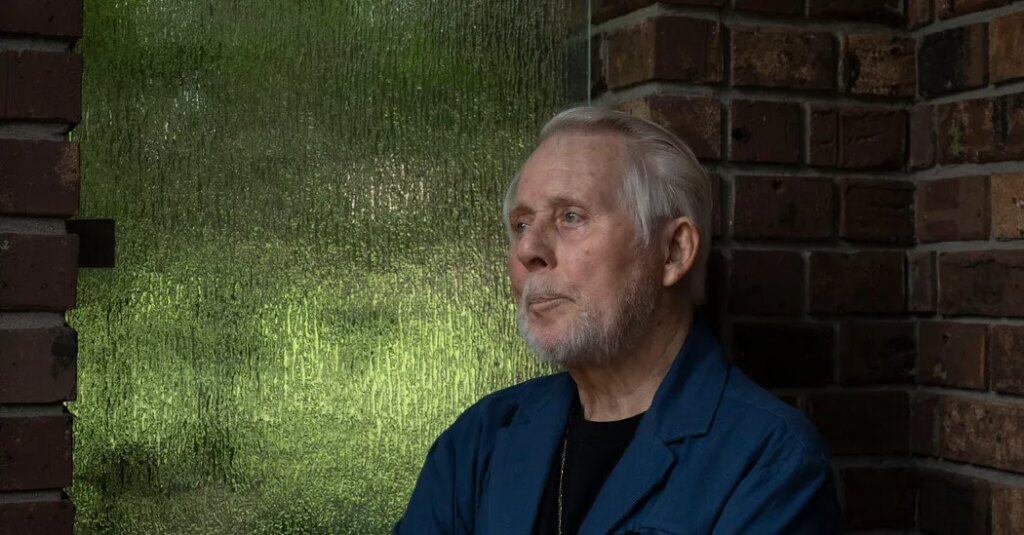
Every day, people call Jeffrey Wigand and say they really need to talk.
They are people with a secret, people who think they have information that can blow their town or their company or their country wide open. Maybe they need a little help. Sometimes they want reassurance that their life won’t be ruined. They’re frightened, so they’re reaching out to someone who has been through the whirlwind.
Dr. Wigand, a corporate insider turned implacable adversary, talks them through it.
“Make sure you have your family tightly bound to you,” he says. “Do you have a strong marriage? Are you a churchgoer?” Sometimes they’re enormously angry. “Vengeance without evidence is bad,” he says. “The only thing that protects you is 100 percent truth and the facts that support it.”
Often the callers are in their late 40s or mid-50s, have young children, haven’t quite hit the moment to do what they think is right. But if they are looking for uplift and sweet talk, they should have dialed another number.
“You’ll never be the same,” Dr. Wigand warns.
He certainly wasn’t. In the early 1990s, Dr. Wigand was a scientist at Brown & Williamson, one of the big tobacco companies. Middle-aged with a family, he was hired to make a healthier cigarette. Through an unlikely chain of events, he became a whistle-blower or, to use the term he prefers, “person of conscience.”
He testified that cigarettes were manipulated to make them addictive, an enormously consequential act. He was the recipient of death threats, appeared on “60 Minutes,” was played by Russell Crowe in a big Hollywood movie called “The Insider,” lost his marriage, lost his career and became a high school science teacher.
Now 83 and suffering from severe osteoarthritis — “I move like I’m dead” — Dr. Wigand has become a sort of pro bono Whistle-Blower Central at a moment when the world seems eager to see more of them. Pollsters say the perception of corruption in the U.S. government is practically universal and drove voters in the midterm elections. Dr. Wigand lives in north-central Michigan with his wife, Hope Elizabeth May, and gets calls from all over. The internet has his phone number.
A worker in a big U.S. lab says data is being manipulated for publication. A young researcher in Japan says he has proof that his company’s products do not do what the company claims. An employee of a hospital chain says there is an organized billing scam involving its patients. Someone from an agency charged with defending the country says there are things the world needs to know.
“I believe I have a duty to help others in return for what has been given to me,” Dr. Wigand said. “I don’t like the corruption in our world. There’s more moral decay than before, on all levels. I’m not going to go out on a box and preach, but this is something I can do.”
The first thing Dr. Wigand does is make sure the callers are on the level. “No one likes to be manipulated,” he says. Those who are deemed authentic might talk for an hour or more. Often they call again. He’s talked to the Japanese researcher five times, a process aided by the fluent Japanese he learned early in his career.
He sees his role as less pushing the callers to go through with it and more encouraging them to ask themselves if they can survive it.
“Some are almost there. Some are scared to death. Some are both,” Dr. Wigand said. “They start talking and you can hear their voice changing, and there’s a sob. They’re exploding.” The social media trials in the spring and summer brought him back into the public eye. Meta, owner of Facebook and Instagram, has been defending itself against suits by state regulators and former users. Whistle-blowers helped build the cases. Activists are optimistic that the tide against social media, and maybe screens themselves, is turning.
For Dr. Wigand, all this is familiar. “The tech industry deliberately and conspicuously manufactured a product that was addictive, just like the tobacco companies. And they also geared it to children,” he said. The tech industry denies this, but courts are finding it guilty. In August, Meta settled a suit with California and other states for up to $17 billion, a deal that echoed the $200 billion Big Tobacco settlement in 1998.
If there are useful parallels, there are differences, too. One element that accelerated the push against tobacco was the dangers of secondhand smoke. Smokers were seen as imperiling the health of others, who were outspoken as a result.
In other words, society wanted to change, which seems less clear with social media. Social media is also in the midst of shifting as it becomes subsumed into artificial intelligence, which makes it a more elusive target.
The biggest problem for social media critics reaching back to the tobacco battles for inspiration might be this: They weren’t entirely successful. Smoking in public has largely disappeared, but consumption of nicotine through vaping and other methods is still very much with us.
Dr. Wigand has outlived Brown & Williamson, which was absorbed in a merger, but the tobacco industry itself has survived and even prospered since the big settlement.
“It turned out to be only a symbolic victory,” Dr. Wigand said. “The industry easily came up with the money. They passed the price on to the victims, who will pay what they can to get the addictive product.”
The road ahead for social media is equally uncertain. “What social media needs more than anything else is the truth,” Dr. Wigand said. “The incriminating documents had to be extracted from the tobacco industry through legal proceedings. We’re in the earliest stages of that with social media.”
When Dr. Wigand went public with his accusations against Big Tobacco, there was minimal legal infrastructure to support people making accusations of wrongdoing against their own employers, and not much in the way of public support, either.
“Whistle-blowers were then called ‘snitches,’” recalled Ralph Nader, who held the first conference on insiders and informants in the early 1970s. The most famous whistle-blowers of the era included Frank Serpico, a New York cop who made Police Department corruption into a major issue; Karen Silkwood, a nuclear lab technician in Oklahoma; and Deep Throat, a then-anonymous government source for the Watergate reporter Bob Woodward (later revealed to be an F.B.I. official, Mark Felt).
These individuals — whose lives were enshrined, like Dr. Wigand’s, in big Hollywood movies — might have been inspirational, but their stories offered little practical guidance. In any case, people of conscience are rare. Threats of retribution are a very effective deterrent.
“After the way the company went after me, nobody wanted to follow,” Dr. Wigand said of his Brown & Williamson colleagues. Money plays a role, too. “When you get paid $500,000 a year, you don’t want to upset the apple cart.”
Since the 1990s, support for whistle-blowers has been institutionalized. By one count, there are now 66 countries with national whistle-blower laws.
The United States, once a leader in this regard, has gone in another direction under President Trump. A government whistle-blower who called attention to a phone call in which the president tried to coerce Ukraine’s president, Volodymyr Zelensky, to investigate Hunter Biden directly caused his first impeachment attempt, which in turn helped inspire a backlash on the right.
“Republicans, with few exceptions, have turned on whistle-blower rights,” said Tom Devine, the legal director of the Government Accountability Project, a Washington nonprofit.
The U.S. Office of Special Counsel, which reviews disclosures of wrongdoing from federal whistle-blowers, has recorded 11 cases so far in 2026. A few years ago, the annual number of cases was 60. With the Democrats regaining the House and the Senate, whistle-blowers may suddenly have a receptive ear in Washington.
If government has been less welcoming and in some cases outright hostile, the media is eager to give a hearing to allegations of wrongdoing. This is particularly true in the tech sector. Jacob Coxon, a former researcher at OpenAI and Anthropic, caused an uproar in September when he announced he was leaving the industry over what he described as disregard for safety.
“Whistle-blowers are among the few people who can get the truth out to the public, and the public is aware of that,” Mr. Devine said.
There is even a new whistle-blower movie, “The Social Reckoning,” Aaron Sorkin’s quasi-update of “The Social Network.” The latter film, released in 2010, explored the origins of Facebook. The new film dramatizes the story of a company whistle-blower, Frances Haugen, who disclosed tens of thousands of internal documents. And the movie that seems to be filling theaters, “You Can See Everything,” would not exist were it not for a whistle-blower. Tyler Shultz, an intern at Theranos, endured threats and extraordinary familial pressure when he helped expose fraud at Elizabeth Holmes’s blood-testing start-up. (Mr. Shultz still feels that Ms. Holmes is once again getting away with things.)
Mr. Wigand has yet to see either movie. But then, he doesn’t spend a lot of time rewatching the movie about him. “The Insider,” directed by Michael Mann, came out in 1999. Mr. Crowe’s portrayal of Dr. Wigand — uncertain whom to trust, worried about his family, beset on all sides — won an Oscar nomination.
“It brings back a lot of bad memories,” Dr. Wigand said. “If you got a death threat to your children, how would you feel?”
His story had a relatively happy ending, but it could have gone in another direction. While many whistle-blowers succeed in publicizing their issues, a few come to unfortunate ends, leading to speculation they have been silenced, or at least that the burden was too much to bear.
The 1974 case of Karen Silkwood, a plutonium plant worker who had reported safety and record-falsification violations to regulators, still haunts potential whistle-blowers. Ms. Silkwood’s car hit a concrete culvert while she was on her way to meet a New York Times investigative reporter. The official verdict ruled it an accident. Her family and others say they have spent decades searching for the truth.
A Boeing whistle-blower was found dead from a gunshot wound in 2024, as was an OpenAI whistle-blower. Both deaths were ruled self-inflicted.
Dr. Wigand doesn’t keep track of how many calls he gets. His younger brother James says that when he comes to visit, they’re a persistent backdrop.
“The phone rings and he says, ‘I need to take this call.’ I go to another room or go outside,” said James, a retired endocrinologist. “Most 83-year-olds are like, ‘I’ve had enough.’ They’re worn out. But my brother is a persistent fighter. To use a Yiddish term, he has really good chutzpah.”
He also has his bone-deep understanding of what’s ahead. Fewer than half of his callers go through with it, Dr. Wigand estimates.
“Given how hard whistle-blowing is,” he said, “I think that’s a lot.”
The post When Would-Be Whistleblowers Have a Secret to Tell, He Gets the Call appeared first on New York Times.