At the dawn of feminism, I assumed that cat fights would soon be history.
We were all going to be sisters, supporting each other and keeping our claws sheathed.
How naïve I was.
As they fought for equality, women were competing not only for mates but for jobs, desperately trying to infiltrate the room where it happens. Even the pioneers of feminism, Gloria Steinem and Betty Friedan, feuded.
But cat fights, as it turns out, are great for business. From “Dynasty” to the “Real Housewives,” “The Bachelor” and “Love Island” franchises, from “Mean Girls” to “Bridesmaids,” women scratching each other’s eyes out has been an amazing moneymaker, mostly for the men who still largely run the entertainment industry.
Cat fights are big in politics, too. Witness the tabloid delight in the “Democrat fight” between Nancy Pelosi and Alexandria Ocasio-Cortez in 2019 and the recent hair-pulling at the White House, with President Trump’s recently ousted chief of staff, the “ice maiden” Susie Wiles, sparring with the West Wing aide Natalie Harp and the short-lived press secretary Katie Zacharia.
So, naturally, I wanted to go to Connecticut to talk with Illeana Douglas about the biggest cat fight movie of all time and one that helped popularize the term — Metro-Goldwyn-Mayer’s 1939 classic, “The Women,” based on the Clare Boothe Luce Broadway hit of the same name. (Luce, the wife of Henry Luce, the founder of the Time-Life magazine empire, later became a congresswoman from Connecticut.)
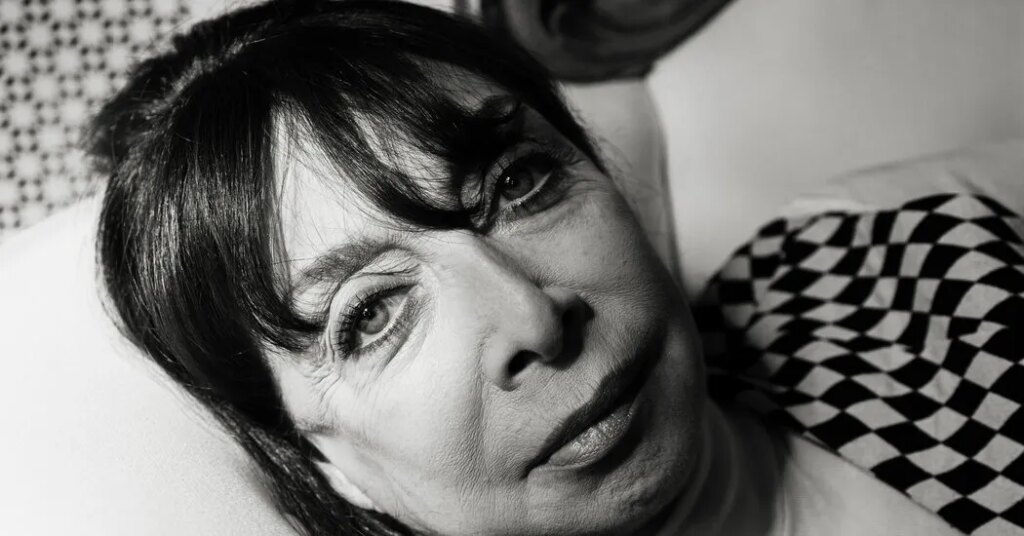
Douglas, a 65-year-old actress, writer and director, has a glossy new book, “Jungle Red!”, on the making of the movie — the only lavish studio film, she says, ever produced with no men onscreen — and the rivalries offscreen among the famous actresses.
Even the animals in the film, dogs and horses, were female. George Cukor, the director, told the press that male visitors were barred from the set — an order defied by Joan Crawford.
“In all the publicity and in the press, they had people coming to the set, like, ‘This is going to be the world’s best catfight,’” Douglas said. “So from the very beginning, they set it up.”
In case anyone possibly missed the point, Cukor’s opening credits included animals corresponding to the film’s main characters — a leopard for Crawford and a hissing black cat for Rosalind Russell, while Norma Shearer and Joan Fontaine were prey, a doe and a lamb.
Crawford embraced her inner predatory feline. “I wanted this role more than anything in my life,” she said. “I like playing bitches. There’s a little bitch in all of us.”
Douglas and I are sitting in her renovated kitchen of her colonial farmhouse, which looks like one of the dreamy film sets depicted in her earlier book, “Connecticut in the Movies.” She grew up mostly in nearby Old Saybrook, where Katharine Hepburn also lived.
She made pancakes with maple syrup and turkey sausage and reminisced about her grandfather, the urbane Melvyn Douglas, who starred in Ernst Lubitsch’s “Ninotchka” with Greta Garbo and “The Candidate” with Robert Redford.
He went on to win two late-in-life supporting actor Oscars for “Hud” with Paul Newman and “Being There” with Peter Sellers. Melvyn’s second wife was the actress and politician Helen Gahagan Douglas, who lost the 1950 Senate race to Richard Nixon in California, after Nixon smeared her as a Communist sympathizer.
Illeana Douglas had memorable film roles in “GoodFellas,” “Cape Fear,” “To Die For,” “Grace of My Heart” and “Ghost World,” as well as the TV shows “Six Feet Under” and “Law & Order: SVU.” She played Gary Shandling’s girlfriend toward the end of “The Larry Sanders Show” and hosted a show on female filmmakers for Turner Classic Movies.
Her house is filled with gorgeous movie posters, including her grandfather’s Hollywood classics “A Woman’s Face” (with Crawford), “That Uncertain Feeling” (with Merle Oberon) and “Ninotchka.” There’s also a picture of her former boyfriend of eight years, Martin Scorsese, and a library of books about Hollywood.
Douglas was a nepo baby, given her legendary grandfather, but she had to work her way up. After attending the American Academy of Dramatic Arts in New York for a year, she was an assistant to the notorious publicist Peggy Siegal, decades before Siegel got tarred in the Jeffrey Epstein scandal.
“People would jokingly say, ‘You work for the devil’s publicist,’” she recalled. “And I would say, ‘Oh, that’s why it’s so hot in the office.’ My job consisted of calling people like Walter Cronkite on the phone and inviting him to a party.”
Scorsese was editing “The Last Temptation of Christ” nearby and needed someone to dub in screams for Mary Magdalene. Douglas pitched in and the two began dating.
Douglas has complained that she always gets asked about Scorsese, but he never gets asked about her.
“Would you want to be identified with one relationship you had in your life?” she asked me. “Except for privately, I never get to talk about other great relationships I’ve had and influences I’ve had on them.”
What influence did she have on Scorsese?
She said that during the filming of the 1990 movie “GoodFellas,” she suggested making the scene with all the wives a Mary Kay party, after Scorsese couldn’t get the rights to make it a Tupperware party. “And a lot of the improv lines that we were coming up with that day at my house went into the movie,” she said.
Douglas was married to the late Jonathan Axelrod, a producer and writer, for three years until their divorce in 2001. Would she want to remarry?
“No,” she said flatly. “I used to always want to be married, but unfortunately I don’t think there’s anything in it for women. Having been married once, I don’t think it’s a good idea.”
The title of Douglas’s book comes from a signature line in “The Women,” when Shearer’s character, Mary Haines, resolves to go on the offensive against Crawford’s Crystal Allen, a vampy shopgirl who has stolen her husband. Haines gets in fighting trim by growing her nails into “claws” and having them painted a fierce shade: “Jungle red!” she cries, showing off her manicure as violins swell.
When Douglas recounted the scene, I noticed that her nails were done up in the same deep shade.
The stars of “The Women” did not care for each other offscreen either. Crawford felt that Shearer got all the good roles because of her marriage to MGM’s “Wonder Boy” executive, Irving Thalberg, who died in 1936. Crawford mockingly called Shearer, the classy first lady of MGM, “the Widow Thalberg.”
As Anita Loos, the screenwriter, put it: “Norma and Joan could never have been personal friends — they came from different worlds. Norma thought Joan crude and pushy, and Joan considered Norma overbearing and uppity — but they both knew the ‘feud’ was good copy, and so they helped it along.”
Things came to a delicious head when Crawford read lines with Shearer while engaging in her cacophonous hobby, knitting. Norma genteelly asked Joan to put away the clacking knitting needles, but the whole point was needling Norma, so Joan didn’t.
As the movie’s hair stylist, Sydney Guilaroff, recalled, “Crawford went home, drank six martinis and fired off a telegram to Norma informing her in no uncertain terms exactly what she thought of her.” At Cukor’s insistence, Crawford sent an apology telegram to Shearer, but she doubled down by listing all the slights she felt she had endured.
After that, Crawford bailed on the first day of shooting with Shearer, saying she had arsenic poisoning. She also skipped the cast luncheon after the film wrapped, sending word that she had ironing to do.
“So many people say Norma and I don’t like each other,” Crawford purred to the gossip columnist Hedda Hopper. “Who are we to disagree with the majority opinion?”
Cukor, who was known in Hollywood to be gay, had something to prove. He had recently been fired as the director of “Gone With the Wind” after Clark Gable fretted that his approach was too feminine, favoring Vivien Leigh.
“I thought it was kind of interesting that he got fired from ‘Gone with the Wind’ for being gay and then hired for ‘The Women’ because he was gay,” Douglas told me.
Rosalind Russell soared as Mary’s backbiting friend, playing the role as high camp. “I relate, obviously, to Rosalind Russell, who was stuck in these second leads, but she persisted,” said Douglas, who has played her share of supporting roles.
Tensions bristled between Russell and her fellow cast member Paulette Goddard, a longtime girlfriend of Charlie Chaplin who showed up at the soundstage each day in her custom Rolls-Royce. “There was no sisterhood,” Goddard said.
The mutual antipathy spilled over into what the producer Hunt Stromberg hailed as “the greatest catfight of all time,” a fight scene at a ranch in Reno, Nev., which escalated to the point that a doctor was called to patch up Goddard after Russell bit her.
It should have been a mere stage bite, Douglas writes, “but during one of the takes, Russell sank her teeth right into Goddard’s thigh. Loos, who was watching the scene, said, ‘Blood began dripping from her leg.’”
“The Women” was such a hit that studio suits began inserting cat fights in other movies, Douglas noted, saying, “‘Oh, it worked with Rosalind Russell. Let’s see Marlene Dietrich now!’”
Douglas added dryly: “You know, if Nicole Kidman and Sandra Bullock had had a catfight in ‘Practical Magic,’ it would have done so much better.”
Some people objected to Luce’s portrayal of women in “The Women.” Eleanor Roosevelt dismissed it as unpleasant.
But Douglas said she was relieved, when she saw screenings of the film with younger women, that they got into the fur-is-flying spirit and were not put off by female characters who devote so much energy to discussing husbands, ex-husbands and suitors. (The movie’s tag line was “It’s all about the men!”)
Douglas acknowledged that some women these days might be skeptical of a movie centered on female characters who talk so much about men. “But what should they be talking about?” she said. “Their diet?” And when you think about it, the girls in “Girls” and “Sex and the City” talk a lot about men, too.
“As soon as the leopard comes on and you see Joan Crawford, the audience starts laughing,” Douglas said. She added: “People seem to be relieved, like, ‘Oh, OK, we can just laugh at women all being bitches.’ ”
She said she follows the Elaine May rule, that there’s no point trying to disarm men who think you’re scary-smart by trying to be likable. (That’s where Hillary Clinton went wrong in her debate with a lurking Donald Trump; as she recently acknowledged, she should have just turned around and said, “Back up, you creep!”)
“You wrap yourself up like a pretzel trying to please people and navigate and then you can’t take it anymore,” Douglas said. “It’s better to just be unlikable from the get-go.”
She said that all the actresses in “The Women” “used the tools in their tool kit to scare the hell” out of Cukor and the producers.
“That’s why I wrote the whole book,” Douglas said. “But I think we’re so afraid of it because we want to be liked. But I absolutely know that you get more done with men if they’re afraid of you.”
She continued: “And, yes, people are going to dislike you. And, yes, unfortunately, a lot of times it’s women. ‘Who do you think you are, standing up for yourself?’ That’s what I do find a little odd in the female empowerment game — that we don’t celebrate other women becoming successful.
“I do think that women are way too sensitive to criticism. And that has ended many of my friendships.” Douglas said, adding, “Women will stop being friends with you simply because you confront them about something they did that hurt your feelings.”
Douglas made headlines in 2018 when she told Ronan Farrow of The New Yorker about being assaulted and retaliated against by Les Moonves, then the powerful head of CBS. Moonves admitted to trying to kiss Douglas in his office but denied her other allegations. He ended up losing his job and his severance after revelations by Douglas and other women.
“I was attacked by Les Moonves when I was doing a television show,” she recalled. “And, again, nobody talked about it, but it was something that everybody in my life knew, and we even sort of comically talked about it.
She added: “So I’m glad I stood up for myself. It was extremely cathartic.
She said that making her case against Moonves “did put the nail in the coffin of the predatory behavior at the top level.” But she added, “I don’t think that the #MeToo movement did anything for the relationships between men and women. If anything, it’s like men solidified, and women became terrified.”
She noted “an odd unnaturalness” between men and women in Hollywood meetings these days.
“There always is going to be that weird, awkward thing of, ‘Is she going to say I attacked her?’ or ‘Is he going to say … ?” she said.
Now she’s working on a book about Hollywood in the ’90s.
Back then, she recalled, “There was this environment where you were told to go in — the agents, the managers, everybody’s involved in it — you’re supposed to go in and wear a short skirt, and you’re supposed to flirt with the leading actor, to a certain extent, to get the part.”
The casting couch was installed on the first day of Hollywood. As Douglas writes in her book, Louis B. Mayer, the head of MGM, would tell Crawford he felt paternal toward her. “Mayer would always say, ‘I feel about you like I feel about one of my own daughters,’” Crawford said, “‘but usually, when he was saying it, he would have his hand on my tit.’”
Douglas said that when her grandfather got to MGM in the 1930s, “he said they gave you a list of people that you could take out to dinner, and then people you could have sex with.”
She felt that the #MeToo movement “did seem to be hijacked away from what the initial scream of pain was.”
“I’m like, wait a minute,” she said. “Can we focus? And so, part of the reason that I had friends who wanted me to come forward was to put it back on track to workplace harassment.”
Given the comebacks of several men in the entertainment industry who had been banished for sexual misconduct, and given the recent purging of women executives at studios, what is her advice for young women trying to make it in Hollywood?
“I think they should be a bitch right off the bat,” she said. “You don’t have to be mean. You don’t have to say, ‘Your hair is receding’ or anything like that. But I think that being very strong and very direct always works better.”
The post Illeana Douglas Looks Back on Hollywood’s Biggest ‘Cat Fight’ appeared first on New York Times.