The title “SCTV: The Greatest Show You’ve Never Heard Of” is provocatively tongue-in-cheek.
The documentary, now streaming on Netflix, celebrates the venerated sketch series that debuted in Canada just over 50 years ago, in September 1976, and began syndication in the United States the following year. It ran for six seasons and introduced viewers to an array of future comedy stars, including John Candy, Eugene Levy, Rick Moranis, Catherine O’Hara, Martin Short and Dave Thomas.
In America, “SCTV” was a kind of found object that aired at odd times, often on the far end of the dial. (This was the 1970s and ’80s; televisions still had dials.) Among the comedy cognoscenti, it is still spoken of in reverent tones. In the documentary, Kathryn Hahn says, “I had seen ‘S.N.L.’, but ‘SCTV’ was like their cooler, older cousin that was out smoking cigarettes in the back.”
In September Netflix added all six seasons of “SCTV” to the platform. Before that, it could be difficult to find — it has generally not been easily accessible in syndication. So Thomas gets the “Greatest Show You’ve Never Heard Of” concept.
“It’s no surprise to me if people haven’t heard of ‘SCTV,’” he said. “It was relevant then, in a fun way. I don’t know how relevant it is today.”
The documentary makes a strong case for the show’s enduring relevance. In a phone conversation from Thailand, where he now lives, Thomas recalled the show’s modest beginnings, how he discovered it had developed a cult audience and some of his favorite sketches.
“SCTV” sprang from Toronto’s Second City comedy troupe, with each episode sampling the programming day at a hapless television station in a fictional Canadian town called Melonville.
The show was sketched out during a meeting at the company’s original home, known as the Old Fire Hall. Cast members including Thomas, Levy and Andrea Martin were already local heroes for appearing in a revered 1972 production of “Godspell” in Toronto, itself the subject of a recent documentary, “You Had to Be There.” With the exception of Moranis, who came from radio, the performers made their bones with the Second City troupes in Chicago and Toronto.
It was Del Close, the improv guru and Second City director, who suggested the show be set at a fictional television station, Thomas said.
“That would allow us to do programming sketches, commercial and movie parodies and to create a reality of the station behind the scenes,” he said. “It all tumbled out of that original concept.”
Station employees were recurring characters, including the wheelchair-using owner, Guy Caballero (Joe Flaherty); the leopard-print-clad manager, Edith Prickley (Martin); and the newscaster Earl Camembert (Levy). Candy played an egotistic faded star named Johnny LaRue. Thomas played Bill Needle, a caustic critic.
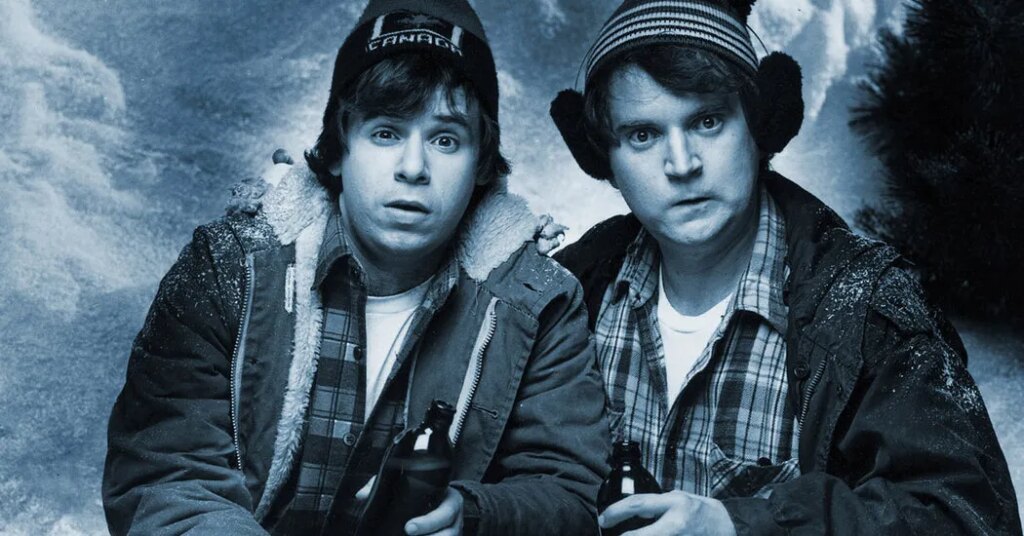
Thomas teamed with Moranis to create the show’s most prominent breakout characters: Bob and Doug McKenzie. The parka-wearing, beer-drinking brothers, who hosted a show called “The Great White North,” introduced unlikely catchphrases like “Take off, you hoser” and “How’s it goin’, eh?” into the international lexicon. The McKenzies eventually released a platinum-selling album as well as “Strange Brew,” a 1983 film that received mostly bad reviews but is now considered a cult classic.
The writers and performers of “SCTV” followed the dictum of Bernie Sahlins, a Second City founder, to always play to the top of one’s intelligence.
“Network comedy at the time played to an established common denominator,” Thomas said. “For the first two or three years of the show, we didn’t think anyone was watching. So we basically just did what we thought was funny and tried to make ourselves laugh.”
The show’s ambitious approach to parody, in particular, set it apart from “S.N.L.” and others. The sketches were multilayered, extending beyond the source material. Thomas pointed with pride to an episode-length spoof of “Fantasy Island,” from the second season, that also contained parodies of “Casablanca,” the Bob Hope-Bing Crosby comedy “Road to Morocco” and even “The Wizard of Oz.”
Another episode Thomas recommends for neophytes is a parody of “The Godfather,” which somehow works in Levy’s masterly impression of Howard McNear as Floyd the Barber from “The Andy Griffith Show.”
Nowhere but on “SCTV” could you see “The Oscar” (1966), an infamously terrible Hollywood potboiler, transformed into “The Nobel,” about one man who will stop at nothing to receive the distinguished prize. Or a mash-up in which “The Benny Hill Show” plus “Hill Street Blues” equals “Benny Hill Street Blues,” with fast-motion cops chasing scantily clad women to “Yakety Sax.” Or “Battle of the PBS Stars,” in which Mister Rogers and Julia Childs duke it out in the boxing ring.
More culturally topical episodes included an Emmy-winning lampoon of the Moral Majority political organization, and another in which the Soviet Union jammed the SCTV satellite and broadcast its own programming. “I was very proud of that show,” Thomas said.
Thomas said the “SCTV” aesthetic stemmed less from some grand comic vision than from the relationships among the performers.
“I knew Marty and Eugene in college, and we were making each other laugh long before ‘Godspell’ and Second City,” he said. “That in itself was the chemistry of the show: a group of people who had a natural admiration for each other’s comic sensibilities, which weren’t identical at all. If you look at the sketches John Candy came up with, or Catherine, or Eugene or Marty Short, they were all very different.”
“SCTV” is still mythologized as an underdog show with a close-knit cast working in the shadow of “Saturday Night Live.” Thomas said the show thrived because they were working in a bubble without interference from a network that couldn’t be bothered.
Thomas did not realize “SCTV” had a following until the third season, when a promotional stunt sent him and Moranis, as the McKenzie brothers, to Winnipeg to drink with the cheerleaders of the city’s pro football team, the Blue Bombers.
“We got off the plane and there were 1,000 people cheering us,” Thomas said.
By then Brandon Tartikoff, the president of NBC, had put “SCTV” on hundreds of affiliates in the United States.
“We started to get feedback from American media and fan mail we had never experienced before,” Thomas said. “It was very new and shocking to us.”
“SCTV” won Emmys for writing in 1982 and 1983, and Thomas was amazed when John Lithgow approached him at one ceremony and said he was a fan of the show. At an after-party Tony Bennett, who had appeared earlier that year in an “SCTV” episode framed around the McKenzies, greeted him by name.
At an “SCTV” reunion in 1999, the moderator Conan O’Brien told Thomas that when he and his brother discovered the show, it felt like it was speaking only to them. With “SCTV” now on Netflix, new generations can watch inspired sketches like “Play It Again, Bob,” “Five Neat Guys,” “High Q” and “Jake LaMotta’s Raging Bull-B-Q.” (One early episode is missing — title: “Ethnic Humor” — and others have been trimmed or altered, partly because of music licensing issues.)
The surviving cast of “SCTV” is getting smaller. Candy died in 1994, Harold Ramis in 2014 and Flaherty in 2024. O’Hara died in January, but she participated in a cast reunion for the documentary before her death.
Thomas, in Thailand, is currently working on several projects, including an immersive video for a dome theater in Dunhuang, China. He wrote the book “SCTV: Behind the Scenes” in 1996, and he has amassed many keepsakes from the show over the years. But he balks at the suggestion that he is the keeper of the flame.
“No,” he insisted. “The shows are on tape. The tapes are the keeper.”
The post Dave Thomas Looks Back on ‘SCTV’ appeared first on New York Times.