Adeline Von Drehle is a writer in Brooklyn.
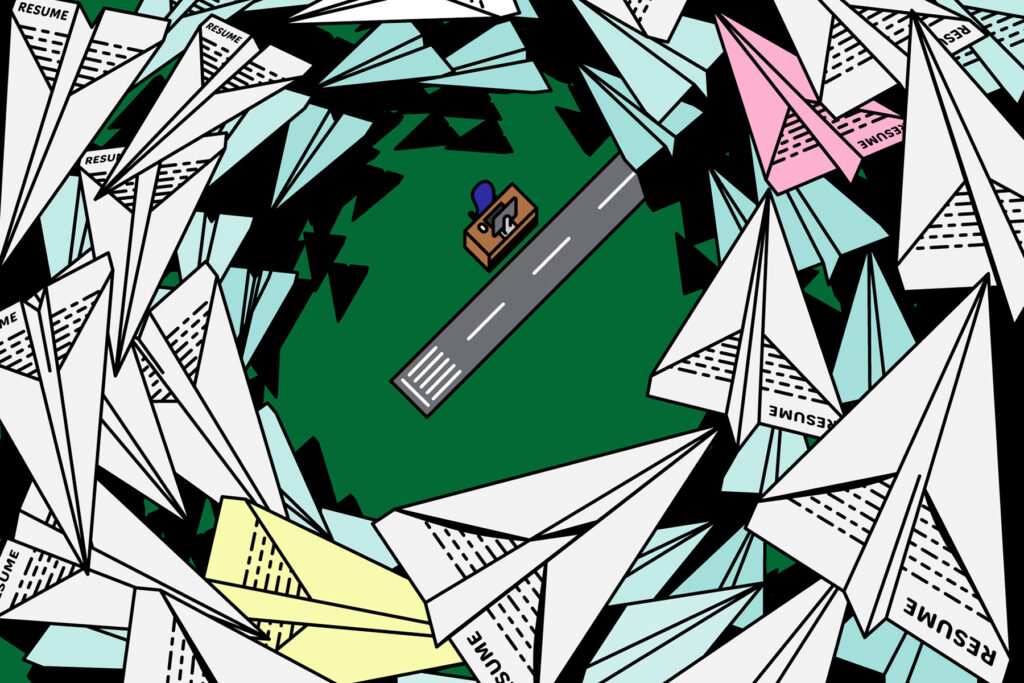
Recent graduates are experiencing the worst job market in years. A shortage of entry-level jobs, plus an explosion of artificial-intelligence-powered online recruiting, has spawned stories of young people who apply to 100, 500 or 800 positions before they eventually land one.
Here’s mine, except for the part about eventually landing one.
I never thought it would happen to me. As a kid, I was told with absolute certainty that if I worked hard enough, I could achieve my goals. And that was true — until I hit this depressed and depressing job market.
After I graduated, I set out to start a career in writing. A child of two journalists, I got a good internship through my parents’ connections, which led to a first job at RealClearPolitics. But after covering the 2024 presidential election as a reporter and polling analyst, I left to get a master’s degree. This wasn’t a career move, really; I knew that a master’s in history wouldn’t add much to my journalistic qualifications. But I had fallen in love with England during a year at Oxford University as an undergrad, so I enrolled at University College London.
When I returned to the job market in September 2025, I was confident. I had an honors degree from my state university, my year at Oxford, experience as a reporter and editor, plus a new master’s from one of the world’s best universities. Three months later I had 43 rejections, but five of these came after an interview, which gave me hope. At least then I knew my application had reached human eyes.
My disappointment was also softened by a feeling of community. I’d seen plenty of bright, qualified friends struggle to get jobs, and I knew others who felt trapped in jobs they didn’t like. Plus, candidates flocked to every job I targeted. I knew, in other words, that I wasn’t alone.
Now, more than a year on, I want out of this community. It’s been bruising. Figuring my search can’t last forever — right? right? — I keep rewriting my résumé and cover letter, guided by a blend of LinkedIn advice, the job description at hand and my best guess at the special sauce that got me past the résumé-rejecting-bots before.
I apply to dream jobs. To jobs that mirror my previous experience. To jobs I am objectively overqualified for. I message hiring managers and intern coordinators and people I have no business messaging. I ask for advice over iced lattes and then, as the weather turns, over hot lattes. I offer — no, beg — to work for free. “For the experience.”
On those rare occasions my email pings with the sweet, sweet sound of “congratulations, we’d like to invite you to interview,” I press pause on the conveyor belt. Now comes time to drill into the company’s history, ethos and style. I practice interviewing in front of the mirror and call anyone I know who might have insight into what the questioner will be looking for. Anything to make myself stand out in the room.
Cue a montage of rejections. I have been rejected via email, via phone and most of the time via silence. I have been rejected in my apartment, on vacation, with friends and all alone. When I ask for feedback (I always do), I am told that I was a fantastic candidate, that the hiring team had a wonderful batch of applicants and that I simply didn’t make the cut.
In March I was sure I’d landed something but — oh, wait, no.
In June I moved back into my childhood bedroom.
In September I hit the one-year mark.
After more than 150 rejections, it’s only natural to feel bad about yourself. I know that the line about all the wonderful candidates is true, but the negative thoughts are irresistible: Maybe my year-old degree and the gap in my résumé make me look sketchy. Maybe my freelance gigs suggest I lack commitment. Maybe I’m a terrible interview.
But another voice inside my head — this one echoed by the people who know me — says it isn’t personal.
And that’s the problem.
This job market does not have an answer for the fact that every year, more and more young people, eager to show the world what they can do, will be competing for a shrinking pool of AI-decimated jobs while being told, over and over, that they aren’t good enough.
Adding insult to injury, in more and more cases it will be AI that tells them this.
This job market demands cover letters no human ever reads. It wastes your time by posting roles that aren’t actually available. This job market usually doesn’t bother to let you know you’ve been rejected and automates a generic message when it does. This job market strings you along, leaving you with hope until days or even weeks after another applicant has been offered the job. If you are a new graduate who needs a break, this job market doesn’t know you and doesn’t want to know you, and it isn’t getting any better.
The post The robots read my cover letters appeared first on Washington Post.